
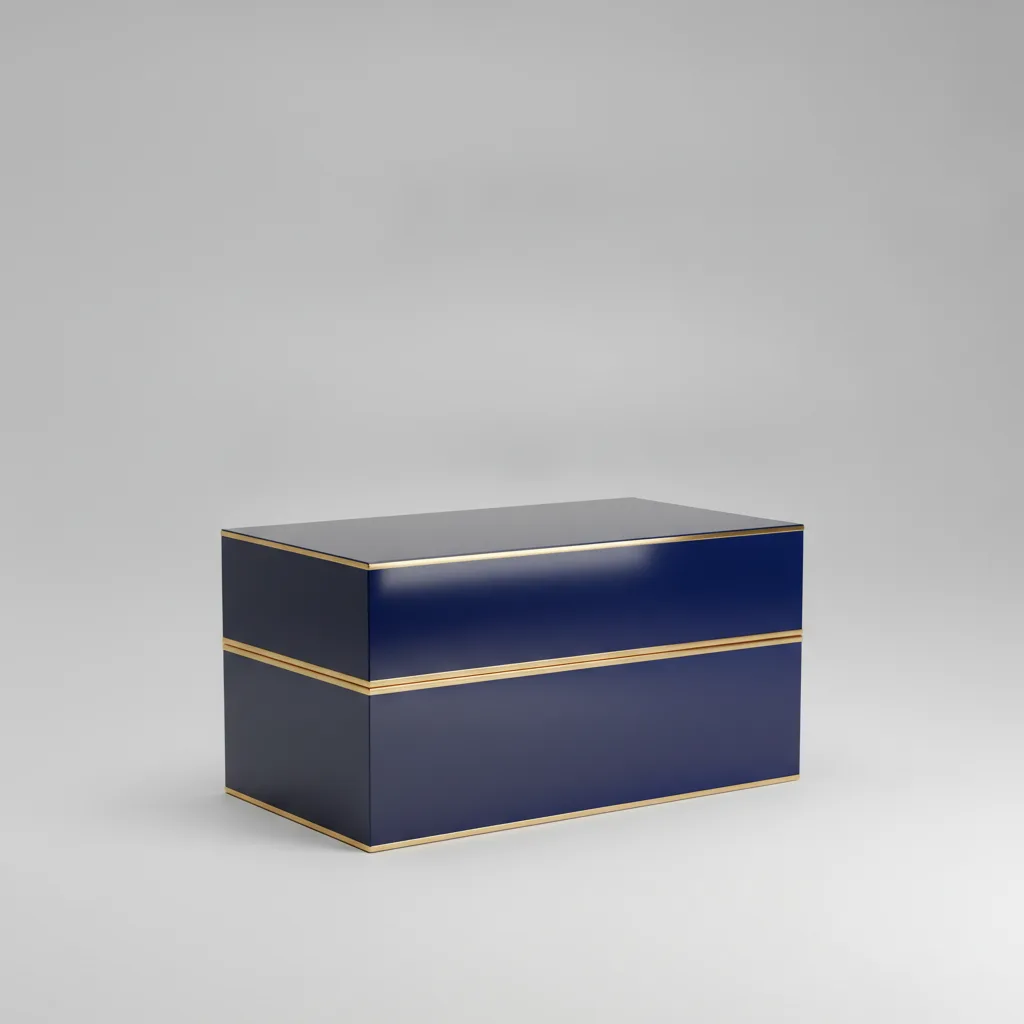
For luxury and premium brands, 3D packaging rendering before production is a key step to secure a launch, reduce industrial risks and align all stakeholders around the same virtual object, faithful to the future reality.
Introduction
3D packaging rendering before production is becoming second nature for all brands that stake their image on a premium box, slipcase, or case. In just a few minutes, you can see your packaging from every angle, with its actual finishes and proportions, well before the first white printing or the first prototype. For a critical launch (Christmas, Fashion Week, limited editionThis realistic visualization secures internal decision-making, limits creative back-and-forth, and reduces technical risks. At Maestro, this tool is integrated into a technical manufacturing office support program, closely mirroring the realities of Italian and Chinese factories.
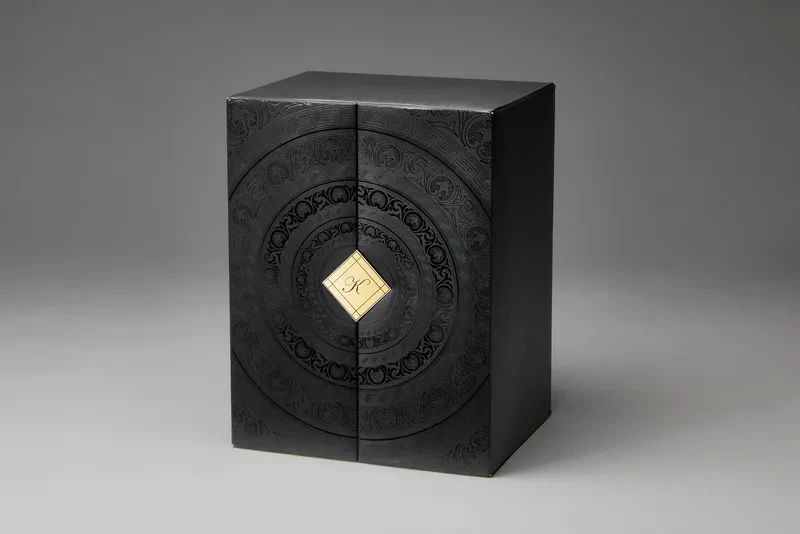
3D packaging rendering before production and packaging visualization: validate your box before it even physically exists
Reading time: ~12 min
- Why 3D packaging rendering before production has become essential
- From flat template to 3D rendering: the typical workflow
- The tangible benefits for the design, manufacturing and marketing teams
- 3D visualization tools used in premium packaging
- Limitations and precautions of 3D packaging rendering
- FAQ
Why 3D packaging rendering before production has become essential
For a Production Director, an Art Director, or a luxury Brand Manager, a flat proof is no longer sufficient as volumes, image stakes, and budgets increase. 3D packaging rendering before production addresses several simultaneous needs.
First, it restores the reality of the volume and perspectives. Where a 2D template shows a cut, the 3D model reveals how the faces meet, what will be visible on the front, what will be hidden by a flap or an automatic background.
Next, it allows the concept to be validated with all internal stakeholders. A photorealistic rendering or an interactive visualization is much more compelling for a management committee than technical drawings or a PDF on a white background.
Finally, it acts as a filter before the physical prototype. The most costly errors (logo cut on an edge, illegible legal information, barcodes straddling a fold) are detected upstream, when a simple file correction would still suffice.
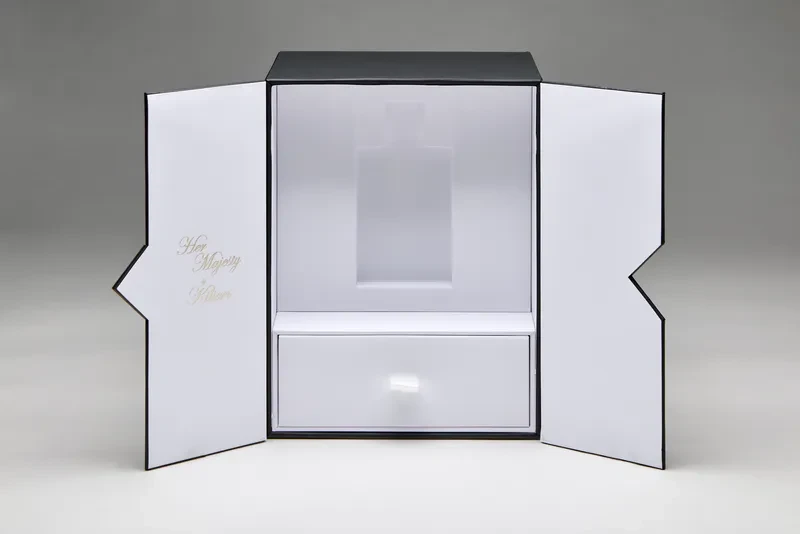
For niche perfume houses, premium spirits, or high-end cosmetics, this step is particularly valuable. It allows them to test color variations, finish combinations, or box proportions without halting production lines in Italy or China.
From flat template to 3D rendering: the typical workflow
1. Define precisely the actual volume
It all begins with the actual dimensions of the product and its packaging (length, width, height, tolerances). For a cognac gift set, for example, the paper engineering will incorporate the bottle, the padding, any accessories, and the expected opening experience. At this stage, the packaging type is also chosen (folding case, rigid box, drawer box, nesting box, custom sleeve) based on the positioning and logistical constraints.
2. Create the technical template
The engineering teams design the die line, which will serve as the basis for all subsequent steps. This step defines the cutting lines, creasing lines, tabs, glue tolerances, and areas for possible embellishment (gilding, embossing, spot varnishing, etc.). The die is technically validated beforehand, particularly with regard to the production sites' machinery, to avoid any future incompatibilities.
3. Graphic design on template
The art direction team or agency then works on this flat template, usually using Illustrator or InDesign. The different layers are organized to clearly distinguish the cutout, bleed, branding elements, and finishing touches. An initial check is already performed at this stage, but as long as the design remains flat, the perception remains abstract.
4. Transition to 3D rendering
This is where pre-production 3D packaging rendering tools come into play. Two main approaches coexist: solutions integrated into the packaging workflow, such as Esko Studio, and visualization engines like KeyShot, which simulate light, materials, and reflections to produce images very close to a photo shoot. At this stage, it becomes possible to rotate the object, zoom in on a specific angle, observe the pattern's behavior on a precise edge, or test a shelf layout.
5. Physical prototype and factory BAT
Once the 3D rendering is approved, it serves as a reference for launching a physical prototype. The digital proof and rotating whites are compared to the 3D rendering to verify the volumes, alignments, and overall perception. The prototype confirms the durability, ergonomics, and tactile quality that the screen cannot simulate.
The tangible benefits for the design, manufacturing and marketing teams
| Profile concerned | Main objective | Providing 3D packaging renderings before production |
|---|---|---|
| Production & Purchasing | Securing industrial feasibility and costs | Early identification of risk areas, improved competition between factories on a volume already visually validated |
| Creation & art direction | Translating creative intention into a concrete object | Exploring variations in finishes and proportions without multiplying physical prototypes |
| Marketing & Brand Management | Validate the positioning and visual impact | Quick comparison of graphic routes and reuse of visuals for presentations and SEO files |
For production and purchasing
Accurate 3D modeling ensures the industrial process is secure: risk areas are identified earlier, and compatibility with machines at Italian and Chinese sites is verified without requiring multiple physical tests. This reduces the number of prototypes needed and limits late-stage corrections. For a purchasing manager, it's also a more reliable tool for competitive bidding, as quotes are based on an object that has already been visually validated.
For the creation and art direction
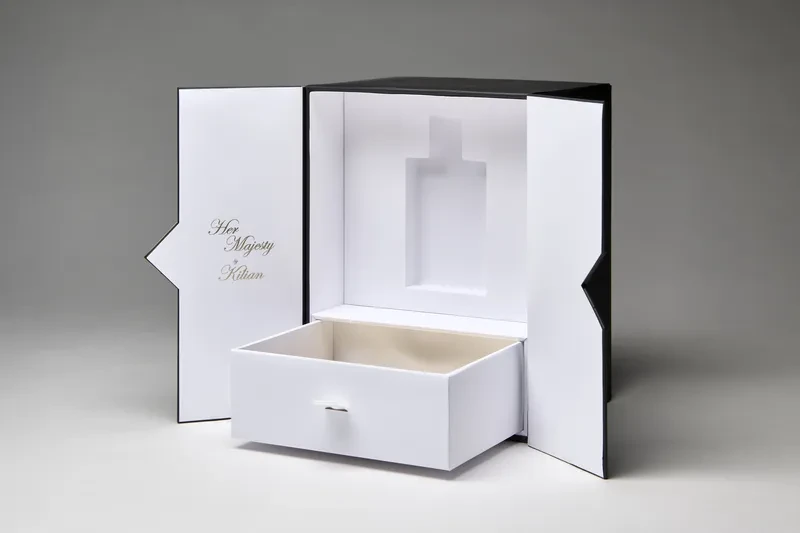
3D rendering becomes a true field of exploration: deeper embossing, wider gilding, more pronounced selective varnishing, adjustment of proportions between printed area and reserve… It serves as a translator between the creative intention and the final material, reducing the fear of loss between model and finished object and limiting the back-and-forth of BAT.
For marketing and brand management
A photorealistic 3D rendering is a powerful decision-making tool: comparing several graphic designs or box layouts as almost tangible objects. The visuals can be reused for distributor presentations or product listing documentation, accelerating communication with subsidiaries and helping to meet tight international deadlines.
3D visualization tools used in premium packaging
Esko Studio and native packaging tools
Esko Studio is designed to transform a technical template into a faithful volume, respecting folds, cuts, and production constraints. It lays out Illustrator files, manages finishing layers, and allows for animated verification, thus synchronizing design studios, prepress, and factories.
KeyShot and photorealistic rendering engines
Engines like KeyShot add a layer of realism by finely managing light, shadows, materials, and environments. For a high-end perfume box or a rigid jewelry case, this precision helps project exactly the expected premium feel.
Augmented reality and in situ visualization
Augmented reality solutions project virtual packaging into a real-world environment (shop window, shelf, tasting table). A phone or tablet is all that's needed to visualize the presence of the box, providing increased confidence before committing significant budgets.
Limitations and precautions of 3D packaging rendering
3D rendering accelerates the decision-making process, but it should not be confused with the finished product. It does not replace material testing or a prototype. No screen can reproduce the feel of a high-quality paper, the depth of embossing, or the true brilliance of hot foil stamping. A rendering that is too flattering or poorly aligned with production capabilities can create unrealistic expectations; hence the importance of oversight by a technical manufacturing department. Finally, any changes made after the rendering is generated must be implemented and reviewed to avoid discrepancies between the approved mock-up and the final proof.
FAQ
Is 3D rendering sufficient to abandon the physical prototype?
No. 3D rendering allows for validation of the design and positioning of elements, but the prototype remains essential to verify mechanical strength, opening ergonomics, bonding quality, and the actual appearance of the finishes. In a luxury project, the two are complementary.
Can 3D renderings be used for communication and e-commerce?
Yes, provided it's defined from the outset in the brief. A rendering created with a photorealistic engine can be used for distributor presentations, SEO materials, and sometimes for temporary e-commerce visuals before a photoshoot. However, it's essential to ensure the rendering accurately reflects the final product and to update the visuals after production.
How much time does this add to the planning of a packaging project?
When properly integrated, 3D rendering doesn't add time; it saves it. It reduces late-stage revisions, limits the number of prototypes, and streamlines internal approvals. Generally, rendering generation occurs immediately after graphic design and is part of the normal design schedule.
Towards a systematic use of 3D packaging rendering before production
3D packaging rendering before production is now a strategic building block for securing your product launches, aligning design and manufacturing, and convincing both internal stakeholders and partners. Combining realistic simulation and industrial control, it reaches its full potential when managed by a technical manufacturing office with expertise in both paper engineering and production facilities in Italy and China. To learn more, explore our dedicated page on packaging and discover our solutions.