
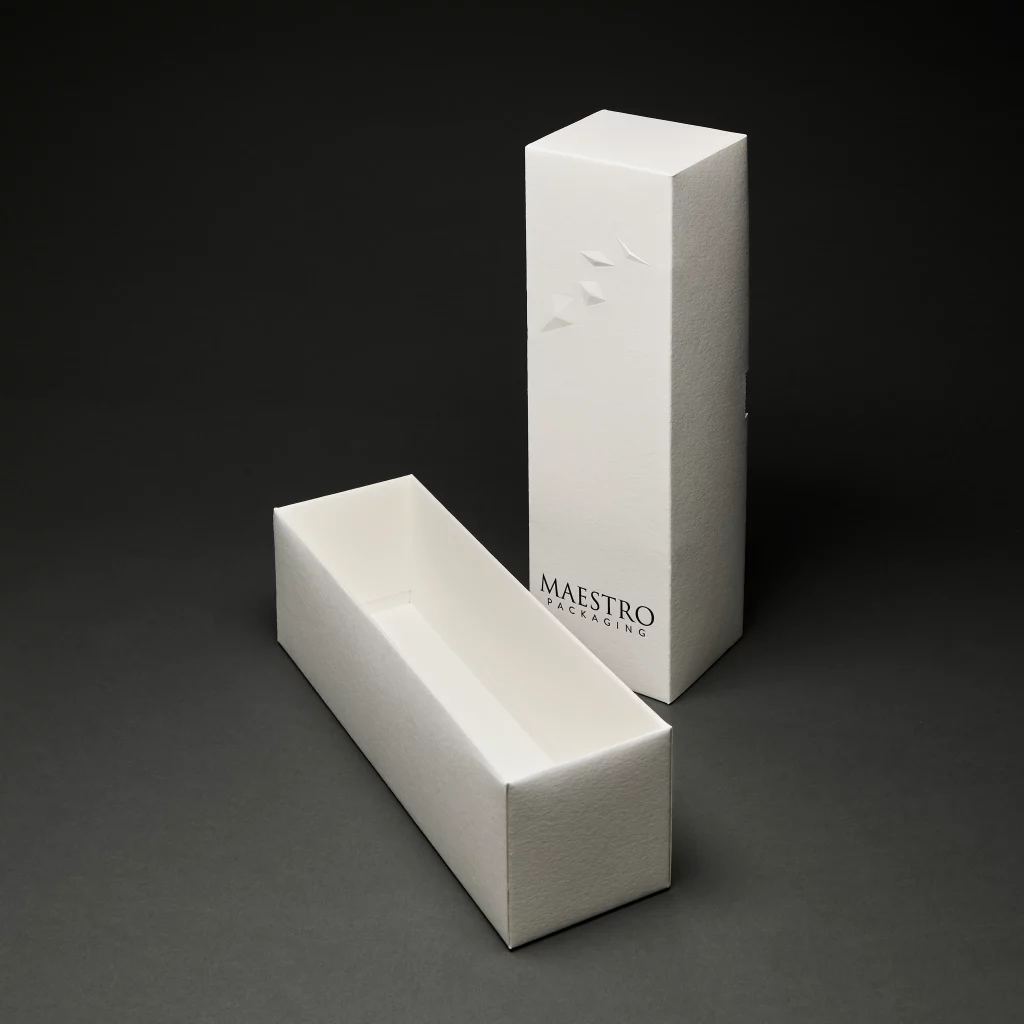
In the luxury packaging sector, reducing the carbon footprint of packaging production is no longer a peripheral marketing ploy. It has become a purchasing criterion, a requirement of CSR committees, and increasingly, a condition for accessing tenders from major corporations. Yet, most discussions on the subject remain vague: vegetable-based inks here, FSC certification there, without ever addressing the central issue of the organization of production itself.
This is precisely where Maestro's dual production model, physically supervised in Italy and, depending on the files, in China, provides a structural and measurable response to reducing the carbon footprint of printed packaging.
Reducing the carbon footprint of packaging production | Maestro
Reading time: ~9 min
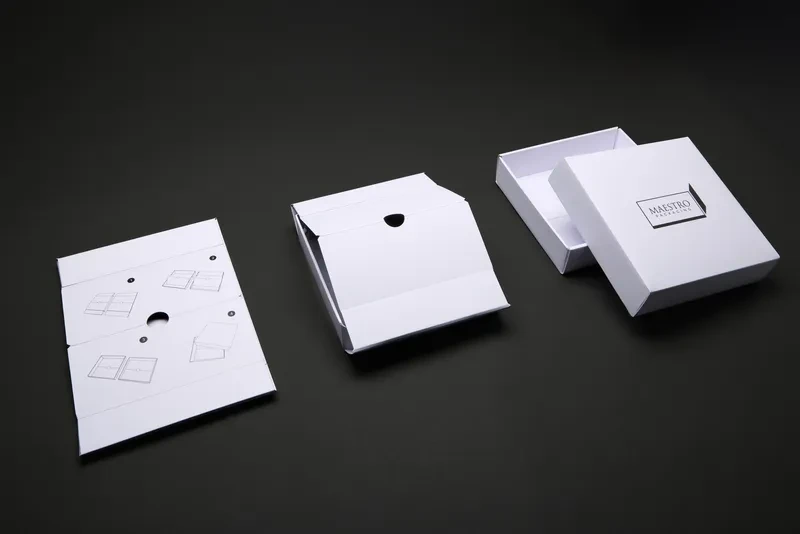
- Summary in brief
- Where exactly does the carbon footprint of printed packaging lie?
- How to measure the carbon footprint of your printed packaging?
- The four structural levers for reducing the carbon footprint
- What changes with the dual production model
- Local production and quality requirements for luxury packaging: a false contradiction
- Certifications and documentation: what luxury buyers will demand in 2026
- Take action from the briefing stage to reduce the carbon footprint of your packaging
- FAQ
Summary in brief
- Where does the carbon footprint of printed packaging lie? Paper and cardboard account for 50 to 75 % of total emissions, ahead of energy and transport.
- How do we measure it? Life cycle analysis (LCA) and Carbon Footprint® according to the ADEME method make it possible to identify priority areas for reduction.
- Which materials should be preferred? Corrugated cardboard has one of the lowest emission factors among common packaging materials.
- How does the dual production model reduce scope 3? By producing as close as possible to distribution markets, emissions related to long-distance transport are significantly reduced.
- What certifications guarantee eco-friendly packaging? FSC, PEFC, Imprim'Vert and ISO 14001 constitute the documentary foundation expected by luxury buyers.
Where exactly does the carbon footprint of printed packaging lie?
Weight of materials and the role of transport
Before discussing solutions, we need to understand the structure of emissions. According to several Life cycle assessments applied to paper products and printed materials, The production of paper and cardboard accounts for between 50 and 75 million tons of the total carbon footprint of printed packaging. Energy consumed during production and transportation constitute the two other significant components. This breakdown has a direct impact on the priorities to be set: focusing solely on inks or printing processes without addressing the choice of substrate or logistical organization is tantamount to treating the peripheral while ignoring the essential.
Not all packaging materials are created equal when it comes to their carbon footprint. Corrugated cardboard has an emission factor of approximately 0.49 kgCO₂e per kilogram of material, compared to 0.96 for flat cardboard, 2.4 for conventional plastic and 8 to 16 kgCO₂e/kg for aluminum. For luxury packaging, where the use of multi-layered cardboard, high-density coated paper and complex finishes is common, optimizing the paper weight and using post-consumer recycled (PCR) fiber are therefore the first two levers to activate.
Transportation, often relegated to the background, nevertheless deserves special attention. In a centralized production model, packaging designed in France, printed in Asia, and distributed in Europe accumulates thousands of tonne-kilometers before even reaching the point of sale. These Scope 3 emissions—that is, indirect emissions related to the supply chain—are precisely those that the CSR departments of large corporations must now document and reduce, driven by the GHG Protocol and extra-financial reporting requirements.
How to measure the carbon footprint of your printed packaging?
Measure to manage your impact
Measurement is an essential prerequisite for any credible approach. Two complementary approaches are recognized by luxury buyers and certification bodies.
The first is the Carbon Footprint Assessment®, a method developed by ADEME, which estimates the greenhouse gas (GHG) emissions generated by an entire activity or production campaign, from the extraction of raw materials to the end of the product's life. The second is Life Cycle Assessment (LCA), governed by ISO 14040 and ISO 14044 standards, which offers a finer level of detail by breaking down each stage: ink manufacturing, plate production, machine energy consumption, VOC (volatile organic compound) emissions, transportation, and packaging recyclability.
In practice, a rigorous approach to measuring the carbon footprint of printed packaging follows six steps: defining the scope and objective of the analysis, collecting activity data by category (materials, energy, transport), applying recognized emission factors, integrating logistics flows and end-of-life considerations, identifying hotspots, and regularly updating the data with each change in the project. It is this structured approach that buyers now expect in the form of auditable documentation.
Good to know
Digital proofing (or paperless proofing) is an often underestimated lever for reducing the carbon footprint of printed packaging. By eliminating successive paper proofs, it reduces material waste and the emissions associated with logistical back-and-forth between the customer and the manufacturer.
The four structural levers for reducing the carbon footprint
Four key areas to structure the action
Four areas of action can significantly reduce the carbon footprint of printed packaging. They are not mutually exclusive: it is their combination that produces the most measurable results.
| Lever | Priority action | Impact on emissions |
|---|---|---|
| Materials | Reduce the paper weight, incorporate PCR fiber, choose corrugated cardboard or FSC/PEFC certified cardboard | Very high (50 to 75 % of total emissions) |
| Printing process | Vegetable-based inks made from soy, reduced number of colors, digital printing for short runs | Moderate (reduction of VOCs, machine setup and print waste) |
| Eco-design | Optimize formats, eliminate over-packaging, design using a single recyclable material | High (weight, volume, recyclability) |
| Organization and logistics | Local sourcing, decentralized production closer to the markets, optimized delivery routes | Raised on scope 3 (long-distance transport) |
In terms of printing technologies, flexography has a carbon footprint of approximately 148 kgCO₂ per ton printed, while digital printing, particularly well-suited to short runs, reduces waste related to machine setup and eliminates printing plates. Offset printing remains the standard for high volumes and the color requirements of luxury packaging, but its environmental relevance increases when combined with vegetable-based inks and rigorous management of printing waste. The AGEC law (Anti-Waste for a Circular Economy) reinforces these requirements by encouraging companies to reduce the weight and volume of packaging at the source and to limit the use of materials that are difficult to recycle.
What changes with the dual production model
A model aligned with CSR objectives
The model developed at Maestro is based on a simple principle, but one rarely implemented rigorously in the sector: producing where the markets are, while maintaining physical oversight of manufacturing at each site. In practical terms, this means that orders destined for European markets are produced in Italy, in workshops known machine by machine, while volumes destined for Asian markets or requiring larger-scale production can be directed to China, with the same level of quality control on site.
This organization is not just a response to the demand for quality; it is also a direct response to Scope 3 emissions. By avoiding the transport of thousands of packaging crates from Asia to Europe for orders destined for points of sale in Paris, London, or Zurich, we mechanically reduce tonne-kilometers and therefore carbon-related supply chain emissions. This logic of decentralized production as close as possible to the markets This is precisely what calculation methods like the GHG Protocol allow us to value in a carbon footprint: less distance traveled by the goods, fewer emissions attributable to the client.
For a buyer who must comply with a CSR roadmap imposed by management and qualify suppliers capable of providing turnkey carbon documentation, this model represents a tangible advantage. Maestro is able to document logistics flows, transport distances, production site certifications (FSC, PEFC, Imprim'Vert, ISO 14001), and the characteristics of the materials used, all within a structured and auditable file.
Key points to remember
FSC and PEFC certifications guarantee that the fibers used come from sustainably managed forests. They are now a minimum requirement in tenders from major luxury groups, just like ISO 14001 certification for production sites.
Local production and quality requirements for luxury packaging: a false contradiction
One objection that often comes up in conversations with production managers and art directors is: is producing locally or in Europe really compatible with the standards of excellence in luxury packaging? The answer is yes, provided that you work with industrial partners selected for their technical expertise and not solely for their cost criteria.
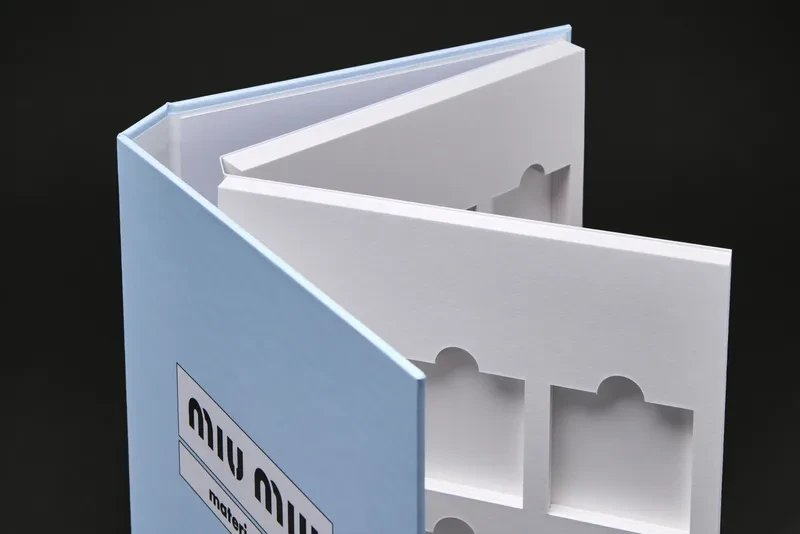
The Italian workshops with which Maestro has collaborated for years master all the finishing techniques required by the industry: hot foil stamping, embossing, debossing, spot varnishing, custom binding, and high-definition offset printing. Photogravure is handled there with the same level of color accuracy as in France. And the geographical proximity to European markets allows for shorter proof approval times, reduces back-and-forth communication, and ultimately minimizes print waste due to late corrections.
For an art director who fears creative loss between the mock-up and the finished product, or for a production manager who needs to ensure a launch on a fixed date, this organization offers a double guarantee: the artisanal quality expected by luxury brands and the responsiveness that only supervised European production can guarantee. Paper engineering, the choice of substrate, the optimization of paper weight to reduce the overall weight of the packaging without compromising mechanical integrity — all of this is worked on upstream, during a consulting phase systematically integrated into the process.
Certifications and documentation: what luxury buyers will demand in 2026
Certification is not an end in itself, but it has become the common language between suppliers and buyers of large groups. By 2026, a complete qualification dossier for eco-responsible luxury packaging must cover several complementary dimensions.
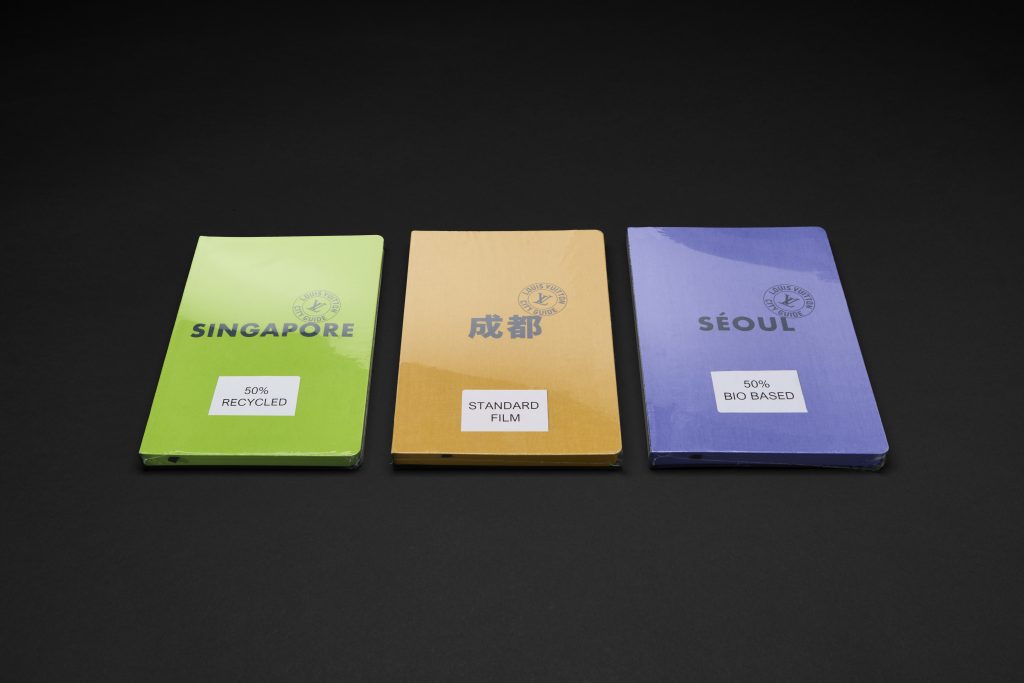
Material certifications (FSC, PEFC) attest to the sustainable origin of the fibers. Process certifications (ISO 14001 for environmental management systems, Imprim'Vert for waste and hazardous product management) guarantee that production sites apply practices compliant with audited standards. A Carbon Footprint® or a simplified LCA of the packaging, carried out according to ISO 14040-14044 standards, makes it possible to quantify emissions and communicate them to the finance department or the CSR committee. Finally, supply chain traceability—that is, the ability to document all material and transport flows—has become an increasingly important requirement in calls for tenders from groups such as LVMH, Kering, and L'Oréal Luxe.
At Maestro, we support our clients in compiling these files, providing the necessary documentation at each stage: technical specifications for the equipment, site certifications, logistics data, and, when the project warrants it, the elements required to conduct a complete life cycle assessment. This approach applies equally to projects involving packaging than to the achievements of’edition High-end.
Take action from the briefing stage to reduce the carbon footprint of your packaging
Reducing the carbon footprint of luxury packaging isn't a matter of compromising between quality and environmental responsibility. It's a matter of organization, material selection, and control of the production chain. The dual production model we've practiced at Maestro since 1999 addresses this requirement structurally: by producing as close as possible to the markets, by physically supervising manufacturing at each site, and by documenting all flows to enable our clients to meet their own CSR obligations.
The initial consultation phase is the most effective for reducing a project's carbon footprint. It's at this stage that you can influence the choice of material, paper weight, format, finishes, and logistics. Waiting until the production phase to introduce environmental constraints severely limits your options and can generate additional costs. If you'd like to assess the carbon footprint of your next project and explore available solutions, we invite you to contact us. contact.
FAQ
Is production in Italy really lower carbon than production in Asia for packaging intended for the European market?
For orders destined for distribution in Europe, yes. Reducing transport distances mechanically decreases scope 3 emissions. Packaging produced in Italy and delivered to Paris travels approximately ten to twenty times fewer kilometers than packaging produced in China for the same delivery point. At equivalent quality, the logistical impact is therefore significantly reduced.
What is Scope 3 and why is it important for a luxury packaging buyer?
Scope 3 refers to indirect greenhouse gas emissions related to a company's supply chain, particularly the transportation of purchased goods. Under the GHG Protocol, large companies are increasingly required to measure and reduce these emissions, which means choosing suppliers capable of providing accurate logistics data and producing as close as possible to the destination markets.
Is post-consumer recycled (PCR) fiber compatible with the aesthetic requirements of luxury packaging?
Yes, to a large extent. Current paper and cardboard manufacturing techniques allow for the incorporation of high proportions of PCR fiber while maintaining the mechanical properties and surface finish required for high-end products. The choice of basis weight and substrate formulation is crucial and is made during the paper engineering phase, before production begins.
What is the Imprim'Vert certification and what does it actually guarantee?
Imprim'Vert is a French label awarded to printing companies that meet a set of environmental criteria: secure management of hazardous waste (inks, solvents, printing plates), absence of hazardous chemicals in emissions, and proper storage of risky products. It does not cover the entire value chain but serves as a reliable indicator of a production site's level of environmental maturity.
How to integrate a low-carbon approach from the initial briefing phase of luxury packaging?
The initial consultation phase is the most effective for reducing a project's carbon footprint. It's at this stage that you can influence the choice of paper stock, weight, format, finishes, and logistics. Waiting until the production phase to introduce environmental constraints severely limits flexibility and can generate additional costs. A partner like Maestro incorporates these trade-offs from the very first discussion on the project.
Does the AGEC law impose specific obligations on clients of luxury packaging?
The Anti-Waste Law for a Circular Economy mandates, among other things, reducing the weight and volume of packaging at the source, promoting recycled materials, and limiting the use of materials that are difficult to recycle. While it primarily targets consumer packaging, its principles are increasingly influencing the specifications of luxury brands, particularly under pressure from CSR departments and the extra-financial reporting requirements of listed companies.
In summary
Reducing the carbon footprint of luxury packaging production relies on structural choices rather than cosmetic adjustments. By combining rigorous material selection, eco-design from the outset, controlled printing processes, and a dual production model closely aligned with market needs, Maestro enables luxury brands to reconcile creative excellence, industrial performance, and documented CSR objectives.