
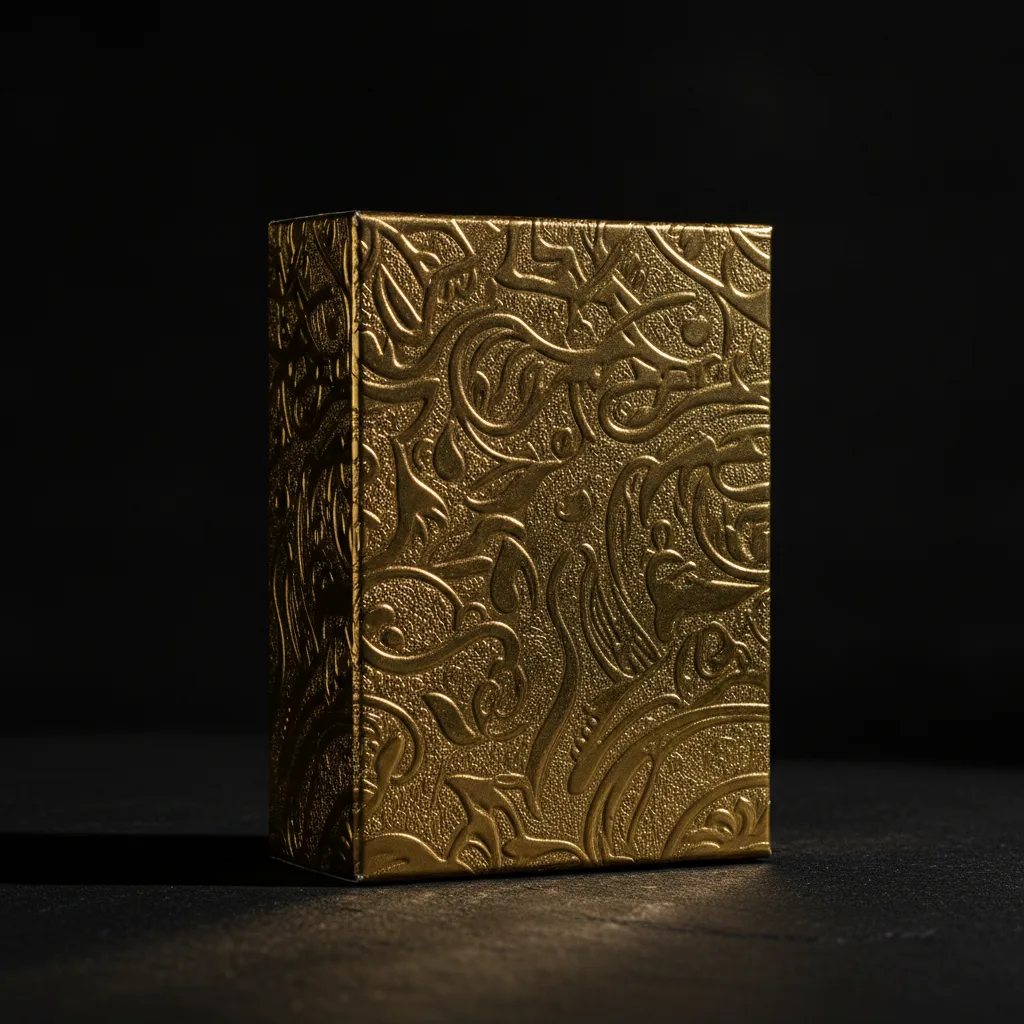
On a perfume box, a jewelry case, or spirits packaging, a few millimeters of relief can make all the difference: they transform a simple gold foil stamping into a veritable luminous sculpture. By combining hot stamping and embossing, the multi-level gilding creates a spectacular 3D effect perfectly suited to premium launches.
For a production manager, an art director or a marketing department, understanding the constraints of alignment, registration and choice of support is essential to ensure the final result; multi-level gilding requires meticulous preparation beforehand and rigorous machine control.
Multi-level gilding: creating depth and relief on a box using hot stamping
Reading time: ~14 min
- What is multi-level foil stamping in packaging?
- The gilding techniques used for multi-level printing
- Where and why to use multi-level foil stamping on your packaging
- Industrial process for successful multi-level gilding
- Advantages and limitations of multi-level gilding
- FAQ
- Synthesis
What is multi-level foil stamping in packaging?
Multi-level gilding is an embellishment effect combining metallic marking (usually hot-stamped) with embossing featuring several relief heights; the gilded visual therefore stands out in 3D from the surface of the box, with different layers of volume.
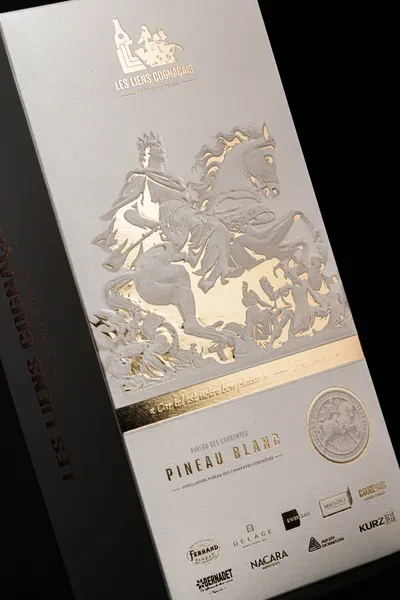
High-end gilding, embossing and embellishment
In the graphic arts industry, foil stamping and embossing enhance the perceived value of printed materials, whether it's a box, jacket, slipcase, or label. Hot foil stamping transfers a metallic film, embossing locally raises the paper using a male/female die, and multi-level effects work with different heights on the same design to highlight the main logo, subtle details, and micro-embossed textures.
Combined, these processes allow, for example, gilding a very domed logo and then, on the same box, adding a gold outline to a more discreet relief; the superimposition generates depth and plays of light.
What distinguishes multi-level gilding from simple gilding
Simple foil stamping is flat (only the thickness of the foil is felt) or, at best, combined with a single-level embossing. The multi-level version provides a structured 3D relief, accentuates reflections when the box is rotated, and offers a much more pronounced tactile experience; however, the paper engineering, tooling complexity, and registration requirements are greater.
The gilding techniques used for multi-level printing
Traditional hot foil stamping and multi-level embossing
The classic method involves a heated metal plate; a sheet of foil is placed between this plate and the cardboard, and then pressure transfers the film cleanly. A set of embossing tools is then added to create multiple layers of volume or a curved relief, all in one or more passes.
| Embossing tool type | Special feature |
|---|---|
| Simple embossing | A single level of relief |
| Embossed curved | Rounded relief, perfect for coats of arms |
| Multi-level embossing | Several steps for a complex architecture |
Digital gilding and 3D varnish
Digital foiling does not use a printing plate: a selective varnish is applied, then a metallic film is pressed on and adheres only to the varnish. Combined with a thick 3D varnish, this solution is suitable for small runs, tests, or customizations, even if the resulting volume is less sculpted than with traditional multi-level embossing.
Where and why to use multi-level foil stamping on your packaging
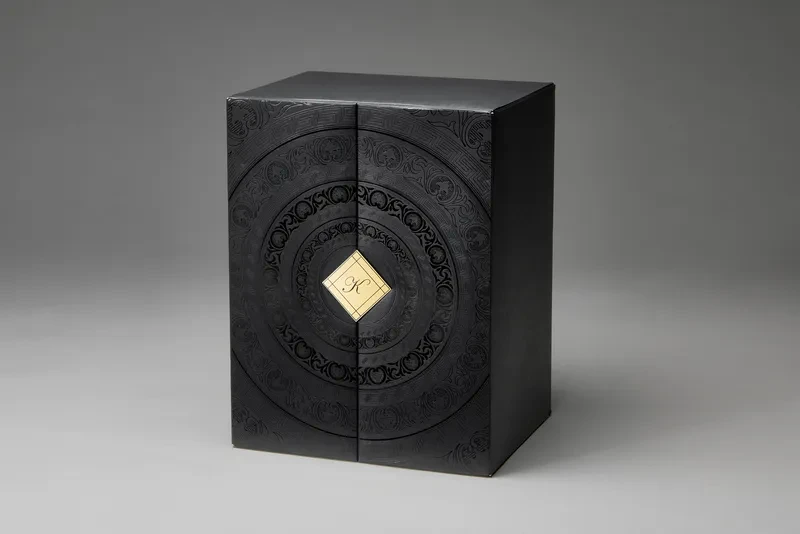
The technique is particularly evident in segments where packaging must convey the brand's value from the first visual and tactile contact: niche or high-end perfume boxes, bespoke spirits packaging (cognac, whisky, gin), jewelry boxes and cases, luxury cosmetic packaging, special editions and collector's sets.
Visually, the multi-level gilding creates a strong contrast between matte and bright metallic areas, adding depth and clearly prioritizing information. Tactilely, it enhances the opening ritual; the box is perceived as a treasured object, increasing its perceived value and justifying its price point.
Industrial process for successful multi-level gilding
A spectacular result requires a rigorous manufacturing chain, from pre-press control to online quality monitoring.
- File preparation and validation: vector pattern on dedicated layer, anticipated relief levels, pre-press check.
- Choice of support: cardboard structure, rigidity, porosity, surface treatments.
- Manufacturing of tools: engraved gilding clichés, male/female embossing dies.
- Printing of the main image: offset or high-end digital printing before embellishments.
- Hot stamping and embossing: temperature, pressure and speed adjustment according to cardboard and foil.
- Online quality control: alignment and marking checked continuously, very low tolerances.
Positioning and alignment constraints
Every tenth of a millimeter counts: the embossing die must fall precisely under the gold foil area, the foil stamping must align perfectly with the printing, and the cardboard must not warp under heat and pressure. This underscores the importance of physical supervision in the factory, both in Italy and China, to adjust settings in real time and ensure consistent quality.
Advantages and limitations of multi-level gilding
Advantages: maximum visual impact on the shelf, strong distinctiveness for a niche fragrance or collector's set, tactile effect consistent with the luxury positioning, and compatibility with other embellishments (selective varnishing, micro-embossing, soft-touch lamination). Limitations: higher tooling investment than simple foil stamping, longer development times, very fine patterns sometimes difficult to reproduce, and risk of decorative excess if the design is not hierarchically structured.
FAQ
What information should I provide for a quote?
Specify the box or case format, type of cardboard, surface finish envisaged, gold foil design in vector file, approximate number of relief levels, print run and delivery area; a technical manufacturing office will then be able to recommend the most effective hot foil/embossing combination.
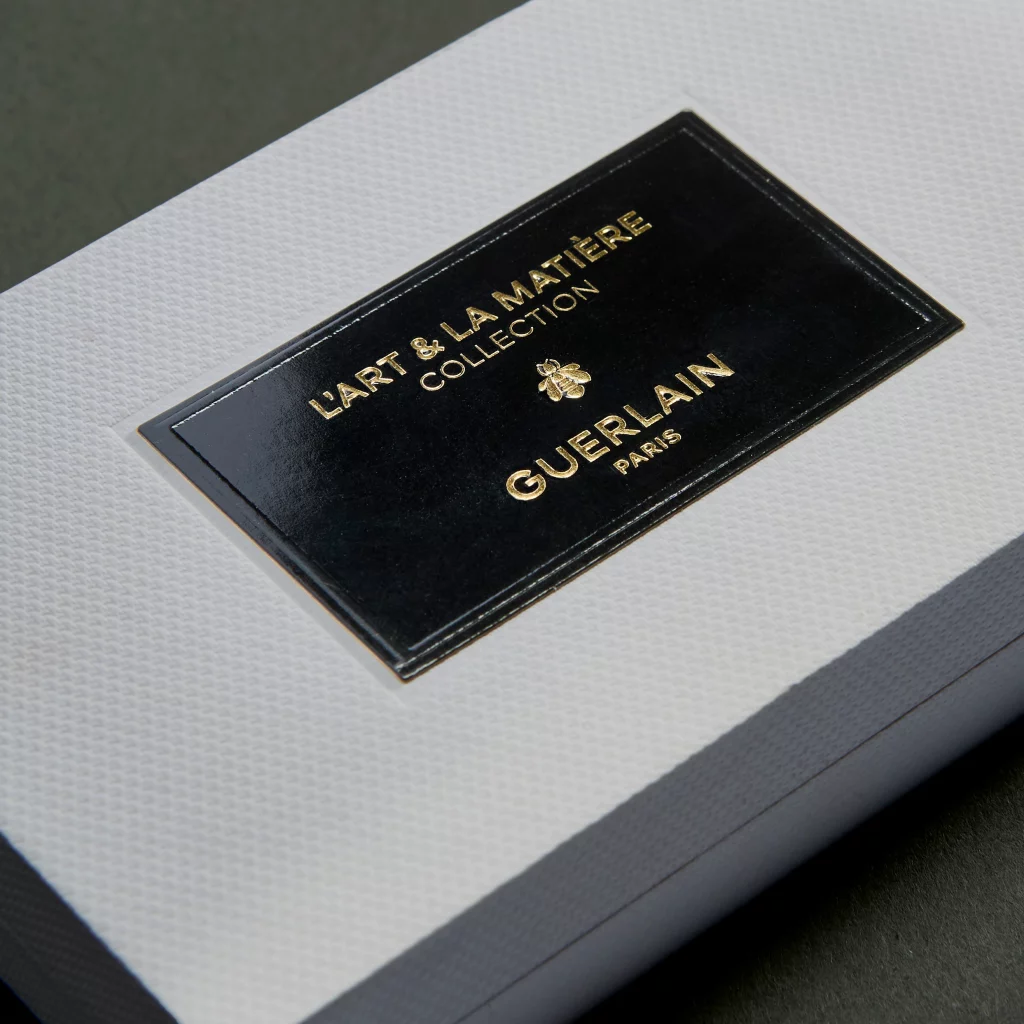
What types of visuals are best suited to multi-level gilding?
Strong identifying elements—logo, monogram, coat of arms, signature, stylized geometric or floral motifs—work best. Lines that are too thin or large solid shapes require simplification to ensure legibility and impact once the embossing is applied.
Is multi-level gilding compatible with a CSR approach?
Yes, if FSC-certified cardboard, low-impact foils, and a traceable production chain are used. Luxury groups require clear supply chain documentation; a partner who controls quality in the factory and centralizes traceability facilitates supplier qualification with purchasing and CSR teams.
Synthesis
Multi-level gilding is one of the most powerful techniques for adding depth, light, and dimension to a luxury box. When mastered, it transforms simple packaging into a true branded object, while relying on essential technical precision; for concrete examples, explore the work of Maestro Gestion Édition on [website/platform name]. maestro-manufacture.com.