
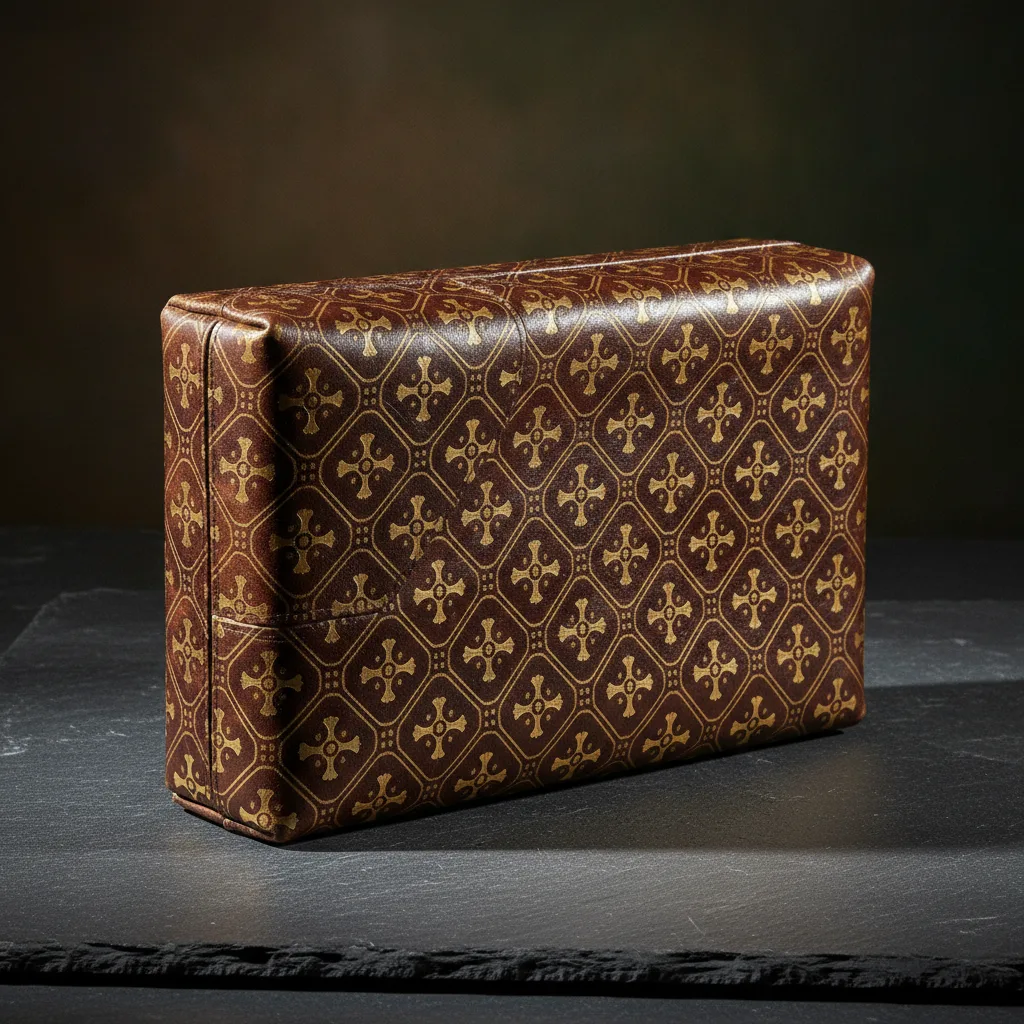
In jewelry, watch, or leather goods packaging, every detail counts. Hot foil stamping on leather packaging is one of those finishing touches that transforms a simple box into an object of desire. When mastered, this technique allows for the branding of a leather, imitation leather, Alcantara, or fabric case with near-jewelry-like precision. Conversely, an incorrectly set temperature or a poorly chosen foil quickly results in a crushed logo, smudges, or burnt leather.
This article provides you with a clear framework for communicating effectively with your manufacturing office or your workshop (temperature, pressure, foil selection, substrate preparation) and ensure the success of your upcoming launches. The goal: to achieve a perfectly clean, repeatable hot stamping on leather that meets the demands of the luxury market.
Hot stamping on leather packaging and flexible materials: techniques and precautions for a flawless result
Reading time: ~15 min
Summary
- What is hot foil stamping on leather for packaging?
- How does hot stamping on leather work in practice?
- Foil selection and support preparation
- Applications in jewelry, watch and leather goods packaging
- Advantages and limitations of hot stamping on leather for brands
- FAQ
- In summary
What is hot foil stamping on leather for packaging?
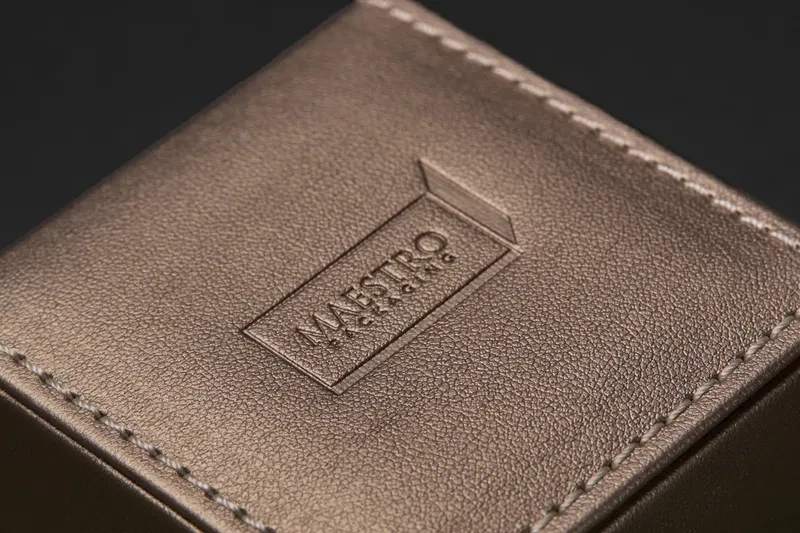
Hot stamping, also known as foil stamping, is a finishing technique that transfers a metallic or pigmented film onto a substrate using a combination of heat and pressure applied by an engraved die. In the case of leather or imitation leather packaging, this film is applied to the surface of a box, rigid case, or leather label to imprint a logo, monogram, serial number, or decorative motif.
The key elements of the process
The process relies on three main components: 1) an engraved die (often made of brass or magnesium) heated to a controlled temperature; 2) a foil, a multi-layered tape composed of a polyester backing, a metallic or pigmented layer, and a heat-sensitive adhesive; 3) the material to be marked (full-grain leather, imitation leather, Alcantara, coated fabric, or sheathed cardboard). Under the combined effect of heat and pressure, the adhesive melts, and the pigments detach from the polyester backing to fuse with the leather surface, creating a clear and lasting mark, with or without embossing. It is also possible to create a blank mark, without foil, which creates a subtle indentation in the leather.
Hot stamping, cold stamping and other finishes
| Technical | Principle | Strengths | Boundaries |
|---|---|---|---|
| Hot stamping | Foil transfer by heat & pressure | Intense metallization, fine detail, possible relief, high durability | Cliché investment, fine adjustments |
| Cold marking | Heat-free film transfer using adhesive | Reduced thermal constraints, integrable into printing workflows | Less chiseled finish on traditional leather |
| Screen printing / UV printing | Ink deposition | Colorful palette, good opacity | Less metallic shine |
| Embossing without gilding | Relief by matrix and counterpart | Subtle tactile effect, tone on tone | No metallic coating, reduced visibility |
How does hot stamping on leather work in practice?
The main stages of the process
- Preparing the image: the logo or design is engraved onto a metal plate adapted to the level of detail required.
- Machine and support leveling: the case or leather element is positioned on a stable surface to ensure even pressure.
- Foil placement: the decorative ribbon is unrolled between the heated cliché and the surface to be marked.
- Parameter adjustment: temperature, pressure and contact time are set by tests on material drops.
- Marking: the heating block descends to "embrace" the leather, the heat activates the adhesive and the pressure ensures the transfer.
- Foil removal: upon retrieval, the polyester backing peels off, leaving only the decorative layer on the leather.
The right settings for leather, imitation leather, Alcantara and fabric
For classic leather and gold foil, the temperature is generally between 110°C and 130°C with very short contact times. For large designs, some equipment can reach temperatures of 200-250°C, always adjusting the pressure and time accordingly. For soft materials such as imitation leather, Alcantara, or fabric, the heat is increased gradually to avoid hardening or surface burning, and the pressure is adjusted accordingly. A preliminary dry run can help structure the fibers of thick fabrics. In all cases, precise temperature control and a perfectly stable contact surface remain essential for repeatability.
Foil selection and support preparation
Selection of foil suitable for luxury packaging
Manufacturers offer specific ranges for leather, imitation leather, and coated textiles. Consider the following: compatibility with the substrate (vegetable tanned, chrome, PU, PVC, Alcantara, textile); resistance to abrasion and creasing for frequently handled cases; level of gloss or matte finish (mirror gold for jewelry, satin gold for high-end leather goods); and any special effects (holographic, pearlescent, deep colors). For niche perfume packaging, warmer, satin-finish golds are often chosen to complement the leather's texture.
Preparation of leather and soft materials
The leather must be clean, dry, and free of grease. Faux leathers and coated textiles require careful dusting. On slightly textured surfaces, white printing before foil stamping creates a recessed area that protects the foil and improves logo legibility, ensuring a lasting finish even in retail stores.
Applications in jewelry, watch and leather goods packaging
Rigid cases and presentation boxes
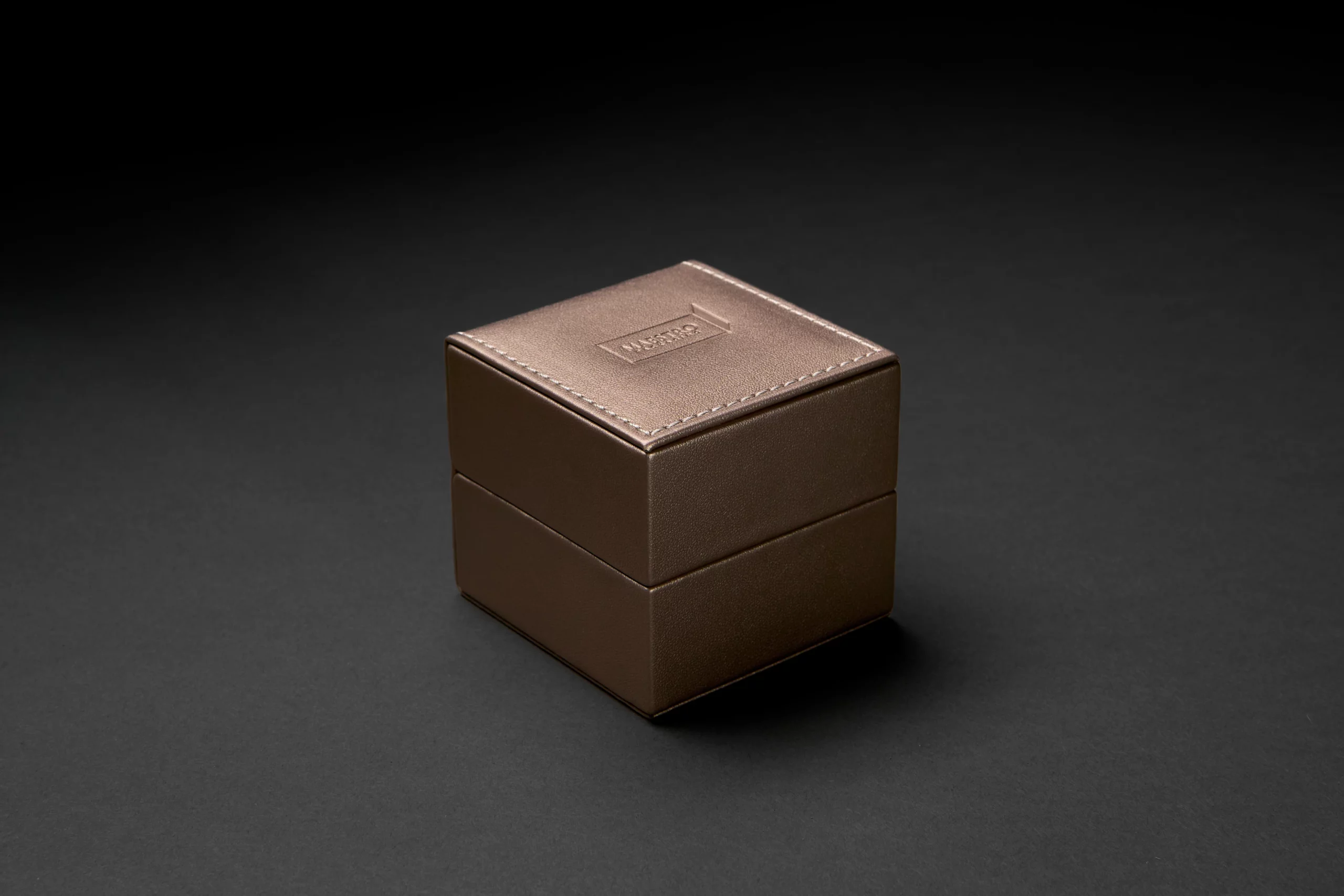
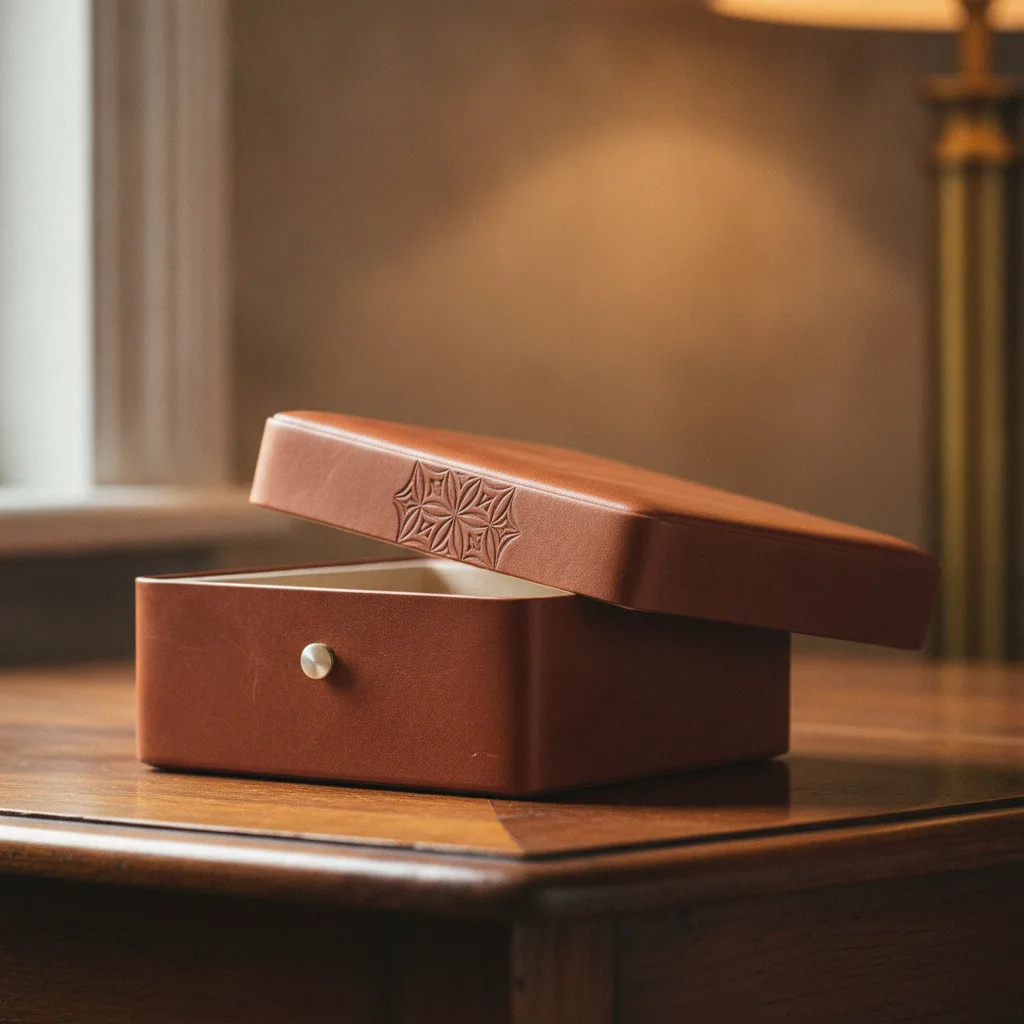
Common practices include a hot-stamped gold logo on the top of the leather-covered or imitation leather box, a discreet tone-on-tone signature inside the lid, and the marking of references or serial numbers on leather tags or tabs integrated into the packaging. The fine lines and small size of the lettering require excellent engraving and perfectly even pressure.
Leather labels and medallions for spirits and perfumes
This technology allows for the creation of leather medallions or collars embossed with gold or silver, labels affixed to wooden or cardboard boxes to provide a tactile detail, and gold leather bands encircling premium boxes. The embossing must remain stable despite the logistical and climatic constraints of distribution networks.
Leather goods accessories and cases
Consistency between the product and its packaging is paramount: the same branding on the bag and its box, hot-stamped leather badges or card holders slipped into the packaging. Gold foil then becomes the unifying element, reinforcing the brand experience.
Advantages and limitations of hot stamping on leather for brands
Key benefits
Ultra-premium perception: the combination of high-quality leather or imitation leather and glossy or satin gold foil immediately evokes luxury and enhances perceived value. Durability: the foil forms a compact layer that is highly resistant to friction, ensuring the logo remains legible throughout the box's lifespan. Exceptional detail: a precisely engraved die produces fine lines, sophisticated typography, and intricate emblems. Clean process: free of volatile solvents and VOCs, it easily integrates into a responsible packaging approach.
Points of vigilance
Tooling costs: each design requires a dedicated printing plate, which should be considered for very small production runs. Sensitivity to settings: an incorrect temperature-pressure-time combination can lead to unwanted shine, burning, or a lack of sharpness. Limitations on some very flexible textiles: durability may be less than that achieved on well-prepared leather or imitation leather.
FAQ
What temperature is best for hot stamping on luxury leather?
For standard leather and a suitable foil, the temperature range is most often between 110°C and 130°C with a very short contact time. For large-format photos or specific equipment, higher temperatures are possible, but always only after testing on actual material; the balance between temperature, pressure, and time remains crucial.
Can hot stamping be done on imitation leather and Alcantara?
Yes, provided you use foils formulated for synthetic materials and carefully control the temperature. The process is generally carried out at a lower temperature than with natural leather, and the pressure is adjusted to avoid excessive shine or grain distortion. Tests on scraps are essential before production.
Is hot stamping on leather compatible with an eco-responsible approach?
The process does not use volatile solvents; the focus is rather on the choice of materials (leathers from committed tanneries, recycled or bio-based imitation leathers, FSC-certified cardboard) and the traceability of the entire printing chain. A partner capable of documenting materials, foils, production sites, and quality controls facilitates the preparation of CSR (Corporate Social Responsibility) documentation.
In summary
When mastered, hot foil stamping on leather packaging is a powerful tool for branding jewelry, watch, spirits, or leather goods boxes with the precision and intensity of prestigious brands. The key lies in anticipating the technical parameters (substrate, foil, temperature, pressure) and choosing a partner who physically oversees the manufacturing process in close proximity to the workshops. For a sensitive launch or a limited edition, discover Maestro's technical manufacturing office approach and its portfolio of high-end packaging projects at [website address]. maestro-manufacture.com.