
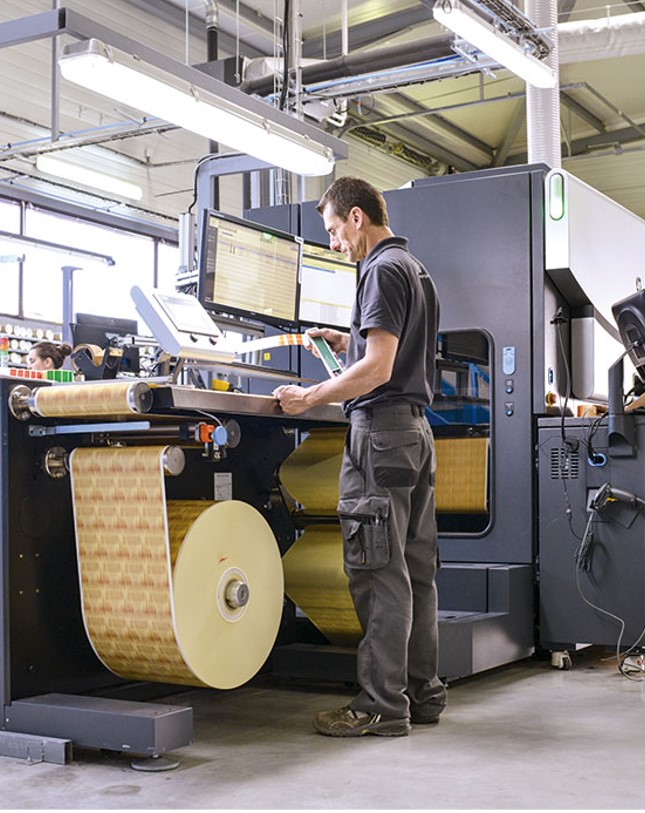
Adding a new packaging supplier to a major luxury group through a factory audit for luxury packaging certification is never a simple formality. Before a box, case, or sleeve can be mass-produced, the purchasing departments of LVMH, Kering, or Richemont impose a rigorous qualification process, based on documented evidence and on-site audits.
This process, generally referred to as a luxury packaging factory audit and certification, has become the essential filter between a purchase intention and a framework agreement. Understanding what these audits cover, which certifications are actually expected, and how to verify their validity is now a strategic skill for any purchasing manager, production manager, or marketing director leading a high-end packaging project.
Luxury packaging factory audit certification: methods and requirements
Reading time: ~10 min

- Summary in brief
- Why do luxury brands audit their packaging suppliers?
- Certifications to check first depending on the type of packaging
- How to verify that a factory certification is valid and covers your products
- What to check during a field audit in a high-end packaging factory
- Warning signs that should stop a supplier qualification
- How Maestro meets the audit and certification requirements of large groups
- Qualifying a luxury packaging supplier: the practices that make the difference
- FAQ
Summary in brief
Here are the main points of this article:
- Large luxury groups impose a supplier qualification framework structured around several types of complementary audits.
- ISO 9001, ISO 14001, FSC and BRCGS Packaging certifications are the most frequently required, but their actual scope depends on the certified perimeter.
- Verifying a certification involves checking its scope, expiry date and the exact identity of the establishment concerned, not just a logo.
- The field audit assesses actual industrial capacity, non-conformity management and batch-by-batch traceability.
- Certain warning signs should lead to the immediate suspension of a supplier's qualification.
- Maestro meets these requirements by combining a physical presence in the factory, complete CSR documentation and control of the graphic chain from end to end.
Why do luxury brands audit their packaging suppliers?
To mitigate reputational and regulatory risks
A luxury brand's reputation is also shaped by the customer's hand, the moment they pick up a box or tear open a piece of tissue paper. A flaw in the finish, a color variation between batches, cardboard with an untraceable forest origin: each of these deviations can generate an immediate reputational risk or a regulatory non-compliance that is difficult to justify to the executive committee. This is why the purchasing departments of large groups have progressively transformed supplier qualification into a structured, documented, and periodically renewed process.

This luxury packaging factory audit goes beyond simply verifying that a factory is clean and well-organized. It aims to ensure that the manufacturer possesses the systems, skills, and evidence that guarantee consistent visual appearance batch after batch, complete material traceability, verifiable social and environmental compliance, and a genuine industrial capacity to meet the requirements of the luxury packaging specifications. These four dimensions are assessed in a complementary manner; one cannot replace the others.
Certifications to check first depending on the type of packaging
Not all certifications have the same scope or relevance depending on the product manufactured. A manufacturer of cardboard boxes for perfumery is not subject to the same standards as a food-contact packaging workshop. The following table presents the main certifications encountered in supplier qualification files for luxury packaging, along with their purpose and priority scope.

| Certification | Main object | Priority scope | Reference body |
|---|---|---|---|
| ISO 9001 | Quality Management | All types of packaging | Bureau Veritas, AFNOR, TÜV |
| ISO 14001 | Environmental management | All types of packaging | Bureau Veritas, AFNOR |
| FSC (Forest Stewardship Council) | Paper and cardboard fiber control chain | Paper packaging, cardboard, cases, boxes | FSC International |
| BRCGS Packaging Materials | Packaging material safety | Food, cosmetic, and pharmaceutical packaging | AFNOR Certification, DQS France |
| ISO 15378 | Good manufacturing practices for pharmaceutical packaging | Primary pharmaceutical packaging | Bureau Veritas, TÜV |
| FSSC 22000 | Food supply chain security | Food contact packaging | FSSC Foundation |
| BSCI / SMETA | Social compliance and working conditions | International sourcing, production in Asia | Amfori, Sedex |
| WRAP | Social and environmental compliance | Textile and packaging production in Asia | TÜV France |
It is important to emphasize that none of these certifications is universally mandatory. Their requirement depends on the target market, the nature of the final product, the distribution channel, and each group's specific CSR policies. A savvy buyer doesn't simply tick a box; they analyze the relevance of each certification in relation to the scope of production in question.
Good to know — The FSC does not certify a product but a chain of custody. It is essential to verify that the manufacturer holds an FSC Chain of Custody (CoC) certificate covering the products purchased before placing any order. cardboard or paper packaging claiming this origin.
How to verify that a factory certification is valid and covers your products
Displaying a certification logo on a website or in a sales document proves nothing in itself. Verifying a packaging factory certification requires a three-step supplier due diligence process.
Step 1 — Direct Document Verification
It is essential to request the original certificate, not a poor-quality scanned copy, and to verify the certificate number, the exact name of the certified establishment, the expiry date, and the scope of certification. This scope, or certified area, specifies the activities, sites, and products covered. A manufacturer may be ISO 9001 certified for its offset printing facility but not for its finishing or cutting facility. This distinction is often overlooked in initial qualification applications.
Step 2 — Verification with the third-party certification body
The public databases of FSC, BRCGS, or ISO make it possible to confirm in a few minutes that a certificate is active, that it has not been suspended, and that the displayed scope corresponds to what the supplier claims. checking the certificate's expiry date is a basic precaution that too few buyers apply consistently.
Step 3 — Document review prior to the site visit
Before visiting a factory, purchasing teams from large companies typically request a set of documents: reports from recent certification audits, a history of supplier non-conformities and associated corrective action plans, technical data sheets for the materials used, proof of batch-by-batch traceability, and laboratory test results for inks and materials. This documentary review helps identify potential risk areas even before entering the factory.
What to check during a field audit in a high-end packaging factory
Quality organization and process control
The on-site audit is the step that distinguishes a serious qualification from a simple paper review. It involves assessing the supplier's actual industrial capability, that is, their concrete ability to produce according to the brand's requirements in a stable and repeatable manner. Here are the main control points to cover during a quality audit visit to a printing plant or packaging workshop.
The auditor first examines the supplier's quality management organization: the existence of an identified quality manager, documented and effectively implemented procedures, a non-conformity management system with traceability of decisions, and operator training in high-end finishing standards. Next, the auditor verifies process stability: are machine settings recorded and reproducible? Are in-process controls performed at a defined frequency? Are samples stored and traceable?
Material traceability is a key focus in luxury packaging. For each batch of cardboard, paper, or finishing material, the auditor verifies that the origin is documented, that the FSC chain of custody is maintained if claimed, and that the inks used comply with the brand's requirements, particularly regarding the absence of regulated substances. The consistency of visual rendering between two successive print runs is also assessed, as this is often where luxury brands have suffered the most costly setbacks with unaudited suppliers.
Key points to remember — An effective on-site audit typically lasts a full day. Less than four hours on-site is insufficient to properly assess the industrial capacity, non-conformity management, and material traceability of a high-end packaging workshop.
Warning signs that should stop a supplier qualification
Some situations observed during a social audit of packaging supplier or a field audit should lead to the immediate suspension of the referencing process, regardless of the supplier's commercial attractiveness.
A certificate whose scope doesn't cover the purchased products is the first red flag that should never be ignored. A manufacturer might present a valid ISO 9001 certificate that only covers its administrative activities or main site, while production takes place in a secondary, uncertified facility. Lack of transparency in subcontracting is a related red flag: if the supplier cannot clearly identify which production steps are carried out internally and which are outsourced, batch-by-batch traceability becomes impossible to verify.
The absence of a history of non-conformities is paradoxically a warning sign. A workshop that has never recorded a non-conformity likely lacks an effective detection system, which is more concerning than a well-documented list of non-conformities with their corrective action plans. Finally, the inability to provide complete CSR documentation, including carbon footprint assessments and evidence of social compliance, is now a disqualifying factor for inclusion in groups subject to CSR roadmaps mandated by their management committee.
How Maestro meets the audit and certification requirements of large groups
Maestro positions itself as a technical manufacturing office, neither a simple broker-intermediary nor an anonymous industrialist. This positioning has direct implications for its ability to meet the requirements of luxury packaging factory audit certifications from purchasing departments.
The physical presence of our teams in the factories, both in Italy and China, on the relevant projects, is the primary differentiating factor. Where an intermediary transmits documents without on-site verification, we conduct in-process control, allowing us to anticipate technical incompatibilities before they lead to non-conformities. This direct supervision applies to the entire process, from paper engineering to logistics, including photogravure and high-end finishing. You can consult our approach to the double supervised production to better assess our ability to meet your qualification requirements.
Our mastery of the entire graphic chain allows us to provide buyers with traceable and auditable documentation at every stage: material datasheets, FSC certificates with verified scope, production reports, and proof of social compliance for international productions. This turnkey documentation directly facilitates the supplier qualification file that our clients must compile internally for their purchasing departments and CSR committees.
For purchasing managers who oversee annual tenders or need to select a new supplier capable of meeting Green Premium criteria, we offer support from the initial briefing phase, with clear guidance on relevant certifications based on packaging type and target market. Our expertise covers both the perfume gift sets and cosmetic cases that the art editions and premium press kits. You can also view our projects on our gallery.
Qualifying a luxury packaging supplier: the practices that make the difference
Qualifying a luxury packaging supplier is a demanding process that requires technical, documentary, and field expertise that few stakeholders truly possess from start to finish. The luxury packaging factory audit for certification is not an administrative burden; it guarantees that the finished product will live up to the brand's reputation.
Verifying scopes, cross-referencing certifications with purchased products, auditing non-conformity management, and demanding complete material traceability are the practices that distinguish solid certification from poorly assessed risk. Maestro has built its legitimacy on these same requirements, applied to its own manufacturing chain since 1999. To discuss a qualification project, contact our team.
FAQ
What is the difference between a factory audit, a social audit, and a product certification?
A factory audit assesses a manufacturer's industrial capacity and quality systems. A social audit verifies working conditions and compliance with international standards such as BSCI or SMETA. Product certification attests that a specific product meets defined characteristics. These three processes are complementary and do not replace one another in a luxury packaging supplier qualification process.
Is FSC certification mandatory for a manufacturer of luxury paper or cardboard packaging?
While not legally mandatory, FSC certification has become a de facto requirement in most tenders issued by major luxury groups that have integrated CSR objectives into their purchasing policies. A manufacturer without an FSC Chain of Custody certificate cannot legally use the FSC label on the products it supplies, effectively excluding them from certain markets.
What documents should I request from a packaging supplier before adding them to my list?
The essential documents are the current valid certificates with their full scope, the reports of the latest certification audits, the history of non-conformities and associated corrective action plans, the technical data sheets of the materials and inks used, the evidence of batch-by-batch traceability, and the CSR documentation required by the specifications of the purchasing group.
How do major luxury groups assess the industrial capacity of a packaging supplier?
They typically combine a preliminary document audit, a site visit conducted by their teams or by a mandated third-party certification body, and a qualification period on test orders before any framework contract. The evaluation focuses on process stabilization, non-conformity management, consistency of visual appearance between batches, and the ability to meet guaranteed deadlines in international production.
What is BRCGS Packaging Materials and to whom does it apply?
THE BRCGS Packaging Materials This certification standard assesses the safety of packaging materials, particularly their suitability for contact with food, cosmetic, or pharmaceutical products. It is especially relevant for manufacturers of luxury cosmetic packaging and workshops producing packaging that comes into contact with regulated products. In France, AFNOR Certification and DQS France are accredited bodies authorized to issue this certification.
Can a supplier based in China meet the certification requirements of European luxury brands?
Yes, provided that the relevant certifications have been issued by internationally recognized bodies and that their scope covers the products and production site in question. The main difficulty lies in verifying actual compliance on-site, which requires a physical presence at the factory or the use of a manufacturing office with local teams capable of supervising production and documenting traceability.