
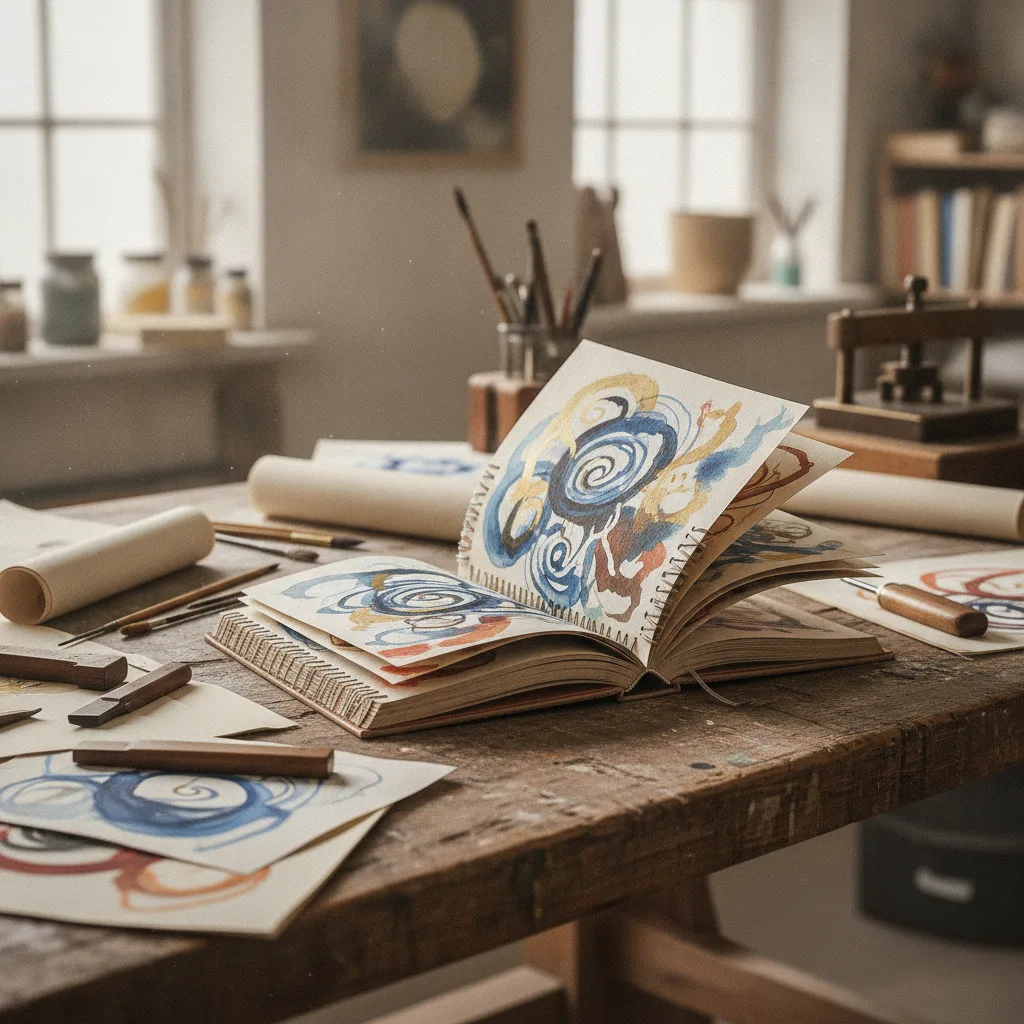
In contemporary artists' books, binding is no longer a mere technical detail; it becomes a visible graphic gesture that engages in a dialogue with the images and text. Japanese binding, Coptic binding, or Singer binding—these exposed stitches transform the book into an art object. Whether you're designing an artist's book, an exhibition catalog, or a numbered edition, the chosen technique influences both the reader's experience and industrial feasibility. This article provides an overview to help you select the most suitable solution for your next exceptional publishing project, especially if you're considering a Japanese binding for your artist's book.
Japanese binding, artist's book binding, Coptic binding, Singer binding: visible bindings that transform a book into an art object
Reading time: ~9 min
- Summary
- Japanese binding for artist's books: origins and principles
- Aesthetic advantages and uses in high-end editions
- Technical constraints of Japanese bookbinding
- Coptic binding: a perfect opening for art books
- Singer binding: the visible stitching in a fine line
- How to choose between Japanese, Coptic and Singer binding
- Technical considerations and file preparation
- FAQ
Japanese binding for artist's books: origins and principles
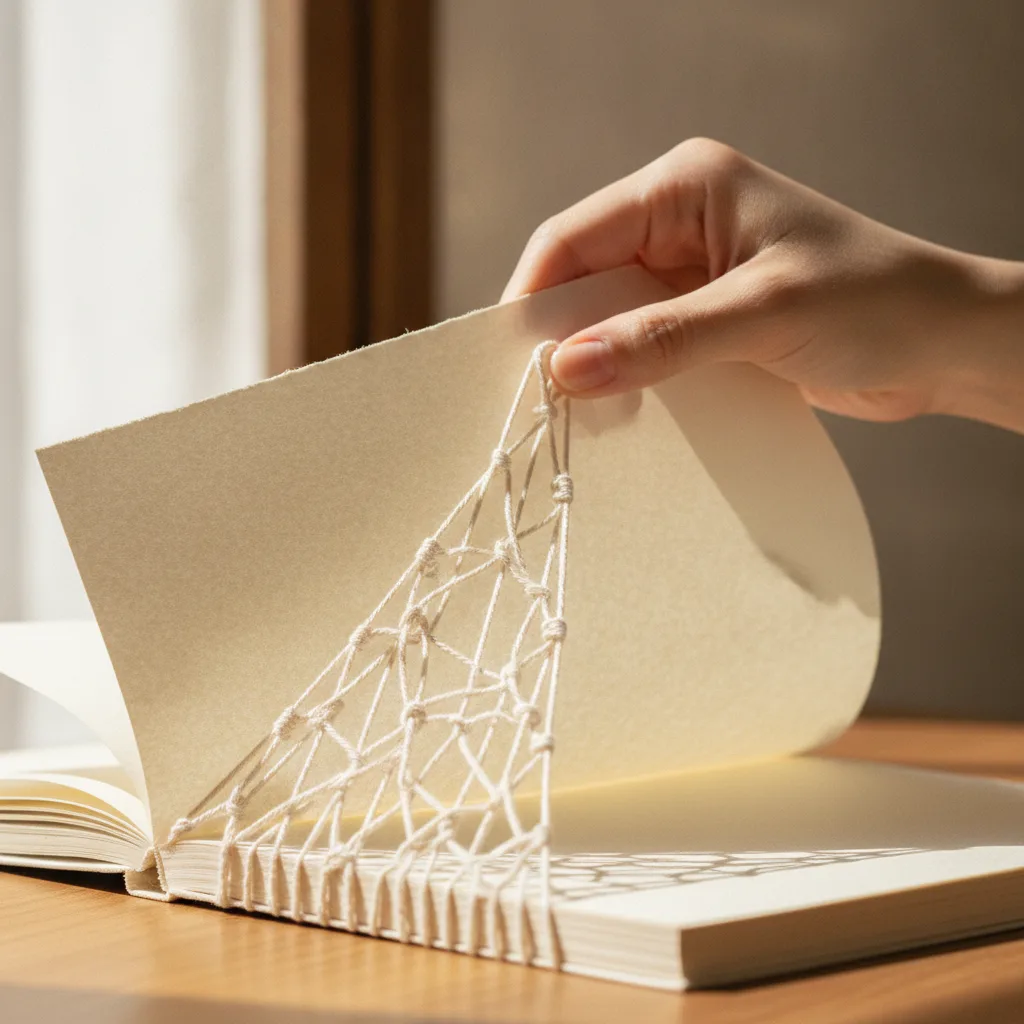
Japanese binding (or Japanese-style binding) is a binding with exposed stitching where the thread creates a pattern on the outer edge of the block, highly sought after as a Japanese artist's book binding. Unlike traditional binding, there is no glued spine or nested signatures: the sheets, folded or layered, are perforated near the edge and then sewn following a graphic pattern.
Inspired by oriental bookbindings – particularly the Yotsume Toji or Asa-No-Ha Toji motifs – it now appeals to artists, photographers and publishers of fine books for notebooks, portfolios, photo albums or artist's books in very limited print runs.
For an artist's book, Japanese binding has three major characteristics:
- a fully visible back where the thread becomes a strong graphic sign;
- a simple structure that easily accepts a variety of creative papers;
- a production compatible with limited print runs and numbered editions.
Aesthetic advantages and uses in high-end editions
A thread that becomes a graphic motif
The stitching appears on the spine in the form of loops, zigzags, or geometric patterns. The thread can echo a key color from the visual identity, contrast with the cover, or, conversely, create a subtle tone-on-tone effect. In art publishing, this stitching will extend an engraving or photographic motif, add rhythm to a series of images, or immediately signal that it is a unique, limited-edition item.
An image of masterful craftsmanship
Japanese binding conveys an impression of meticulous craftsmanship. For an exhibition catalog, portfolio, photography book, or numbered edition, this handcrafted dimension enhances the perceived value of the object and its connection to the artist's hand. Galleries and luxury brands frequently employ it for limited-edition catalogs, artist's books accompanying a series of works, or premium invitations.
Technical constraints of Japanese bookbinding
Number of pages and paper weight
Since all the sheets are perforated and sewn together near the edge, the overall thickness is crucial. Ideally, the book should have between 40 and 120 pages, depending on the paper weight. Thicker fine art or photo papers are acceptable, provided the number of sheets is reduced; the covers can be made of heavy card or reinforced textured paper.
Opening and lost zone
Because the thread runs just a few millimeters from the edge, the pages don't open fully. Therefore, avoid full-page images too close to the spine, allow for a generous inner margin, and favor airy layouts. Once these margins are incorporated, the book remains very pleasant to hold.
Durability and use
Made with clean drilling and sturdy thread (cotton, linen), Japanese binding withstands regular use but is less suitable for intensive consultation of technical manuals. It excels on artists' books, catalogues intended for collectors, or numbered editions.
Coptic binding: a perfect opening for art books
Principle of Coptic binding
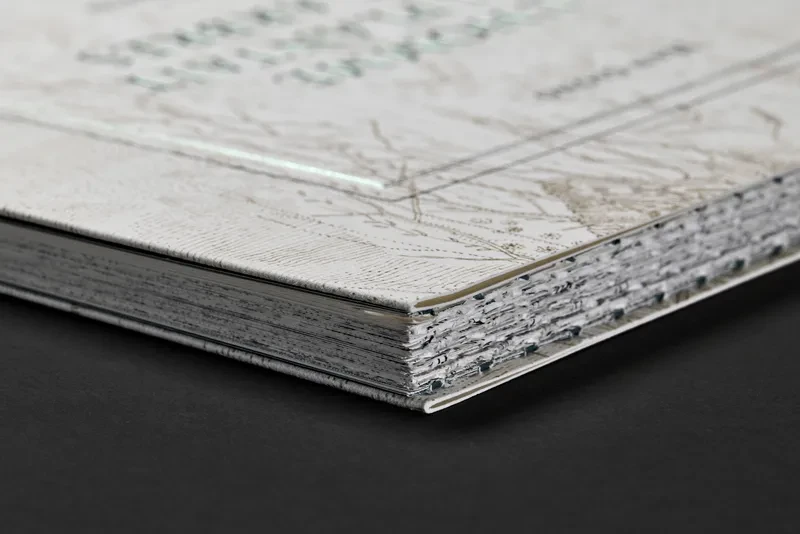
Coptic binding uses folded quires, sewn together and then attached to rigid boards. The exposed spine reveals a regular chain of stitching; the book opens completely flat and the edges of the quires create a layered effect.
Applications in art publishing
Particularly relevant for high-end sketchbooks, artist books with reproductions of drawings or catalogues requiring large double pages, it accepts volumes thicker than a Japanese binding while offering a very architectural character.
Singer binding: the visible stitching in a fine line
Principle of Singer binding
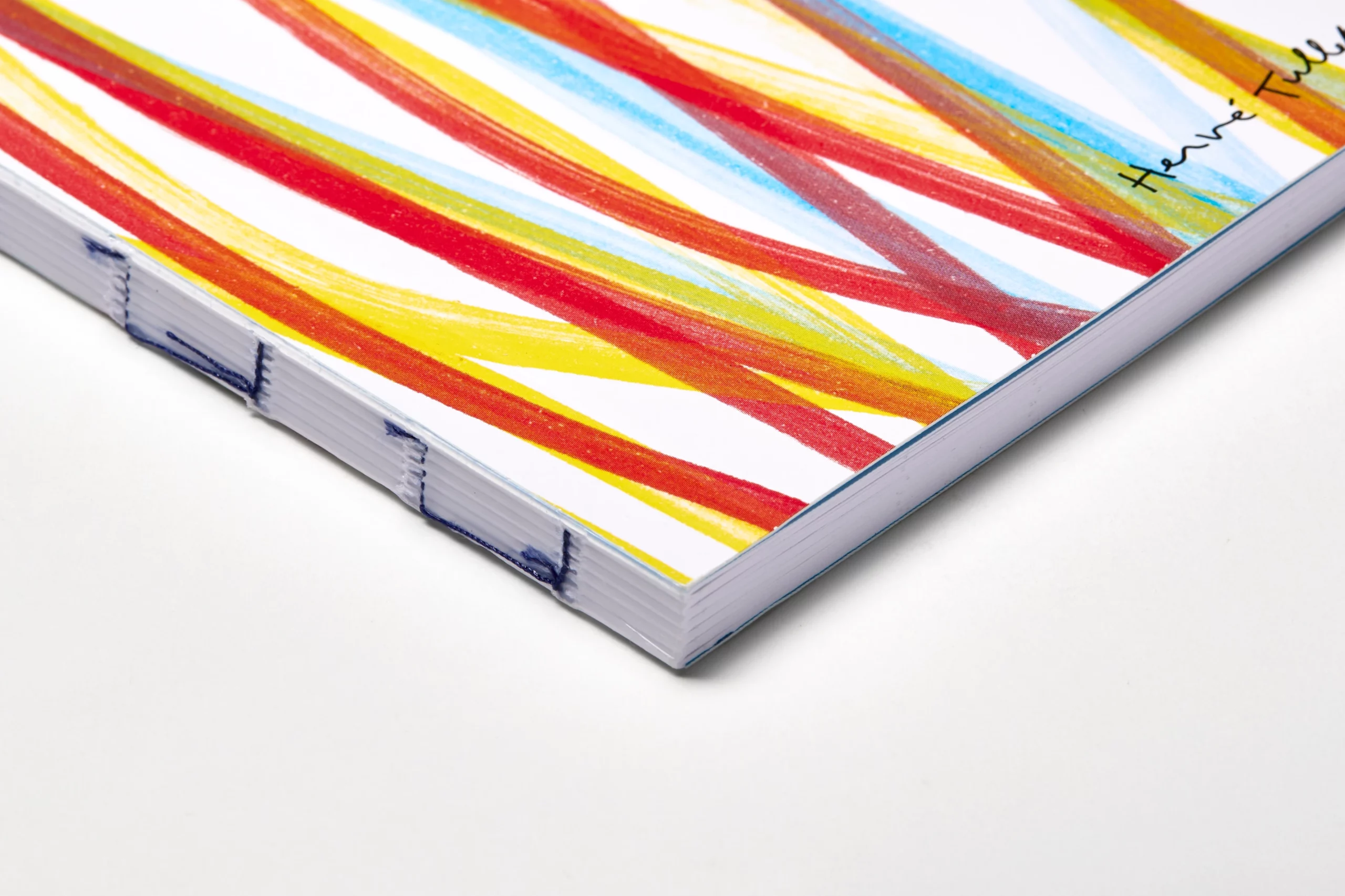
Inspired by machine stitching, Singer binding assembles the pages with a visible linear stitch along the fold or on the spine. Made with contrasting or tone-on-tone thread, it offers a clean, contemporary look and a good opening, often superior to stapling.
Key strengths
This technique provides an excellent compromise between readability, resistance and visual signature for jewelry brochures, high-end press kits or small, minimalist artist books, without the thickness constraints of Japanese binding.
How to choose between Japanese, Coptic and Singer binding
| Criteria | Japanese binding | Coptic binding | Singer binding |
|---|---|---|---|
| Visible stitching | Very decorative | Regular Channel | Thin line |
| Opening | Internal margin to anticipate | Flat | Good to very good |
| ideal volume | Late to medium | Medium to thick | Late to medium |
| Image conveyed | Graphic craftsmanship | Contemporary art object | Refined simplicity |
| Complexity | High-quality (large series) | High | Average |
| Typical projects | Artist's books, portfolios | Notebooks, art books | Catalogues, lookbooks |
In practice, for a limited edition artist's book, Japanese binding remains iconic; for a catalogue where double pages are essential, Coptic will be more relevant; and for a handy press kit, Singer offers a discreet and elegant signature.
Technical considerations and file preparation
Margins, page numbers and pagination
Include a generous inner margin on the Japanese binding side, plan for paginations adapted to the technique (joins for Coptic, simple blocks for Japanese) and test a paper mock-up before final validation.
Paper selection and compatibility
Select papers that are resistant to perforation and sewing, harmonize the weights of the interior and cover, and, in art publishing, favor fine art papers while validating the durability on a prototype. At Maestro Management Edition, These trade-offs are made upstream in order to reconcile creation, workshop feasibility and logistics.
FAQ
How many pages can an artist's book with Japanese binding contain?
Japanese binding remains a comfortable option for thin to medium-sized volumes. With 120-160 gsm paper, a block of approximately 40 to 120 pages is manageable. Beyond that, the stitching becomes more complex and the opening is less convenient; it is then necessary to use a lighter paper weight or consider Coptic binding.
What type of paper is best for an artist's book with Japanese binding?
Dense papers are best for showcasing images and engravings, but flexible enough for clean perforation: uncoated fine art papers, colored-through creative papers, or fine art photo papers, adjusting the number of pages accordingly. A prototype validates the weight/thickness combination.
Is Japanese binding suitable for frequent use or for a bookstore?
For collection purposes or respectful consultation, yes. For intensive shelf use or repeated handling, it will be more fragile than a perfect-sewn perfect-back binding or a well-made copta; it is therefore best suited to art editions, boxed sets or portfolios.
Conclusion: Choosing the ideal exposed binding for your artist's book
By treating these visible bindings as a graphic language, you transform a printed document into a true work of art. To discover concrete examples, explore the publishing world of Maestro Management Edition And his project gallery before structuring a tailored brief.