
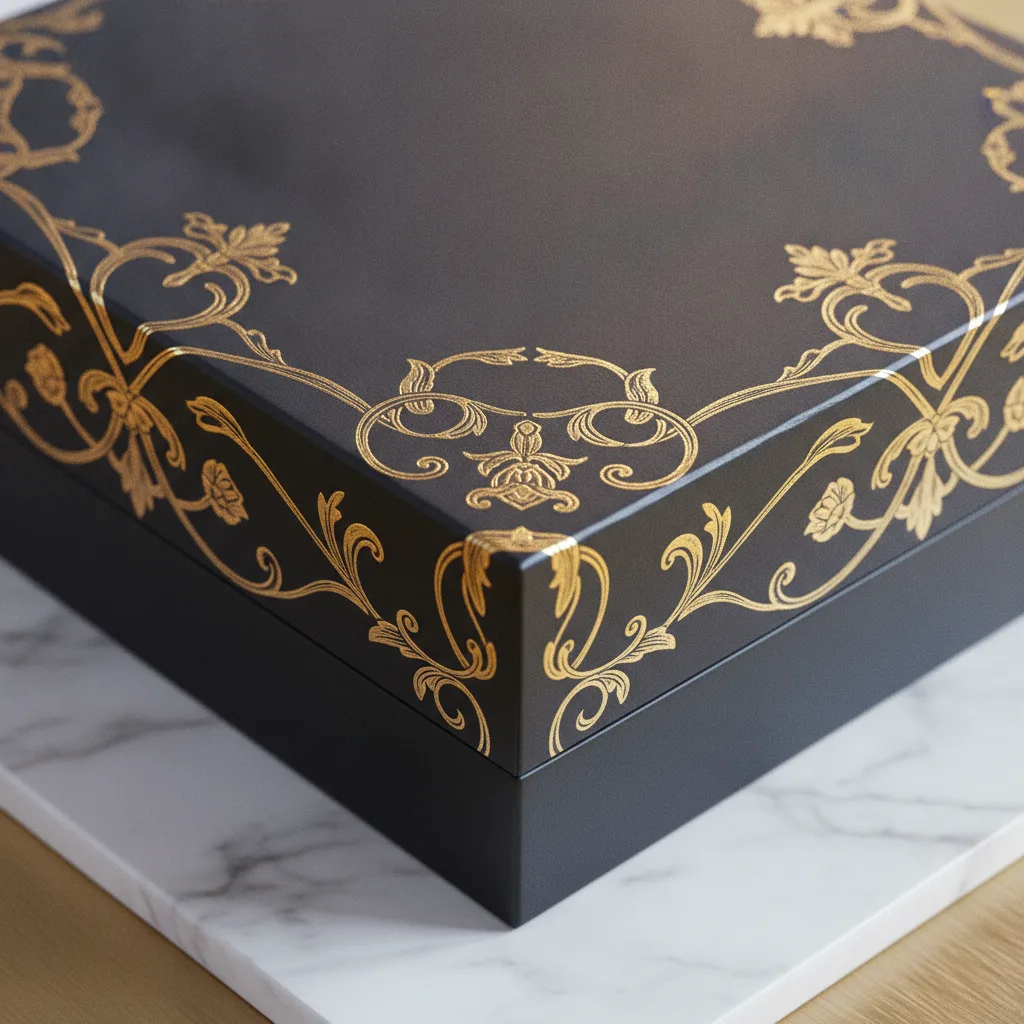
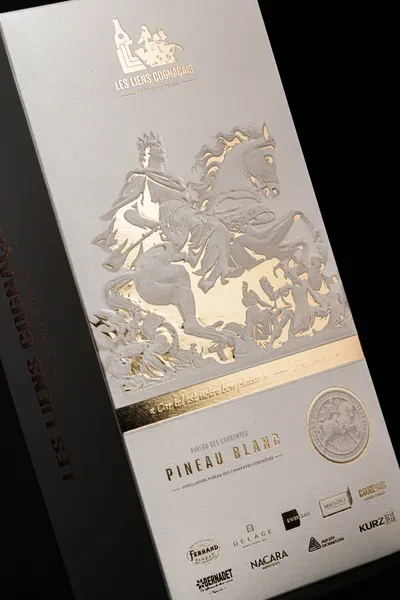
On a cognac box, a perfume case, or an art book cover, the foil stamping is often the first visual contact with your brand. It must therefore be spectacular, but also technically flawless. The choice between hot foil stamping and cold foil stamping isn't just about aesthetics: it impacts your costs, deadlines, and file and logistics constraints. The hot foil stamping vs. cold foil stamping question is therefore not insignificant. This article clearly compares the two processes to help you brief your team. manufacturing office with complete confidence.
Hot foil stamping vs. cold foil stamping: which process should you choose for your premium packaging?
Reading time: ~10 min
- Hot foil stamping vs. cold foil stamping: an overview
- Technical comparison, machines and supports
- Visual rendering and creative possibilities
- Costs, volumes and production times
- Choose according to the type of premium packaging
- Practical guide: preparing your gilding files
- FAQ
Hot foil stamping vs. cold foil stamping: an overview
Hot foil stamping, a traditional luxury technique, relies on the heat (up to 200°C) and pressure of an engraved metal die that transfers a metallic film onto the substrate, often creating a subtle tactile embossing. Cold foil stamping begins by applying a UV adhesive to the areas to be metallized; the metallic film is then pressed at room temperature in the continuous flow of an offset or flexographic press and can be overprinted in four-color process.
| Criteria | Hot foil stamping | Cold gilding |
|---|---|---|
| Principle | Heat + pressure engraved image | UV adhesive + pressure Cold transfer |
| Gloss/relief | Maximum brightness Possible relief | High gloss Flat surface |
| Ideal series | Small to medium-sized | Major series |
| Graphic effects | Logos, net nets | Gradients, flat tints, nuances |
| Supports | Papers, thick cardboard, leather | Coated paper/cardboard, labels |
Technical comparison, machines and supports
Detailed operating principle
In hot foil stamping, the combination of temperature and pressure softens the foil and activates it on the raised areas of the plate; the stamped area remains permanently bright and crisp. In cold foil stamping, an adhesive is printed and then UV-cured; the metallic film transfers only onto these still-sticky areas, at the same speed as the press.
Types of machines and their impact on production
Hot foil stamping requires a dedicated unit or specific post-press machine, along with additional setup and handling. Cold foil transfer can be integrated inline with offset or flexo presses, eliminating a step and ensuring consistent production rates.
Material and substrate compatibility
Thanks to its versatility, hot foil stamping can be applied to textured papers, laminated cardboard, leather, wood, or plastics. Cold foil stamping is best suited to coated papers and cardboards, as well as heat-sensitive labels; its use remains limited to traditional printed materials.
Visual rendering and creative possibilities
Shine, texture and perception of luxury
Hot foil stamping offers a jewel-like shine and the possibility of metallic embossing, ideal for crests or monograms. Cold foil stamping, which is smoother, excels for large solid areas, gradients, and complex plays of light, making it well-suited for perfume boxes or beverage labels.

Graphic constraints
In both cases, 100 % vector visuals, a dedicated spot color for overprinting, a minimum thickness of approximately 0.2 mm, and 0.4 mm spacing are required. Planning ahead from the graphic design stage avoids revisions during the proofing phase.
Costs, volumes and production times
Cost structure
Hot foil stamping involves a fixed cost for the printing plate, which is spread over the quantity and remains cost-effective for short to medium print runs focused on image quality. Cold foil stamping, which does not require a thermal printing plate, reduces fixed costs and, in-line, lowers the unit cost by up to 30% on very large print runs.
Typical volumes and recommended projects
Hot foil stamping: rigid cognac or niche perfume cases, jewelry boxes, limited editions requiring tactile relief. Cold foil stamping: folding cases and labels in very large series, requiring metallic flats, gradients, or consistent multi-format industrial application.
Choose according to the type of premium packaging
Rigid case and bell-shaped box
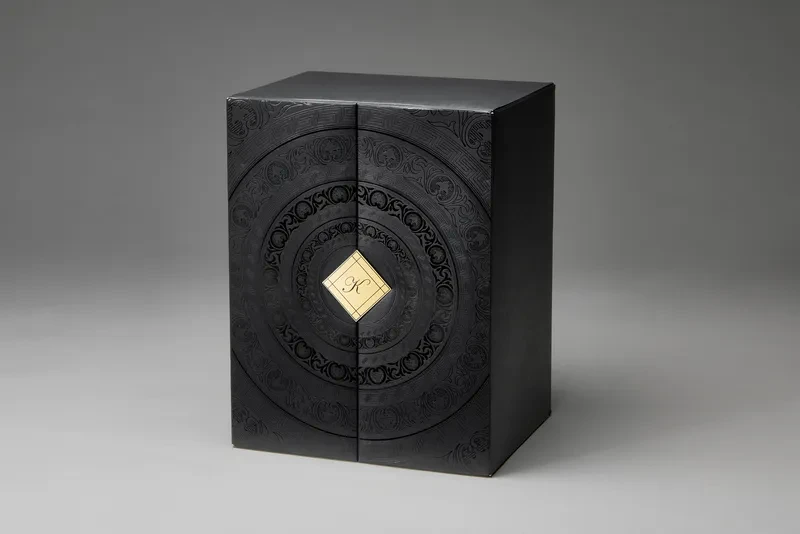
On laminated cardboard or textured art paper, hot foil stamping remains the standard for highlighting company names and branding elements. Cold foil stamping is reserved for very large volumes or extensive metallic backgrounds.
Folding case and sleeve
For a cosmetic or premium chocolate case: hot stamping if a few key elements need to be highlighted and the series remains moderate; cold transfer if large solid areas, gradients and industrial speed are desired.
Book cover, art catalogue, press kit
Hardcover art books often feature hot foil stamping for their collectible appeal. For brochures printed on a large scale, cold foil stamping becomes a suitable option for controlling costs and achieving metallic textured effects.
Practical guide: preparing your gilding files
Thorough file preparation is essential to ensure quality and deadlines; follow the checklist below.
- Define the gilding areas from the briefing stage and validate the minimum thicknesses.
- Create a "Gilding" layer placed above the other layers.
- Assign a dedicated spot color (e.g., "Foil_or") for overprinting.
- Vectorize all the gold elements, including the text.
- Allow for blemishes, safety margins, folds and edges.
- Provide an annotated template for complex boxes or assemblies.
FAQ
Hot foil stamping or cold foil stamping for niche perfume packaging?
For a niche fragrance, produced in short runs with high image requirements, hot foil stamping enhances the precious character and the relief of the logo. Cold foil stamping is only used when large metallic effects and industrial volumes are required.
Does the gilding adhere to recycled or textured papers?
Yes, primarily through hot foil stamping, where pressure and heat compensate for surface irregularities. A proof is still essential to approve the final result.
Is it possible to create gradients and complex images using gilding?
Hot foil stamping is preferred for clean shapes and vector designs. Cold foil stamping, combined with CMYK printing, on the other hand, allows for metallic gradients and highly detailed visuals.
Conclusion: Choosing between hot foil stamping and cold foil stamping for your premium packaging
To help you choose between these two approaches based on your media, markets, and CSR objectives, discover Maestro's manufacturing office approach, with a presence in factories in Italy and China, on maestro-manufacture.com.