
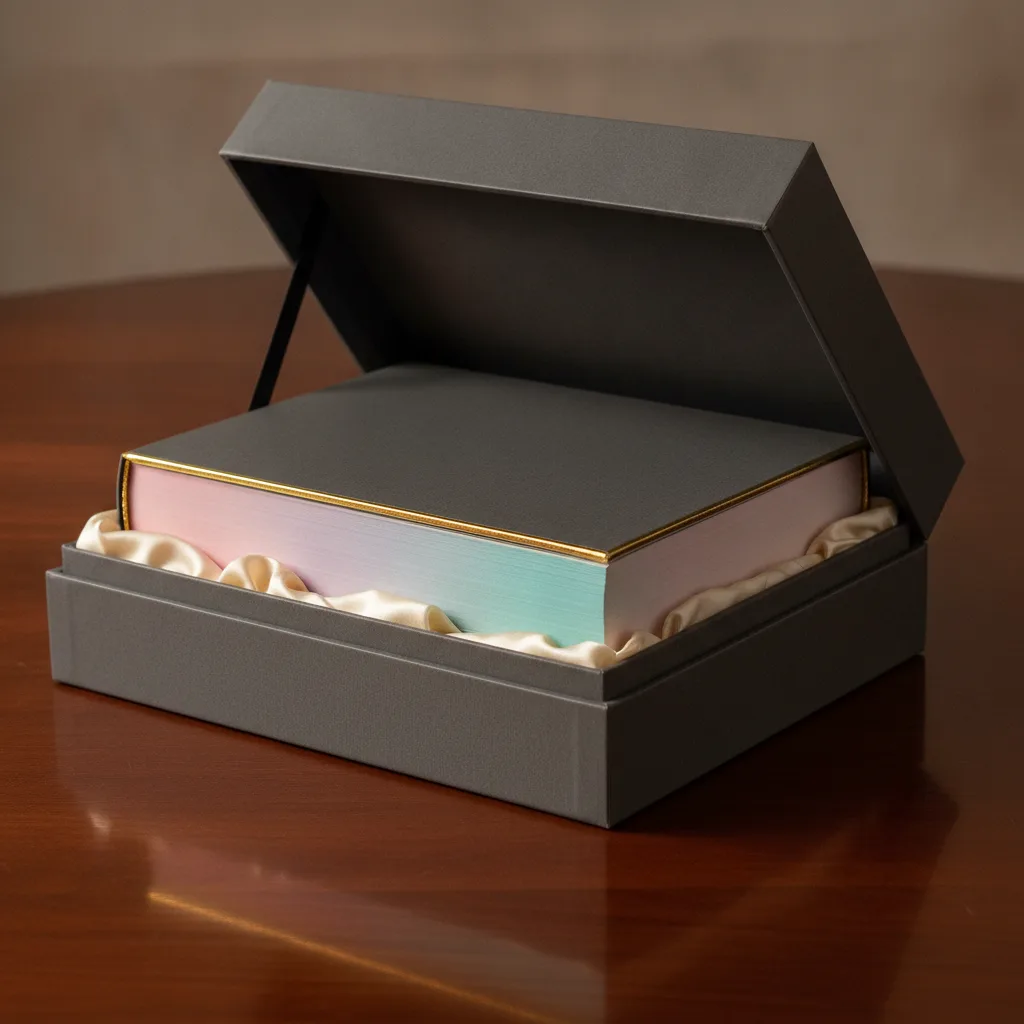
In high-end publishing and luxury packaging, first impressions often hinge on a detail. Colored edge painting is one of those micro-visual signatures that radically changes the perception of a book, catalog, or box.
In a colored line, a golden thread or a holographic effect, The object shifts from the status of a classic print to that of an object of desire. For luxury houses, art publishers or spirits and cosmetics brands, this finish is not a simple decorative effect: it is a territory marker, an element of recognition and a powerful tool to reinforce perceived value.
Maestro, as a technical manufacturing office, uses it as one lever among others to best articulate creation, paper engineering and custom production.
Edge painting, colored edges and colored spines: the detail that transforms a book or a box into an object of desire
Reading time: ~12 min
- What is edge painting or colored edge painting?
- Colored edge, painted edge, fore edge painting: what are the differences?
- On what surfaces can a colored edge be used?
- Possible effects and role in the visual signature
- How is a colored slice made?
- Best practices and limitations to be aware of
- Prices and criteria for choosing a service provider
- FAQ
What is edge painting or colored edge painting?
In printing, the’edge painting This refers to a finishing process where a color or effect (metallic, pearlescent, holographic) is applied to the edge of a printed document. In practice, this involves coloring the edges of the sheets after the block has been printed and trimmed.
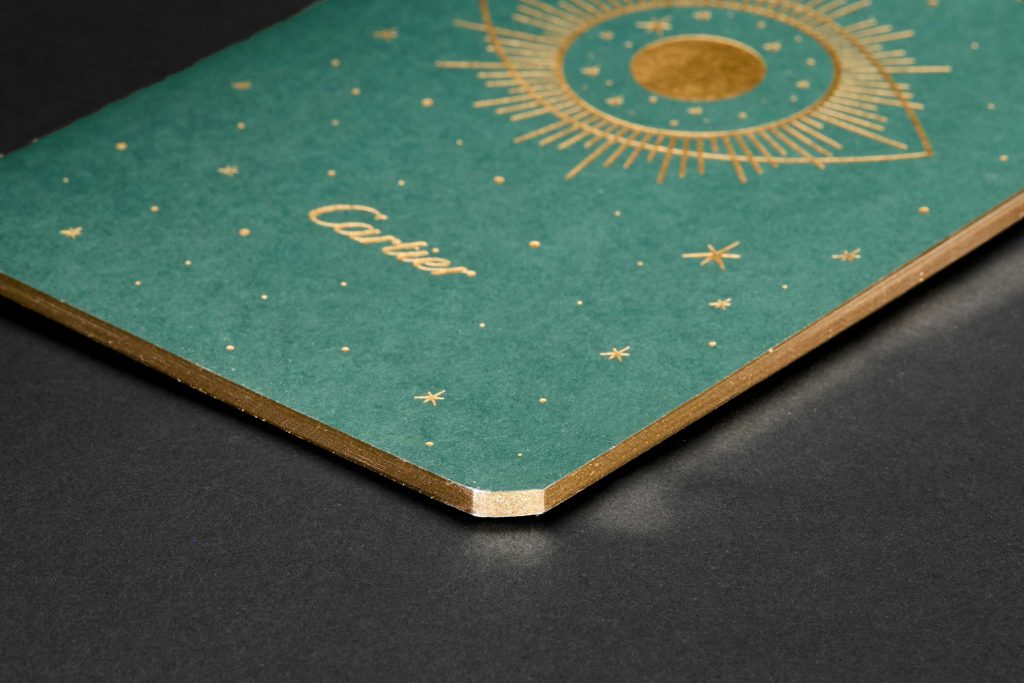
These are also called colored edges or painted edges. This finish is applied particularly to bound books; high-end cards; boxes and slipcases. In its contemporary use, colored edges are a controlled industrial or semi-artisanal process, not to be confused with historical fore-edge painting, which is more a matter of bibliophilic art.
Colored edge, painted edge, fore edge painting: what are the differences?
Colored slice or modern edge painting
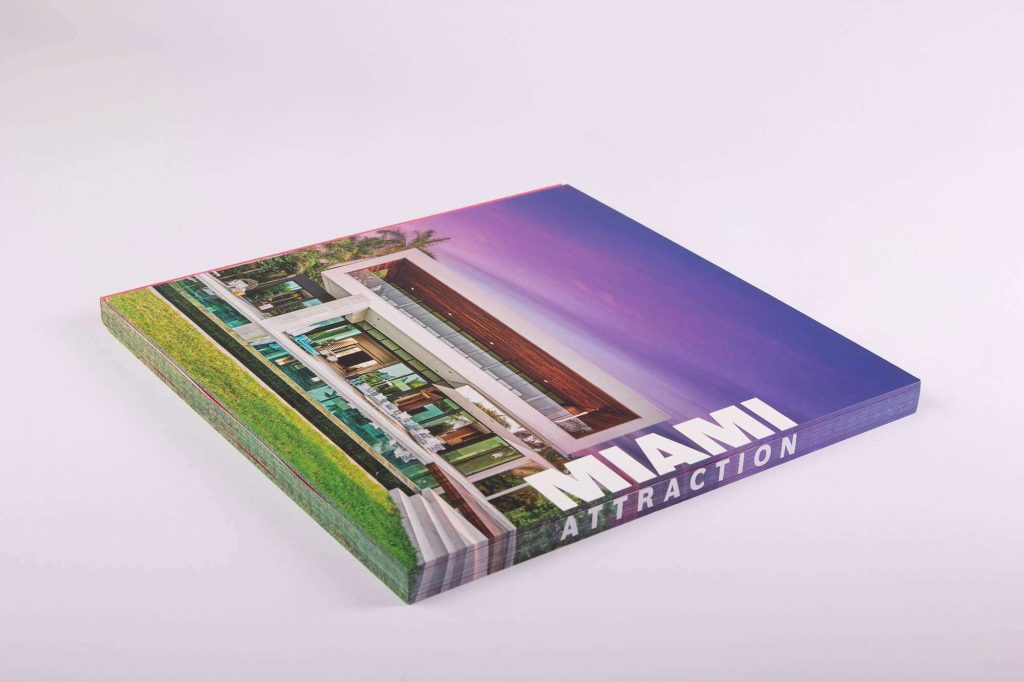
The most common term in the graphic arts industry: applying a solid color or effect to the edge of the paper, visible even when the book is closed. Main purpose: aesthetics and marketing (contrast, brand identity, a feeling of luxury).
Painted edges in the heritage sense
Inherited from bibliophilia: edges sometimes gilded or decorated with motifs, with a more artisanal approach, oriented towards conservation and ornamentation.
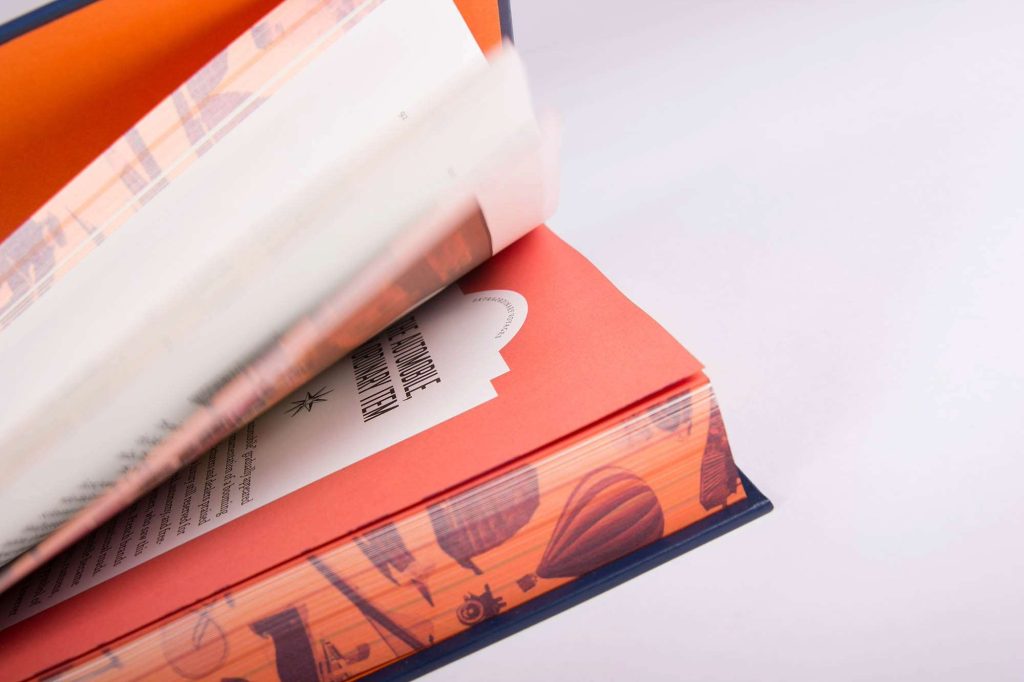
Hidden foreedge painting
A spectacular method involving painting a design on the gutter, visible only when the pages are fanned; a museum-style technique, not very commercially viable. In contemporary publishing, the industrial, designer version of the colored edge is almost always used.
On what surfaces can a colored edge be used?
Books, catalogues and art publications
For a high-end perfume catalog, an artist's book, or a fashion house monograph, edge painting instantly transforms the book block. Combined with a premium binding (hardcover, sewn square spine, half-cloth), it adds depth and exclusivity. Common uses: premium press kits, collector's catalogs, numbered limited editions, art books.
High-end cards and invitations
On thick business cards or fashion show invitations, a colored edge becomes an immediate distinguishing feature. The denser the card, the more legible the effect; ideal for bold contrasts: neon edge on raw paper, metallic on black card, subtle tone-on-tone on dyed paper.
Nesting boxes, cases and cases
In the world of premium spirits gift sets, cosmetic sleeves, or nesting boxes for niche perfumery, the visible edge of certain cardboard elements is treated as a spine; it emphasizes the volumes, creates graphic lines, and extends a brand's color scheme. This edge treatment combines perfectly with hot foil stamping, embossing, or spot varnishing.
Possible effects and role in the visual signature
Types of renderings
| Rendering | Short description |
|---|---|
| Solid color | Direct colors, Pantone, neon for maximum impact |
| Gradient | Subtle or dramatic ombré effect |
| Metallic | Gold, silver, copper, champagne: the jewel effect |
| Pearlescent / iridescent | Soft highlights suitable for cosmetics |
| Holographic | Changing mirrors for special editions |
Impact on perceived value
A carefully chosen colored edge simultaneously signals: mastery of detail; investment in a non-standard finish; and a rich tactile and visual experience that invites you to hold the object. On niche perfume packaging or a premium cognac case, this micro-finish often makes the difference between a beautiful object and one that will be treasured.
How is a colored slice made?
Main steps of the process
- Block preparation: sheets aligned and tightly packed for a uniform surface.
- Paint preparation: thinned to a consistency close to milk.
- Application in light layers: spraying, brushing or dedicated system.
- Controlled drying: complete rest to avoid marks and sticking.
- Quality control: color consistency, sharpness of angles, resistance to handling.
Specifics depending on the medium
On a sewn book, the durability also depends on the glue used on the spine and the type of endpaper. On a rigid cardboard slipcase, the spine can be textured by cutting and laminating. In dual production between Italy and China, physical supervision at the factory guarantees color consistency despite different industrial environments.
Best practices and limitations to be aware of
Best practices
Incorporate the coloured edge from the brief in order to adapt paper, binding and cutting; validate the colour on physical prototype, especially for metallics or special effects; coordinate art direction, manufacturing and logistics, because drying time cannot be compressed.
Limitations and points of vigilance
On very thin or flexible papers, the effect is less striking and more fragile. Highly textured papers absorb paint unevenly; therefore, testing is essential. Repeating a complex gradient on large surfaces requires a stable process and genuine technical expertise.
Prices and criteria for choosing a service provider
| Setting | Influence on cost |
|---|---|
| Media type & format | Book, box, map, thickness |
| Selected effect | Solid color, neon, metallic, holographic |
| Volumes / references | Limited editions, multilingual series |
| Logistics complexity | Multi-site production, tight deadlines |
To compare several providers, examine their sector references, their ability to provide realistic prototypes, their mastery of paper engineering and binding, the traceability of materials (FSC, inks, balance sheets) and the presence of technicians in the factory for large series or double productions.
FAQ
What is edge painting in printing?
Edge banding is a finishing technique that involves applying a color or special effect to the edge of a printed item (book, card, box). The color is applied after the block has been trimmed, creating a visible line when the item is held.
What is the difference between edge painting and fore edge painting?
Edge painting is an industrial or semi-artisanal finish that is permanently visible. Historically, fore edge painting refers to a pattern painted on the gutter, visible only when the pages are fanned out; it remains a niche art form.
How to achieve a uniform paint finish on the edge?
Precise cutting and tight block; fluidized paint applied in thin layers with complete drying between passes; visual and tactile quality control to avoid runs or lighter areas.
Can a metallic or holographic effect be applied to the edge?
Yes. These inks have a particular viscosity and require a specific drying time. They are popular for limited edition boxes, festive packaging, and event launches.
How much does a colored edge finish cost?
There is no single price: the cost depends on the format, thickness, volume, type of effect, and logistical complexity. For a high-end edition, the additional cost remains manageable compared to the perceived increase in value.
Conclusion: The colored edge as a signature of the edition and packaging
Often considered a minor detail, colored edges frequently prove to be a major brand identifier, especially when integrated into a comprehensive approach to paper engineering, binding, and luxury packaging. To explore what this finish can bring to your next launch, discover Maestro's expertise: maestro-manufacture.com.