
In a high-end packaging or publishing project, hot foil stamping is often the focal point that transforms an object from "simply beautiful" to truly precious. Yet, behind a crisp, even, and well-defined gold stamping lies a crucial technical choice: the specific type of foil used for the magnesium, brass, or copper stamping.
Each material has its strengths and limitations, and a direct impact on detail sharpness, durability in long print runs, and machine stability. For a production manager, art director, or luxury buyer, a thorough understanding of these differences is essential for a successful launch, optimizing the printing budget, and avoiding unpleasant surprises at the 100,000-copy mark.
This guide provides a concrete overview of the three main families of photos, their typical uses and the selection criteria to be integrated from the technical briefing.
Gilding techniques: magnesium, brass, or copper — how to choose the right tool for the right printing job
Reading time: ~14 min
- As a reminder, the role of the hot foil stamping plate
- The three main materials: magnesium, brass, copper
- Practical comparison of magnesium, brass, copper clichés
- How to choose between magnesium, brass and copper depending on your project
- Best practices for file and image preparation
- How Maestro orchestrates the choice of the shot in a real-life situation
- FAQ
As a reminder, the role of the hot foil stamping plate
Definition and operation of the hot foil stamping cliché
A hot foil stamping die is an engraved plate (made of magnesium, brass, copper, or sometimes aluminum) mounted on a heated press. A foil or embossing film is placed between this plate and the substrate—paper, cardboard, leather, or plastic. Under the combined effect of heat and pressure, only the raised area of the die transfers the metallic or colored layer to the substrate.
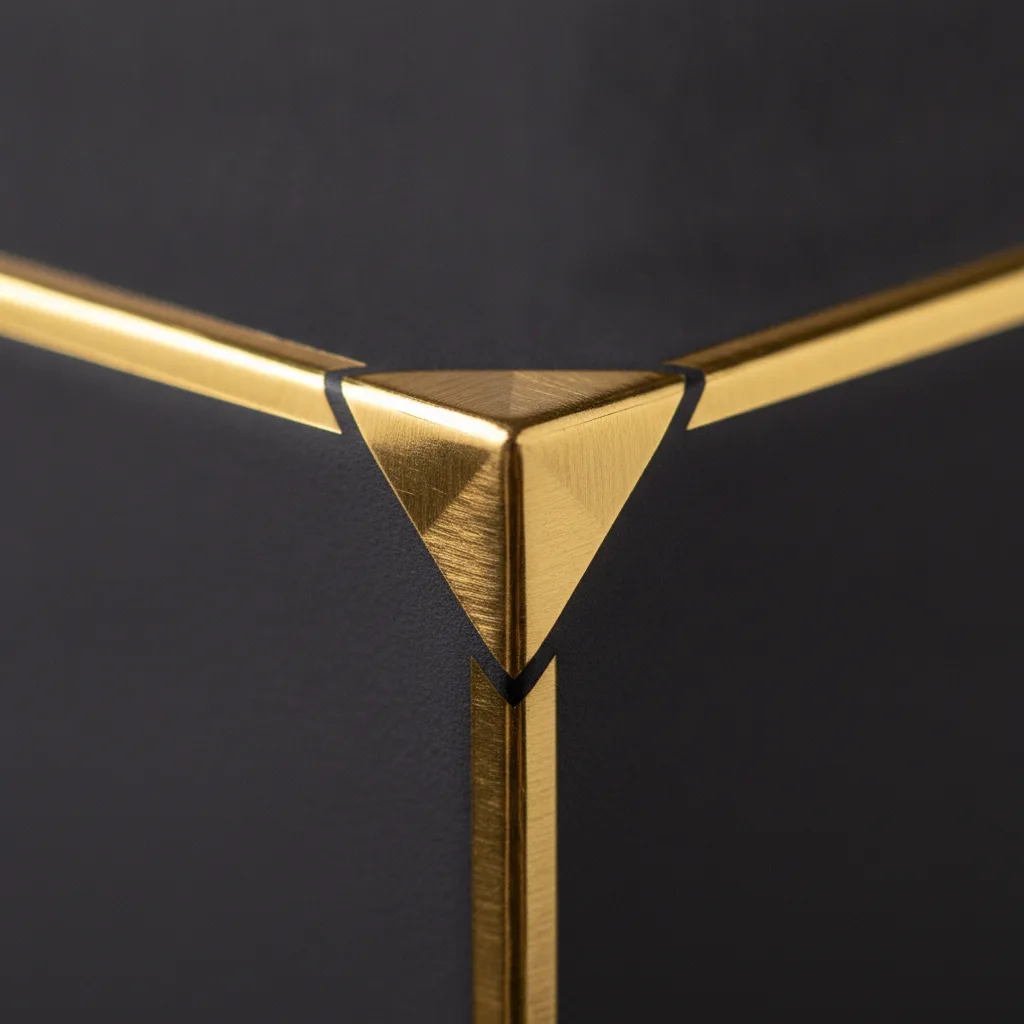
The same tool can be used: for hot foil stamping with metallic foil; for hot foil stamping with non-metallic pigmented film; or, in combination with a counterpart, for embossing to create relief without film.
The cliché is therefore not a simple consumable: it conditions the precision of very fine lines and delicate typography, the regularity of flat areas, the lifespan in the machine, and the tolerance to calibration as well as temperature rise.
The three main materials: magnesium, brass, copper
Magnesium, the agile shot for short and medium series
Key strengths: lower unit cost than brass or copper; fast engraving, valuable when time is tight; ideal for short to medium print runs on paper or cardboard; sufficient for many logos, titles and designs without extreme fineness.
Boundaries : less hardness and resistance; faster wear on very long print runs or repeated productions; less efficient on large flat areas or complex reserves; increased sensitivity to temperature or calibration errors.
When to choose a magnesium plate: premium press kit or catalogue in a few thousand copies; limited edition perfume box or case without reprint; creative tests, advanced mock-ups, marketing pre-series.
Brass, the robust standard for long production runs
Key strengths: high hardness and excellent mechanical resistance; very good engraving fineness suitable for delicate logos; better temperature resistance, ensuring stability throughout the print run; preferred choice for recurring restocks.
Boundaries : higher access cost than magnesium; sometimes longer manufacturing lead time; oversized for a single test or micro-series.
When to choose a brass cliché: premium perfume or cosmetic packaging produced in several waves; cases or boxes for spirits with long-term referencing; visual identity applied systematically to numerous references.
Copper: high precision for the most demanding jobs
Key strengths: hardness and wear resistance comparable to brass; very high engraving precision for complex patterns and micro-textures; excellent behavior on large flat areas with homogeneous pressure; high performance in combined embossing and letterpress.
Boundaries : higher cost than magnesium and often higher than brass; reserved for projects with high perceived value or high complexity; less suitable if the graphics are very simple and the volumes modest.
When to choose a copper plate: covers for art books or exhibition catalogues; packaging for high jewelry or perfumery with micro-details or critical flat areas; projects incorporating security elements printed by gilding.
Practical comparison of magnesium, brass, copper clichés
| Criteria | Magnesium | Brass | Copper |
|---|---|---|---|
| Tooling cost | The most economical | Medium to high | Pupil |
| Sustainability | Average: short to medium series | High: long series, restocks | High, excellent fit |
| Fine details | Good | Very good | Excellent |
| Flat areas and reserves | More sensitive to defects | Well suited according to engraving | Reference for large flat areas |
| Manufacturing speed | Fast | Intermediate | Intermediate to longer |
| Typical projects | Limited editions, tests | Premium packaging in volume | Highly demanding luxury, art, anti-counterfeiting |
How to choose between magnesium, brass and copper depending on your project
1. Production volume and restocking
For short runs (a few hundred to a few thousand) without reprints: magnesium is generally sufficient, especially if the design is not extremely fine. For long runs or multi-country runs with scheduled reprints: brass ensures the longevity of the printing plate. For very high-end production with high unit value: copper becomes the appropriate choice, as even the slightest imperfection is visible.

2. Pattern complexity
Simple logo or design without micro-details: magnesium is suitable, brass if the gilding is central. Very fine lines or micro-textures: brass or copper to guarantee precision. Large areas of flat gilding: copper has a clear advantage, being more homogeneous, especially on textured creative papers.
3. Foil type and support
Standard metallic foils on coated paper: all three materials are suitable, with magnesium being the most economical. Special foils or textured substrates: brass or copper, which are more stable under temperature and pressure. Marking on leather or thick substrates: magnesium is possible for limited runs, brass is recommended for repeatability.
4. Project context and acceptable risk level
In the luxury sector, the tolerable risk is low; robustness (brass or copper) will be preferred for key components, with magnesium remaining confined to ancillary elements.
Best practices for file and image preparation
One image reflects the upstream preparation: clean source file in vector format, typography not too thin on high-grained media, anticipation of machine tolerances, paper-foil-pressure compatibility validated from the prototype stage.
Before a critical launch, 3D prototyping of packaging coupled with a real gilding test allows adjustment of both the plate material and the registration parameters, rather than discovering the limits of magnesium or brass in the middle of the print run.
How Maestro orchestrates the choice of the shot in a real-life situation
The gilding die is part of a complete chain: paper and weight selection, foil and varnish selection, transport constraints, storage, and restocking. The technical production office compares, in real-world conditions, the advantages of magnesium, brass, or copper dies on partner machines in Italy and China; it ensures the reliability of long print runs with brass or copper dies when the risk of wear would be too high with magnesium; it documents the traceability of tooling and the gilding process in line with CSR and anti-counterfeiting principles.
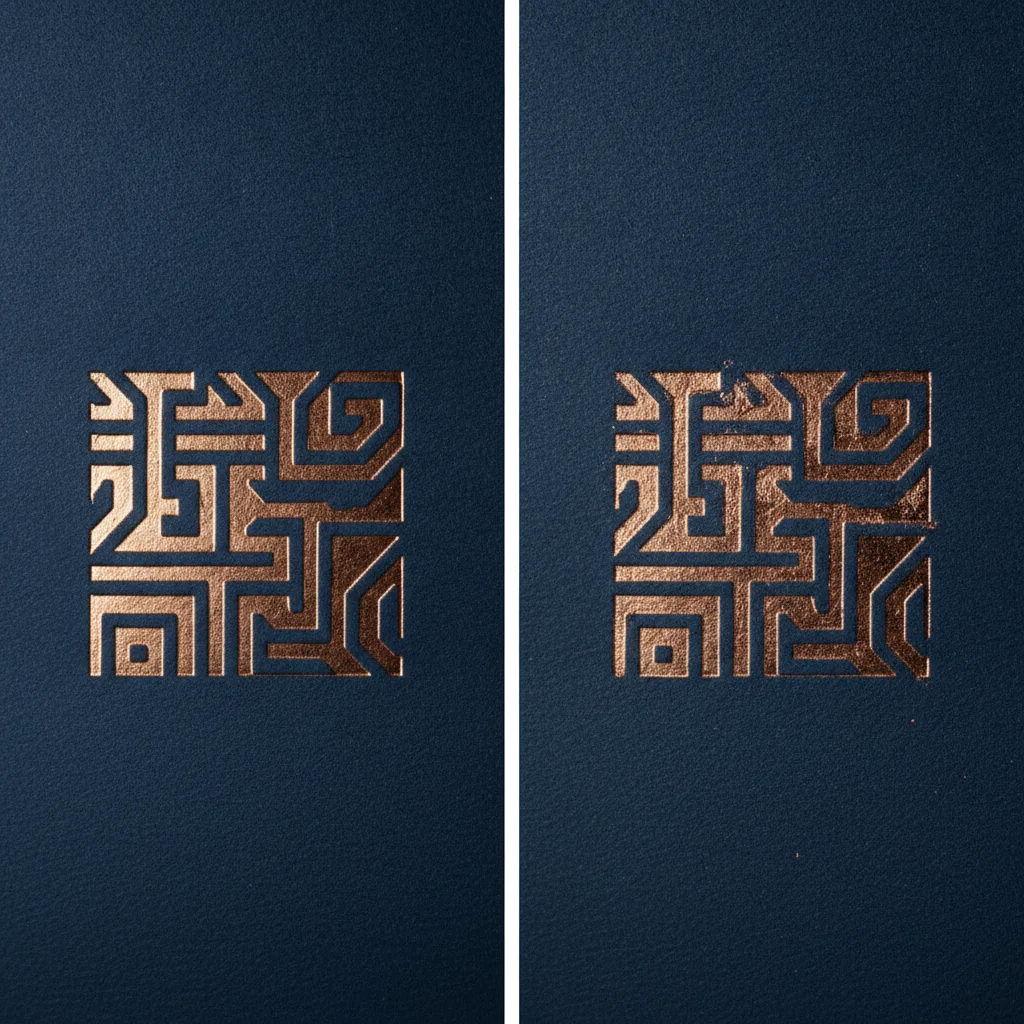
For a premium cognac box, a niche perfume case or an art catalogue, this management avoids both unnecessary additional costs — an oversized copper for a simple local series — and short-term savings that are costly in the event of a reprint.
FAQ
Magnesium, brass, copper: is there a visible impact for the end customer?
The end customer doesn't distinguish between materials, but they perceive the consequences of an unsuitable choice. Overused magnesium can result in less crisp gilding at the end of a run; brass or copper guarantees consistency from the first to the last copy, especially in large quantities.
Is magnesium still a bad choice for luxury?
No. For a limited edition or a collector's set produced only once, magnesium offers excellent value for money. The problem isn't magnesium itself, but its use in projects whose lifespan exceeds its capabilities.
How to anticipate the right photographic material from the briefing stage?
From the outset, share the overall volume and planned reorders, paper and foil type, pattern detail level, target markets, and logistical constraints. A manufacturing department can then simulate several scenarios and recommend the most robust option, validated if necessary by a machine test.
In summary, choosing between magnesium, brass, or copper foil stamping comes down to weighing budget, lifespan, design complexity, and acceptable risk level. To align these criteria with your industrial reality (Italy and China) and your brand objectives, discover Maestro Gestion Edition's comprehensive approach: Maestro Manufacture.
—