

In the world of luxury packaging, every detail counts. On a niche perfume box, a cognac case, or a jewelry box, it's often just a few millimeters of shine that make the difference between a beautiful package and a truly desirable object. Selective UV varnish on packaging allows for precisely this: focusing light on key areas, creating visual and tactile relief, and protecting sensitive components. For a production manager, art director, or brand manager, understanding how this varnish works, what it truly allows on different substrates, and how to prepare the files has become essential. In 2D or 3D, combined with matte lamination or foil stamping, selective UV varnish packaging is a staging tool that demands genuine technical expertise. It is in this area that the manufacturing office technician Maestro intervenes, between paper engineering, photogravure and production supervision in Italy and China.
Selective UV varnish on packaging: how to enhance a premium box with a light-relief effect
Reading time: ~9 min
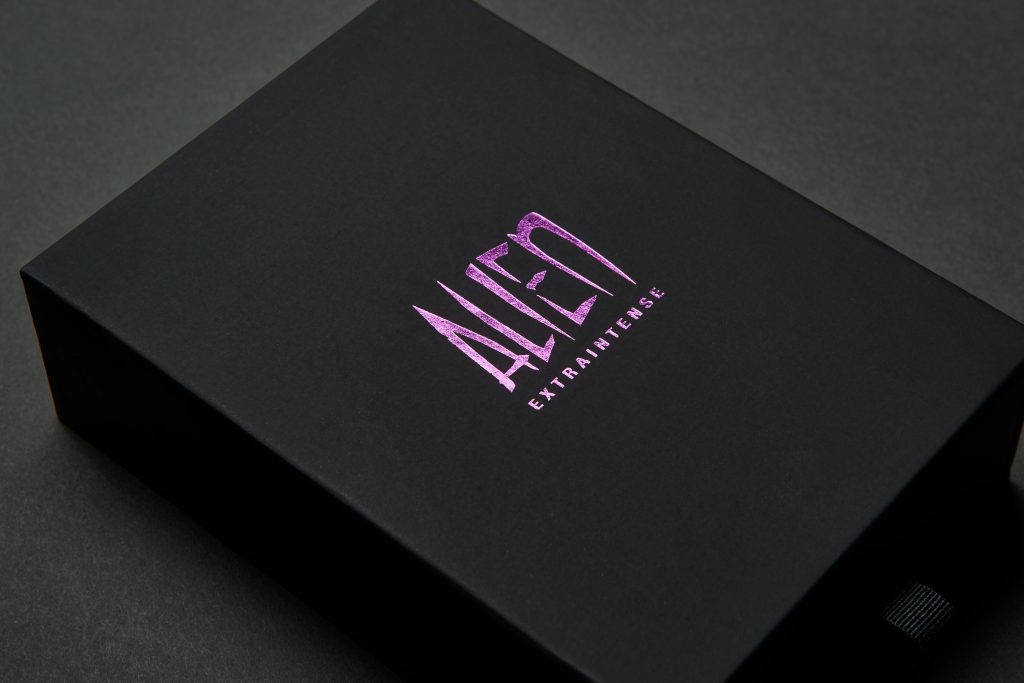
- Selective UV varnish on packaging: what it really does
- How is UV selective varnish applied?
- Prepare a file for spot UV varnish without any unpleasant surprises
- Why use selective UV varnish on a premium box?
- Selective UV varnish, gilding, lamination: what are the differences?
- Practical applications in perfumery, spirits and jewelry
- FAQ
Selective UV varnish on packaging: what it really does
Definition and principles
Selective UV varnish is an embellishment finish that applies a layer of clear varnish to precisely defined areas of the packaging (logo, design, text, image) and then instantly hardens it under UV light. Unlike ink, it doesn't deposit color but a glossy or textured film that interacts with light and enhances the protection of the selected elements. It's not a printing technique but a coating: four-color process or Pantone inks are printed first, and then the UV varnish is applied over the areas specified in the file. The photoinitiators it contains polymerize almost instantly, allowing for high-volume production. On premium packaging, its full potential is revealed when a matte background (lamination or matte varnish) is contrasted with highly localized glossy highlights.
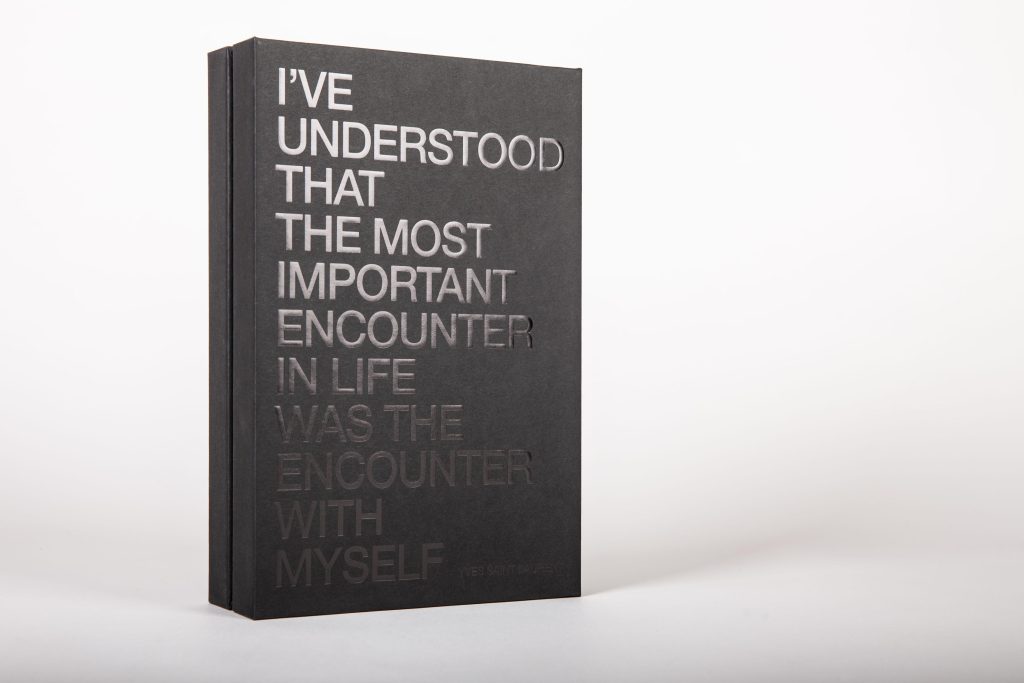
The three main families of UV varnish
| Variant | Key Features & Uses |
|---|---|
| Full surface UV varnish | Covers the entire surface for overall shine and uniform protection: often reserved for secondary surfaces in luxury applications. |
| 2D Selective UV Varnish | Thin film, very glossy, without tactile relief: ideal for highlighting logos, illustrations or tone-on-tone patterns. |
| 3D embossed UV varnish | Significant thickness that creates a tactile relief: recommended for monograms, graphic designs and short elements. |
How is UV selective varnish applied?
Technical process in production
Depending on the volume, materials, and packaging type, selective UV varnish can be applied using offset, flexography, screen printing, or digital UV printheads. The image is first printed onto the substrate (cardboard, paper, sometimes plastic or metal). The sheet then passes through a varnishing unit that deposits the liquid varnish onto the desired areas before it passes through a tunnel of UV lamps: under the effect of the light, the varnish hardens instantly. For luxury rigid cardboard boxes, Maestro prioritizes processes that offer precise registration and good durability during finishing. The team adjusts the varnish type, printing plate, halftone screen, temperature, and drying speed directly at the factory to guarantee reproducibility.
Compatible media and possible renderings
Selective UV varnish works with many substrates, provided the material is properly prepared. On coated cardboard intended for perfume or cosmetics packaging, the contrast with a matte lamination immediately enhances a logo or background design. For rigid, sheathed cardboard, edge sharpness depends as much on the backing paper as on the adhesive and the cushioning: precise engineering maintains varnish definition, even on corners. Textured creative papers offer spectacular results but require preliminary testing, as porosity affects gloss and consistency. Finally, on labels or synthetic substrates, adhesion sometimes necessitates a surface treatment or primer.
Prepare a file for spot UV varnish without any unpleasant surprises
Create the selective varnish layer
The UV varnish corresponds to a separate technical layer. 1) First, design the main layout (CMYK, Pantone colors, white underlays). 2) Then, create a dedicated layer with a clear name, for example, "UV Varnish". 3) Trace only the areas to be varnished on this layer. 4) Assign each area a spot color at 100% % for unambiguous identification. 5) Set this color to overprint to avoid creating "holes" in the inks. 6) Export a final PDF containing the spot color, perfectly aligned with the print document. A prepress department then checks for bleed, alignment, and thickness before the final proof.
Design constraints to be respected
Avoid letting the varnish stop on a groove or a fold area: risk of cracking upon opening.
Avoid overly fine details: Even minor discrepancies in positioning can negatively impact the premium perception.
Isolate varnish and critical components: The overlap increases the impact of any potential defect.
Testing on a prototype: On textured or heavily tinted papers, a prototype allows the visual hierarchy to be validated before production.
Why use selective UV varnish on a premium box?
Aesthetic and sensory benefits
Selective UV varnishing instantly enhances the perception of luxury thanks to the matte-gloss contrast that evokes precision and high standards. Varnishing only the logo or a signature motif guides the eye and establishes a graphic identity without cluttering the packaging. In a 3D version, the embossing adds a tactile dimension comparable to light embossing: on a cognac box or a niche perfume case, this sensation is felt immediately upon handling and intensifies the emotion of opening it.
Protective function and durability
Beyond aesthetics, varnished areas are more resistant to scratches, scuffs, fingerprints, and certain levels of humidity. For boxes intended for travel or handling in retail and e-commerce environments, this is a decisive advantage: the creative investment remains relevant over time without requiring over-specification of paper weights or multiple layers of lamination.
Selective UV varnish, gilding, lamination: what are the differences?
| Finishing | Scope | Strengths | Points to be aware of |
|---|---|---|---|
| Selective UV varnish | Localized areas | Intense shine, targeted protection | Requires very precise location |
| Film coating | Total area | Overall protection, texture (matte, soft touch, etc.) | Less focused effect, plastic film covering the entire surface |
| Hot/cold gilding | Localized areas | Unique metallic sheen, possible relief | More expensive photos, sensitive calibration |
| Classic acrylic varnish | Often global | Economic protection | Less bright, less harsh than UV |
Practical applications in perfumery, spirits and jewelry
Niche perfumery and haute parfumerie
On a matte case, highlighting the fragrance name in glossy varnish immediately draws the eye. An olfactory motif or bottle design can be created using tone-on-tone varnish; a recurring varnish line around the logo creates a strong signature. Fine photogravure ensures the stability of the underlying colors and prevents deep blacks from becoming overly glossy.
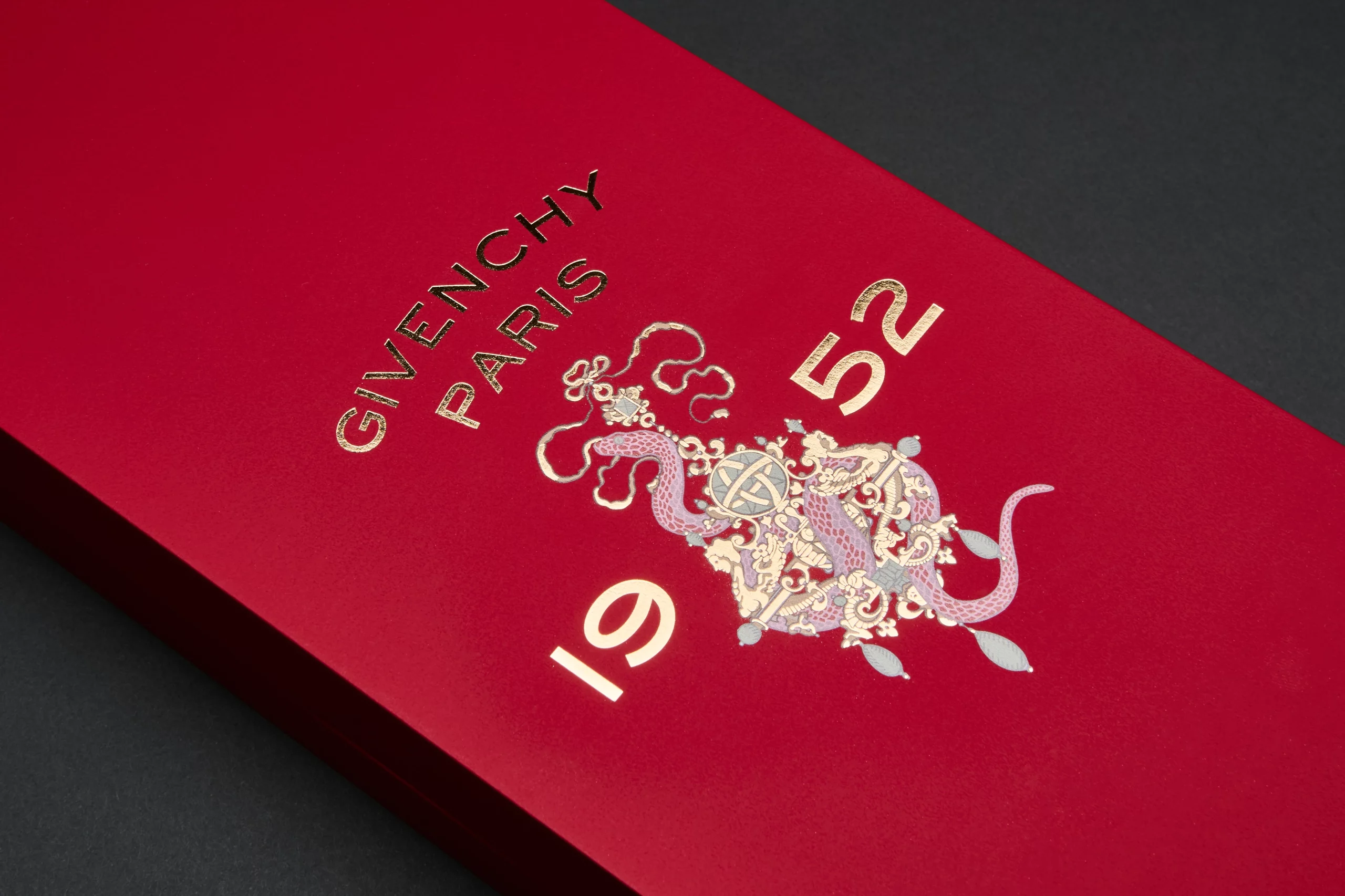
Custom-made spirits gift sets
For a premium cognac or gin gift set, 3D UV varnish serves as a marker of quality: embossed crest or vintage, glossy vine motif on textured paper, protection of detailed illustrations on the sides. Maestro combines artisanal excellence for small runs with industrial capacity in Italy and China for larger volumes.
Jewelry and accessory packaging
Understated elegance prevails: a fine varnished typeface on an ultra-matte background, a monogram in 3D varnish rather than solid gold foil, and reinforced high-wear areas (inside the box, inserts, booklets). Varnish, gold foil, and embossing are often coordinated in a single pass to ensure perfect alignment when the case is opened.
FAQ
Is UV selective varnish compatible with eco-friendly packaging?
Applied in a very thin layer to FSC-certified cardboard and integrated into an optimized design, UV varnish remains compatible with a serious CSR approach. The challenge is to limit unnecessary plastic over-layers and to precisely document materials and processes, which Maestro includes in its production reports.
Is a protective film always necessary under UV varnish?
No. It is possible to varnish directly onto certain coated papers or cardboards. However, on luxury packaging subjected to heavy handling, the combination of matte lamination and selective UV varnish on key areas often offers the best compromise between appearance and durability.
Does 3D selective varnish replace embossing?
3D varnish creates a noticeable relief without flattening the paper fibers; the feel and the way light catches the paper therefore differ from embossing. In the luxury sector, they are considered complementary: depending on the project, Maestro may recommend 3D varnish alone or a combination of embossing and varnish for maximum impact.
Conclusion
By mastering file preparation, paper engineering, and factory varnishing parameters, selective UV varnishing becomes a true brand presentation tool. For a critical launch in perfumery, spirits, cosmetics, or jewelry, relying on a manufacturing office that physically oversees production in Italy and China ensures deadlines, results, and traceability, while giving the creation the exposure it deserves. To learn more, discover Maestro's approach at [website address]. maestro-manufacture.com.