
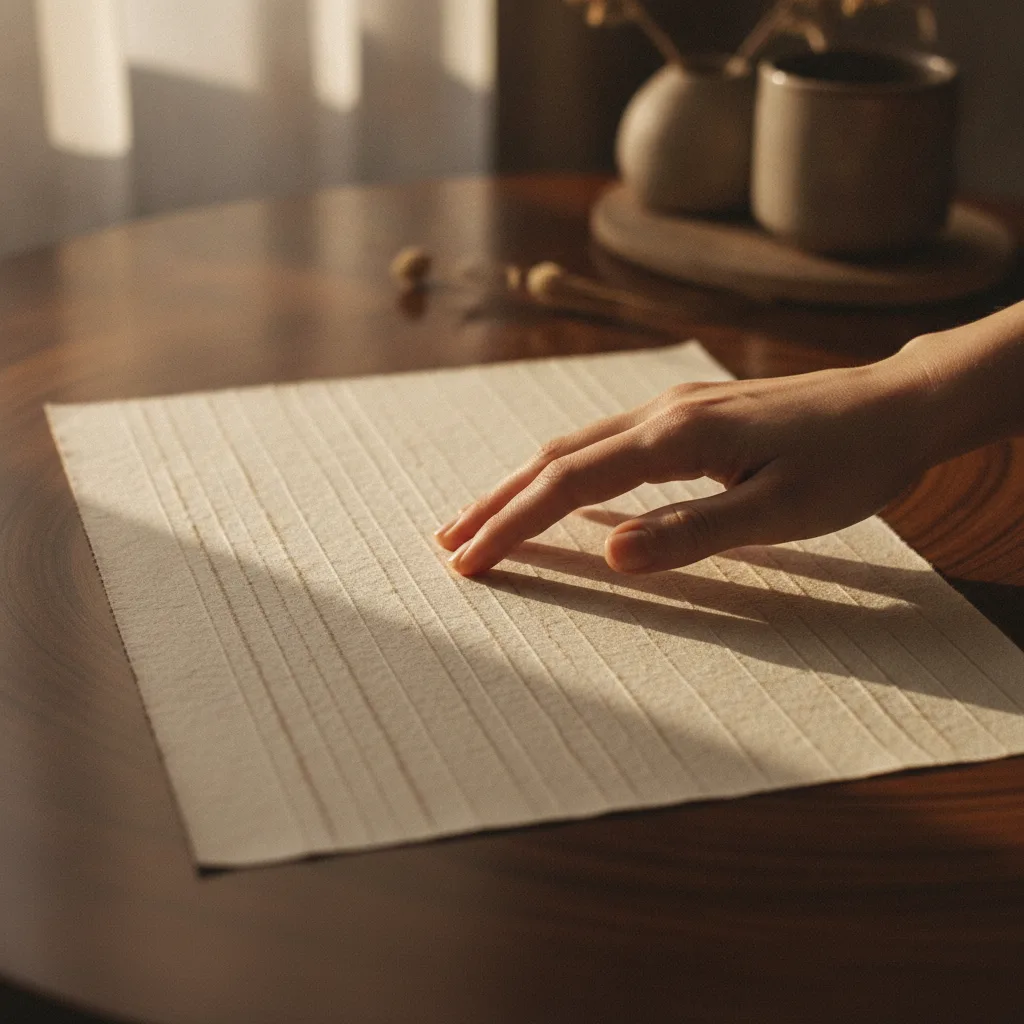
The choice of a textured laid paper with a felt-like, canvas-like finish is never insignificant when producing a high-end printed object. Even before the eye lays upon an image, the hand perceives a surface, a resistance, a grain. This first physical contact influences the perceived value of the object, whether it's a jewelry invitation, a spirits case, or an exhibition catalog.
Among the various types of creative papers available, textured laid, felt, and canvas papers hold a special place. These three textures serve very different aesthetic, technical, and industry purposes, and confusing them can jeopardize an entire project. This guide will help you distinguish between them, understand their production, and choose the paper that best reflects your brand's intent.
Textured laid paper, felt-lined paper | Buyer's guide
Reading time: ~9 min
- Summary in brief
- What is textured paper and how can it be distinguished from smooth paper?
- Laid paper: history, structure and brand image
- Felt-like texture and canvas paper: two textures, two tactile worlds
- Paper weights, technical compatibility and printing limitations
- Which grain should you choose depending on your sector of activity?
- The role of paper engineering in a high-end printing project
- Go further with textured laid paper, felt-lined canvas
- FAQ
Summary in brief
- Understanding textured papers : definition, manufacturing processes and fundamental differences with smooth or coated papers.
- Laid paper in detail : origin, structure of the laid lines and bridges, comparison with vellum and high-end positioning.
- Felt and canvas grain : tactile characteristics, production methods and distinct uses in creative printing.
- Technical compatibility Paper weights, printing techniques and limitations to be aware of before starting a project.
- Recommendations by sector : what grain for jewelry, perfumery, spirits or art publishing.
- The role of the manufacturing office : why paper selection must be integrated from the outset of the project, with an expert who masters paper engineering.
What is textured paper and how can it be distinguished from smooth paper?
Textured paper is a creative paper whose surface has a relief that is perceptible to the eye and touch. It differs from coated papers, which receive a glossy or satin finish to smooth the surface and improve image reproduction. Textured paper is, by nature, uncoated: its material remains visible, breathable, and interacts with light in an organic way.
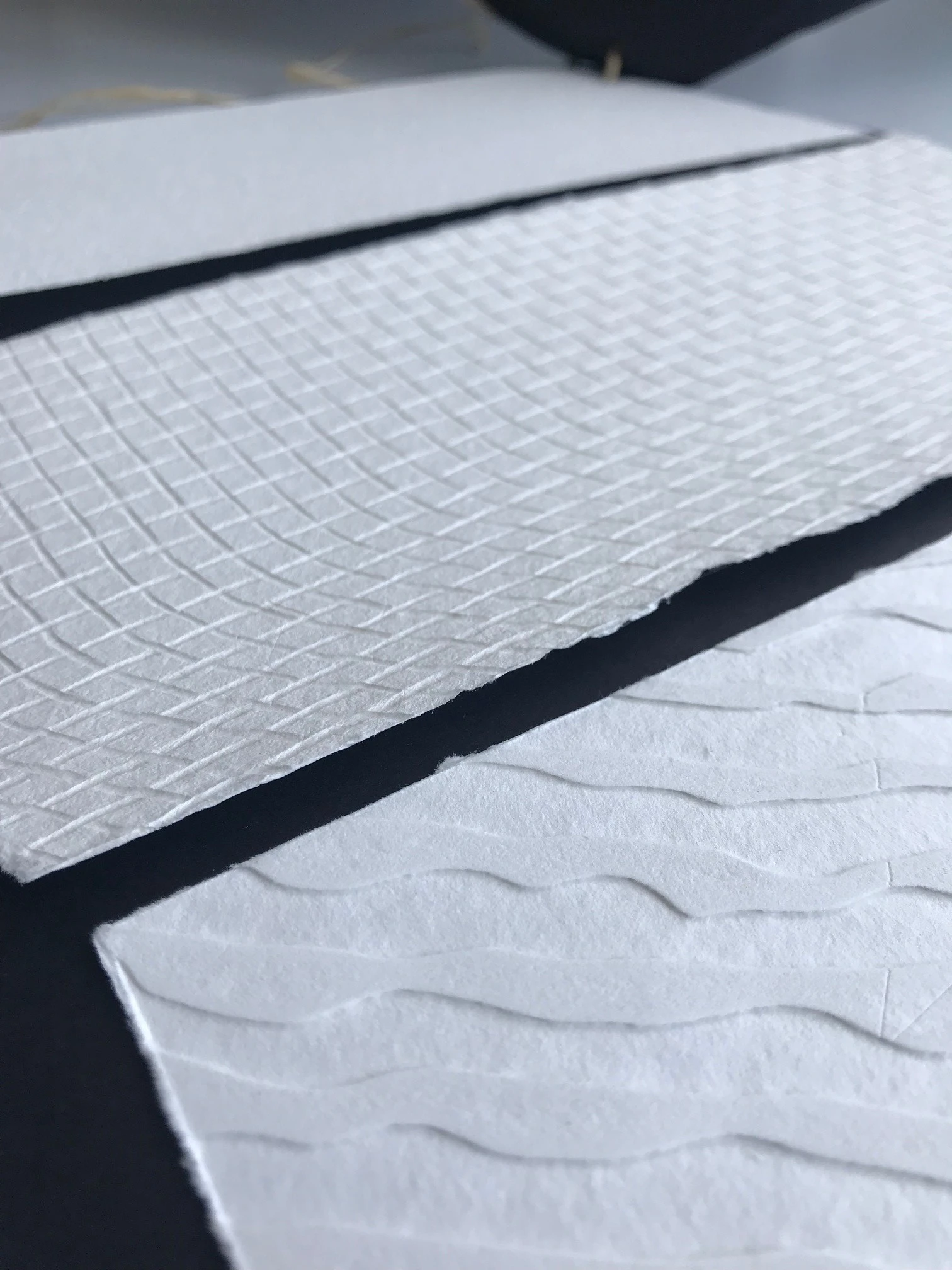
The texture of paper can be achieved through several processes. Embossing involves pressing the sheet between two engraved plates to imprint a design in both relief and debossed areas. Hammering creates irregular micro-reliefs that lend a handcrafted and vibrant appearance. In the case of laid paper, the texture arises directly from the mold-making process, where brass wires stretched over the forming screen leave characteristic marks in the still-damp pulp. Each technique produces a distinct visual and tactile result, with concrete implications for the printed outcome.
The key distinction to remember is between textured paper and vellum paper. Vellum has a smooth, homogeneous surface, achieved through a fine-mesh forming screen that eliminates any marks. It offers a silky feel and is perfectly suited for reproducing photographs or fine screens. Textured paper, on the other hand, asserts its relief as a distinct aesthetic signature.
Good to know
Laid paper takes its name from the "lay lines," those fine horizontal lines visible when held up to the light. They are evidence of a centuries-old manufacturing process, which appeared between the 13th and 14th centuries, and which remains today one of the most recognizable hallmarks of high-end creative paper.
Laid paper: history, structure and brand image
Laid paper is probably the most iconic of the textured papers used in high-end printing. Its distinctive, ribbed texture results from the arrangement of the metal wires on the forming screen: the laid lines, fine parallel horizontal lines, and the dotted lines, more widely spaced vertical lines, together form a grid visible when held up to the light and perceptible to the touch. This regular structure gives it a classic and refined appearance, immediately associated with official correspondence, fine publishing, and institutional stationery.
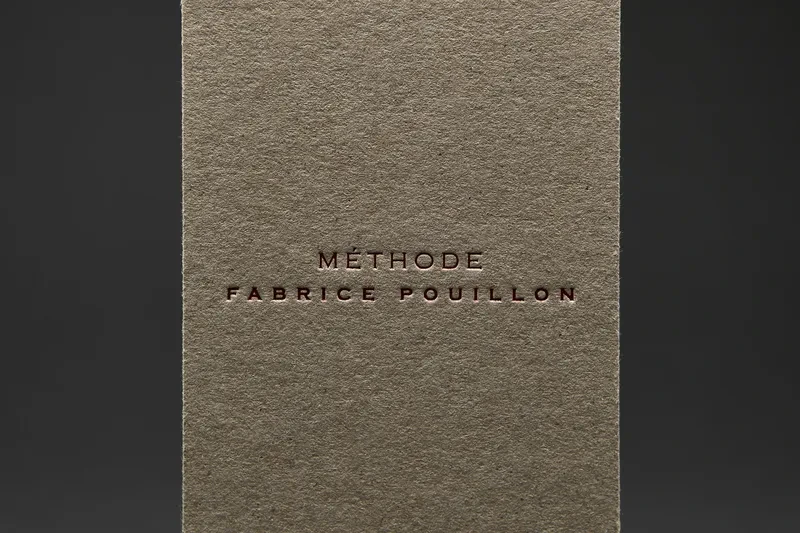
Reference ranges like Conqueror Vergé, distributed by Antalis France, illustrate the longevity of this positioning: used for decades for corporate letterheads, formal invitations, and diplomas, they embody a form of understated and timeless elegance. The Italian company Fabriano, whose technical glossary precisely documents the role of brass wires in grain formation, perpetuates this tradition in creative papers intended for both offset printing and handwriting.
In terms of brand positioning, laid paper conveys seriousness, tradition, and value. Its higher cost compared to standard vellum reinforces the premium perception of the medium. It is particularly well-suited to projects where text is dominant and where the aim is to convey an impression of solidity and permanence: correspondence from a fashion house, invitations to an exhibition opening, gala programs, or the cover of a high-end annual report.
Felt-like texture and canvas paper: two textures, two tactile worlds
Felt grain refers to a soft, slightly grainy, and even texture, reminiscent of the surface of felt or low-grain watercolor paper. It is less pronounced than a textured or hammered paper, but still noticeable when handled. This subtlety makes it a versatile choice: it adds character without overpowering the printed content, making it suitable for premium business cards, wedding and birth announcements, prestigious brochures, and cultural programs. Specialized distributors like Antalis offer felt grain ranges with two textured sides, ensuring visual and tactile consistency regardless of which side is printed.
Canvas paper, on the other hand, displays a much more pronounced texture, imitating the weave of a woven canvas. Its repetitive pattern, generally obtained by embossing, creates a grid visible to the naked eye and very perceptible to the touch. This canvas effect clearly distinguishes it from laid or felt-textured paper: it stands out as a deliberately expressive choice, asserting a handcrafted or artistic dimension. It can be found on art catalog covers, menus, and more. premium packaging, presentation files for decoration houses, or even on certain luxury packaging where the texture of the support becomes an integral element of the design.
Key points to remember
The felt grain promotes the readability of the text and the fineness of the flat areas, while the canvas paper visually imposes its pattern and must be integrated from the graphic design phase to avoid any conflict with the printed elements.
Paper weights, technical compatibility and printing limitations
The weight of textured paper directly determines its use. Here is a summary table of common weight ranges and their applications, based on technical data available from specialist distributors.
Common weights and uses
| Weight (g/m²) | Main use | Examples of supports |
|---|---|---|
| 90 to 120 | Lightweight stationery | Letters, letterhead, correspondence sheets |
| 120 to 160 | Printed communication | Premium flyers, correspondence cards, press kits |
| 170 to 250 | Rigid supports | Business cards, announcements, brochure covers, invitations |
Compatibility with printing techniques is a critical point that is often underestimated. Most high-end textured papers are formulated for offset printing, which remains the gold standard for quality prints in publishing and luxury edition. Certain specific ranges, particularly the felt-textured papers offered by distributors like Novalith, are suitable for color laser or LED printing, in A4 and A3 formats and weights ranging from 120 to 250 g/m². This distinction is essential: using paper not intended for digital printing can lead to ink adhesion problems, smudging, or fiber cracking at the fold.
The main limitation of textured papers lies in the reproduction of highly detailed photographic images or fine halftones. The surface relief creates areas of light and shadow that disrupt the perception of halftones and reduce perceived sharpness. A heavily laid or textured paper is therefore not the optimal choice for a photo catalog where color accuracy and detail precision are paramount. For these projects, a lightly grained uncoated paper or a high-quality offset paper will be more suitable.
Which grain should you choose depending on your sector of activity?
Choosing a textured paper isn't simply a matter of personal aesthetic preference. It must align with the visual and tactile codes of the industry, the project's technical constraints, and the end user's expectations. Here's how to guide this choice for the main client groups we support at Maestro.
In jewelry and watchmaking, laid paper is the obvious choice. Its regular texture, natural whiteness, and historical association with prestigious correspondence make it the ideal medium for invitations, certificates of authenticity, or accompanying letters slipped into a presentation box. A weight of 120 to 160 g/m² for stationery and 250 g/m² for cards is sufficient to convey the desired weight and prestige.
In high-end perfumery and niche cosmetics, felt offers invaluable versatility. Its soft texture resonates with the sensory values of these worlds, and its compatibility with embellishment techniques such as hot foil stamping or spot varnishing makes it a material of choice for gift boxes, perfume leaflets, or collection launch materials. Hot foil stamping adheres well to a medium-textured felt, provided the surface is not too uneven.
For premium spirits and collector's editions, textured or hammered paper can create a very strong identity, particularly for labels on niche cognac bottles or exceptional whisky gift sets. The visible texture reinforces the perception of craftsmanship and a connection to the terroir. In this case, paper engineering must anticipate compatibility with laminating adhesives and the constraints of die-cutting.
In art publishing and exhibition catalog printing, the choice depends on the nature of the visuals. If the catalog features graphic works, typography, or blocks of color, laid or felt-textured paper adds an extra dimension without hindering readability. If photographic reproductions are central to the project, it's best to reserve textured paper for endpapers, text pages, or the cover, and use high-quality coated or offset paper for the image plates. You can explore our work in this area on our website. online gallery.
The role of paper engineering in a high-end printing project
Choosing a paper grain is a decision that impacts the entire manufacturing process. Very thick laid paper can cause folding problems if the fiber direction isn't correctly aligned with the fold direction. A heavily textured paper can create visual interference with certain offset printing halftones. A felt-like grain that's too absorbent can alter the appearance of cold foil stamping or 3D spot varnishing.
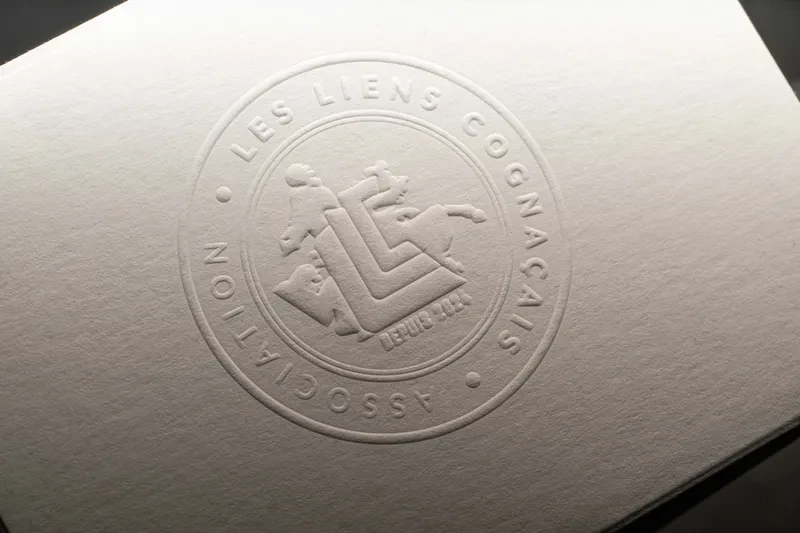
This is precisely why at Maestro, we integrate the selection of the paper stock right from the design phase, even before the production files are finalized. Our technical production office approach means that we anticipate these incompatibilities upstream, validate paper choices with the production workshops in Italy or China depending on the project, and physically supervise the first print runs to guarantee consistency between the creative intent and the finished product. This mastery of paper engineering is one of the three fundamental assets we bring to every publishing or project. premium packaging.
If you would like to delve deeper into understanding our working method, please visit our dedicated page. double production explains how we organize manufacturing monitoring across two production countries to guarantee quality and deadlines. To discuss your project and receive a personalized technical recommendation, our team is available through our contact page.
Go further with textured laid paper, felt-lined canvas
Laid, felt, and linen-textured papers are more than just printing substrates; they are materials that speak volumes even before the content is read. Understanding their manufacturing differences, their printing characteristics, and their industry-specific codes allows for informed choices that reinforce the overall coherence of a brand project. Laid paper embodies classic and institutional elegance. Felt-textured paper offers a versatile softness compatible with most embellishment techniques. Linen-textured paper boasts a strong texture, ideal for artisanal or expressive brand positioning. In all cases, paper selection benefits from being integrated into the project's early stages, in direct dialogue with the production teams.
FAQ
Can you print photos on laid paper?
Laid papers are not recommended for reproducing highly detailed photographs. The texture of the laid lines creates variations in ink absorption that reduce sharpness and can affect color accuracy. For a photo catalog, it is best to reserve laid paper for text pages or the cover.
Is linen paper compatible with hot foil stamping?
Yes, but with caution. The pronounced texture of the textured paper can create uneven contact areas with the gilding plate, which can affect the consistency of the metallic deposit. A proof is essential before committing to this choice for a large print run.
What is the difference between textured paper and embossed paper?
Embossing is an embellishment technique applied after printing on paper, which can be smooth or already textured. Embossed paper is therefore paper that has received a raised pattern by pressing an engraved plate. Textured paper, on the other hand, has its relief from the outset, whether it is laid, felted, or textured.
Are textured papers available in FSC-certified versions?
Yes, most of the major ranges of high-end creative papers offered by distributors like Antalis France are available in FSC-certified versions. This certification guarantees that the fibers come from sustainably managed forests and is required by many tenders in the luxury sector.
What textured paper should I choose for a wedding invitation?
For invitations, felt-textured paper in a 250 g/m² weight offers an excellent balance between tactile elegance, rigidity, and compatibility with digital or offset printing. Laid paper is also very suitable if a more classic and institutional aesthetic is desired. Linen paper should be reserved for projects with a very strong identity.
How can I tell if textured paper is compatible with my desktop laser printer?
Laser compatibility depends on the paper's weight and formulation. Textured papers specifically designed for color laser printing, such as certain felt-grain papers available in A4 and A3 sizes, are clearly identified as such by manufacturers. For paper weights above 160 g/m², it's advisable to check your printer's specifications, as some office printers cannot handle heavier paper weights without risking jams or cracking.