
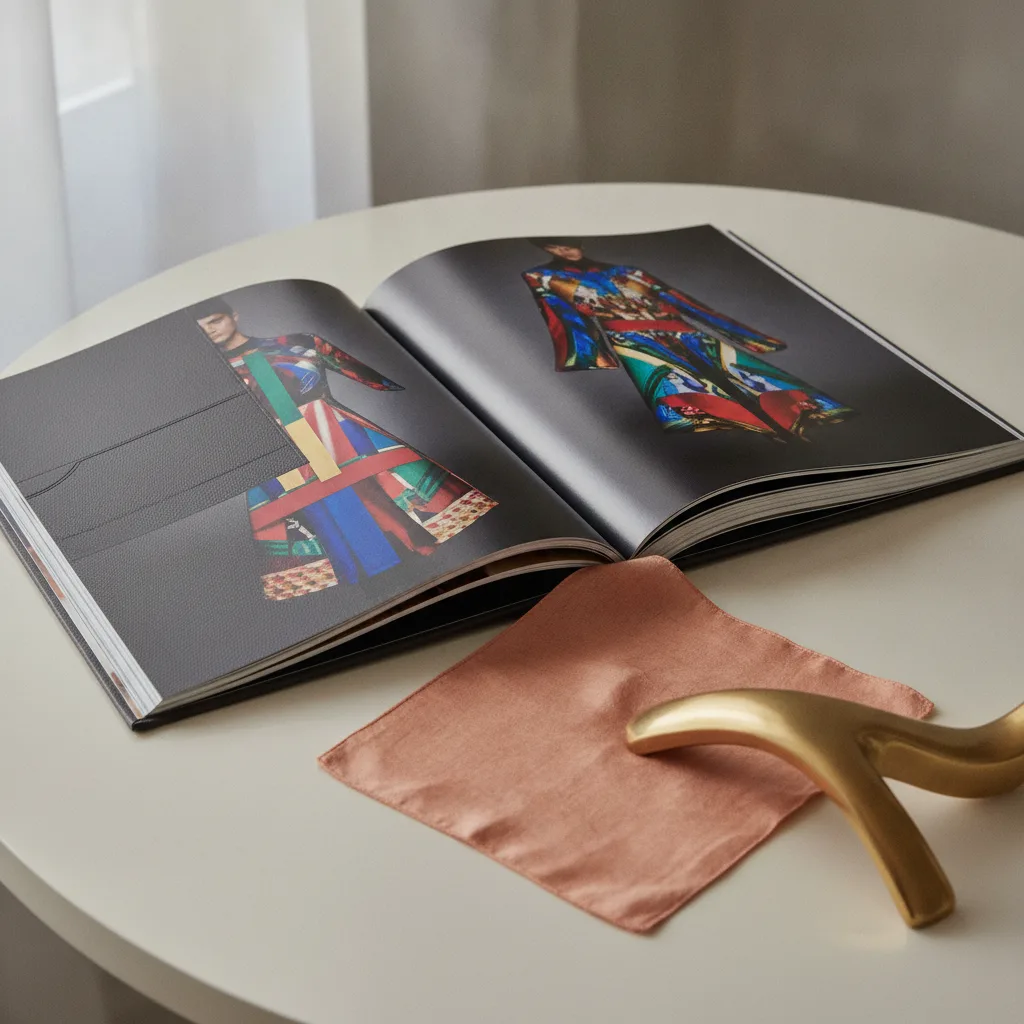
A fashion lookbook, and even more so a premium printed fashion lookbook, is often the first physical contact between your collection and your buyers, partners, or the press. In an age where everything circulates online, a premium printed lookbook becomes a tangible manifestation of your world. It must faithfully reproduce your colors, fabrics, and silhouettes, with no loss of quality between the design and the printed product. For a fashion house, the stakes go beyond simply creating a "beautiful brochure": it's a tool for influence, sales, and brand image, one that must stand up to the collections themselves.
In this article, we guide you through the choices of paper, formats, bindings, finishes and file preparation to achieve a premium print fashion lookbook consistent with your house's requirements.
Premium print fashion lookbook: how to print a product that reflects your home's high standards
Reading time: ~12 min
- What truly makes a fashion lookbook a premium impression
- Why continue to print a lookbook in the digital age?
- Papers for fashion lookbooks: how to choose the right material
- Fashionable formats and bindings
- Finishing touches that enhance a fashion lookbook
- Prepare your files for successful premium printing
- Compare printing options for your fashion lookbook
- How to request a relevant quote for a fashion lookbook
- Synthesis
What truly makes a fashion lookbook a premium impression
Editorial and visual consistency
Your art direction shouldn't be perceived as a mere catalog of references. A successful lookbook tells a story about the collection: a clear narrative thread, a hierarchy of content, and a masterful layout. Framing, page rhythms, and typographic breathing room contribute as much to the perception of "luxury" as the choice of paper.
Photographic quality and color accuracy
Visuals are the heart of the lookbook. Beyond 300 dpi and CMYK, the key is to remain faithful to the actual product: retouching that enhances without betraying its essence, deep blacks without sacrificing detail, and natural skin tones. Your premium printer should act as a prepress partner.
The materiality of the support
Paper weight, texture, rigidity, shade of white, binding type, finishes: all these elements transform a "promotional brochure" into a "collectible editorial item." A premium lookbook feels good in the hand, opens perfectly flat, and withstands showroom seasons without showing wear.
Why continue to print a lookbook in the digital age?
An influence and sales tool
At a trade show, in a showroom, or during a press presentation, a printed lookbook provides a tangible point of reference: it remains on the desk, circulates, and is consulted at a later date. The quality of the printed material directly influences the likelihood that a contact will turn into an order.
A rare media outlet for attention
In a saturated digital feed, a beautiful printed object captures attention for longer. Turning pages, feeling textures, the light on the inks: you gain a few extra minutes without competing notifications.
A bridge to the digital world
Discreet QR codes, NFC chips, links to runway videos or interactive lookbooks extend the experience while remaining the physical embodiment of your universe.
Papers for fashion lookbooks: how to choose the right material
Satin or matte finish: the secure base for photography
Satin or semi-matte finish: ideal for making colours vibrate and rendering the details of materials, in 150 to 170 g for interior use.
Premium matte coating: More understated, perfect for minimalist environments. Requires precise calibration of blacks and dark areas.
Uncoated and textured papers for a creative approach
Premium uncoated: Warmer feel, elegant finish, superior ink absorption.
Textured creative papers: Linen, laid, micro-relief; to be reserved for special covers, jackets or notebooks for a tactile contrast.
Notebook weights and structures
Interior: 130 to 170 g depending on the thickness and binding.
Blanket : 250 to 350 g, with lamination or varnish for resistance.
Special section: possible insertion of coloured or dyed papers into the mass to add rhythm to the collection.
A manufacturing office like Maestro We assist you in selecting available papers, their behavior in printing and their compatibility with the finishes you are considering.
Fashionable formats and bindings
Most commonly used formats
A4 vertical: classic and effective, easy to transport.
Square format: 210 × 210 mm or 240 × 240 mm, highly valued for its "object" aspect.
Large format, French or Italian style: echoes the reference magazines; requires careful binding.
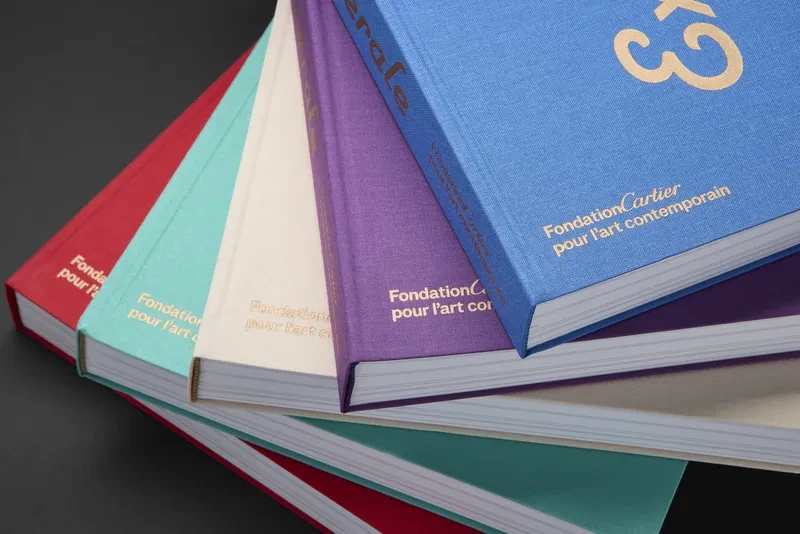
Premium binders for lookbooks
Square back glued: Standard beyond 40 pages, economical, satisfactory opening.
Square back sewn: For editions intended to last several seasons, improved flat opening.
Hardcover binding: transforms the lookbook into a true collector's book; can be housed in a custom-made slipcase.
Finishing touches that enhance a fashion lookbook
Laminations
Soft touch matte finish for a "peach skin" effect, highly prized by premium brands.
Glossy or satin for a more photographic finish.
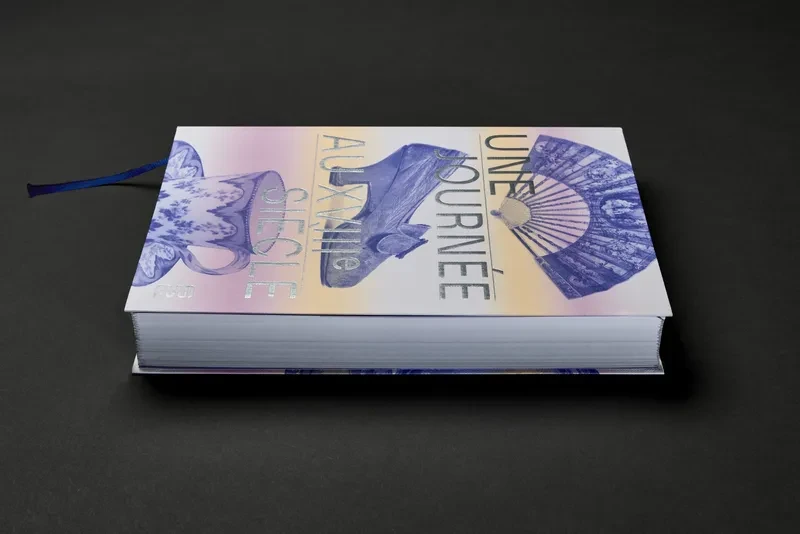
Selective varnishing and 3D varnishing
Selective varnishing highlights logos, patterns or textures; in 3D versions, it adds a tactile dimension.
Hot or cold gilding
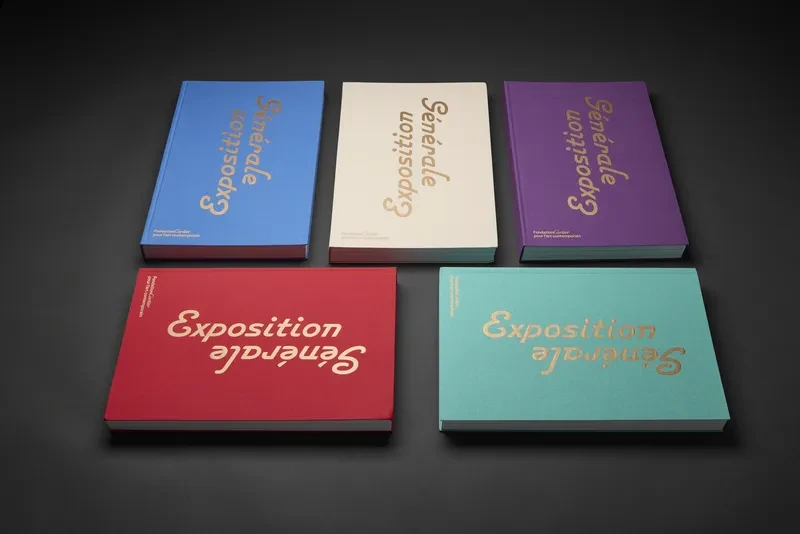
A gold foil trim on the title, logo or edge reinforces the association with the world of luxury; rose gold, platinum or gunmetal depending on your accessories.
Embossing and debossing
Subtle relief on the cover, evoking volumes and stitching, provided that the paper-lamination compatibility is respected.
Prepare your files for successful premium printing
Controlled color flow
Images at a minimum of 300 dpi, CMYK conversion with an appropriate profile, contractual proofs or calibrated BATs to validate sensitive skin tones, textile blacks and reds.
Professional DTP layout
Construction using InDesign with templates and styles, clean management of bleed areas, control of overprints and solid dark areas.
Prepress control
A partner like Maestro checks technical consistency, anticipates paper-finishing incompatibilities and adjusts in real time at the factory during a critical launch.
Compare printing options for your fashion lookbook
| Option | Main advantages | Limitations for a premium lookbook |
|---|---|---|
| Fast online platforms | Competitive prices, simple configurators | Little creative guidance, limited finishes, standardized quality control |
| Local general printer | Proximity, easy communication | Expertise in luxury varies, graphic design chain is sometimes fragmented |
| Manufacturing Technician (Maestro) | Upstream consulting, control of the graphic chain, dual production supervised in Italy and China | Premium positioning, designed for discerning households |
Discover our approach to premium publishing
How to request a relevant quote for a fashion lookbook
1. Basic data: closed and open format, approximate number of pages, desired quantity (standard and/or VIP).
2. Choice of paper and binding: photographic, editorial or responsible intent; soft or hard cover, square spine glued or sewn.
3. Proposed finishes: matte or soft touch lamination, selective varnish, gilding, embossing, colored edges, phygital elements.
4. Scheduling and logistical constraints: Key dates, delivery locations (Paris, major cities, international).
With this information, Maestro can offer a price and scripted options (standard, collector, Italy + China production) to optimize budget, time and impact.
Synthesis
A premium lookbook is born from the alignment of art direction, expert photogravure, carefully selected papers, appropriate binding, and impeccable finishing. For a discerning brand, working with a technical partner capable of overseeing the entire graphic production process transforms a simple brochure into a collector's item that boosts sales and brand image.
If you're preparing a launch or press kit, get in touch with our teams via the Maestro Gestion Edition contact page. Also, check out our portfolio: premium editions and gallery.
FAQ
How to design a premium print fashion lookbook that is consistent with your brand identity?
Start with a clear collection narrative, with an art direction that goes beyond a simple product catalog. Structure your premium print fashion lookbook around a narrative thread, a readable hierarchy of content, and a controlled layout, ensuring harmony between typography, visuals, and page rhythms.
What paper is best for a premium printed fashion lookbook intended for sales and influencer marketing?
For a premium fashion lookbook, satin or semi-matte coated papers remain a reliable base for photography, while premium matte coated papers are better suited to more minimalist aesthetics. You can complement these with uncoated or specialty papers for the cover or certain special sections, in keeping with your brand positioning.
What finishing touches enhance the perception of luxury in a premium-print fashion lookbook?
Soft-touch matte laminations, spot or 3D varnishes, gold foiling, and embossing add a tactile and visual dimension to a premium fashion lookbook. The key is to select a few well-chosen finishes that reflect your brand identity, rather than using too many different effects.