
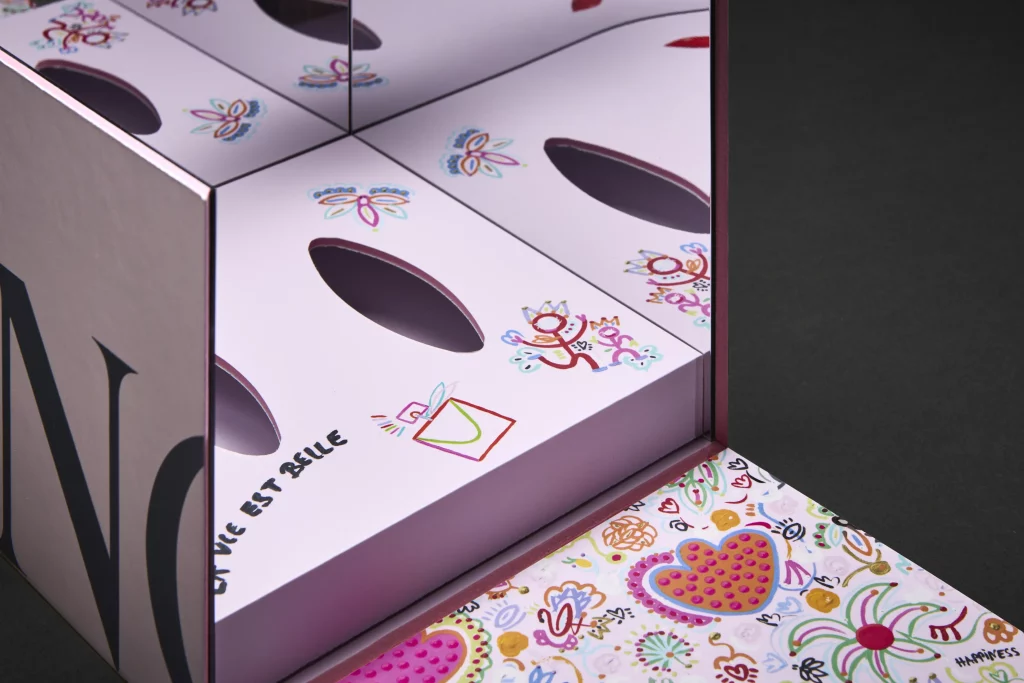
The Packaging and Packaging Waste Regulation, known as PPWR, came into force in the European Union on August 12, 2026. For luxury houses, art publishers and premium cosmetic brands, this new framework, at the heart of the PPWR luxury packaging regulation 2026, is not a simple technical adjustment: it fundamentally redefines the rules of the game for the design, manufacture and documentation of packaging.
Understanding what PPWR concretely requires, and how to respond without sacrificing aesthetic excellence, has become a top strategic issue for any brand that stakes its reputation on a physical object.
PPWR Luxury Packaging Regulations 2026 | Guide
Reading time: ~12 min

- Summary in brief
- What is PPWR and why does it concern luxury packaging in 2026?
- The specific obligations of the PPWR for premium brands
- Finishes, inks and varnishes: what PPWR calls into question
- PPWR 2026 Calendar: Two Levels to Distinguish
- What documentation is needed to prove the conformity of its packaging?
- Luxury and PPWR compliance: a surmountable opposition
- FAQ: PPWR and luxury packaging
Summary in brief
- What is PPWR? A European regulation directly applicable from August 12, 2026, which replaces directive 94/62/EC and imposes new obligations on recyclability, reduction of over-packaging and traceability.
- Concrete obligations for luxury brands : each package must now be classified according to recyclability grades A to E, incorporate recycled materials and reduce superfluous components.
- Impact on finishes and inks Some varnishes, inks and complex substrates are called into question when they compromise the recyclability of the packaging.
- Two-level calendar : a European applicability date of August 12, 2026 and a specific French timetable for professional packaging, operational since July 1, 2026.
- Mandatory documentation : a technical file and a declaration of conformity for packaging are required for each item placed on the market.
- Luxury and conformity are compatible : intelligent material sobriety and eco-design open up new creative avenues without sacrificing brand desirability.
What is PPWR and why does it concern luxury packaging in 2026?
The PPWR, an acronym for Packaging and Packaging Waste Regulation, is the new European regulation on packaging and packaging waste. Unlike the old directive 94/62/EC which it is gradually replacing, the PPWR is a regulation, meaning that it applies directly in all Member States without national transposition, from August 12, 2026 for its first provisions, with additional implementing acts expected until 2030.
For the premium packaging sector, this is a radical change. While Directive 94/62/EC set overall recycling targets at the national level, the PPWR (Premium Packaging Recycling) standard applies to each individual package. Every box, every case, every sleeve placed on the European market must now be classified according to recyclability grades ranging from A to E, justify its material choices, comply with minimum recycled content requirements, and, for certain categories, include reuse mechanisms.
Luxury brands, art publishers, and premium cosmetics and spirits companies are directly affected. A niche perfume gift set, a collector's case for spirits, or a custom jewelry packaging must now meet the same environmental performance requirements as any other packaging placed on the European market.
The specific obligations of the PPWR for premium brands
The European packaging regulation 2026 structures its obligations around four main axes.
First focus: recyclability
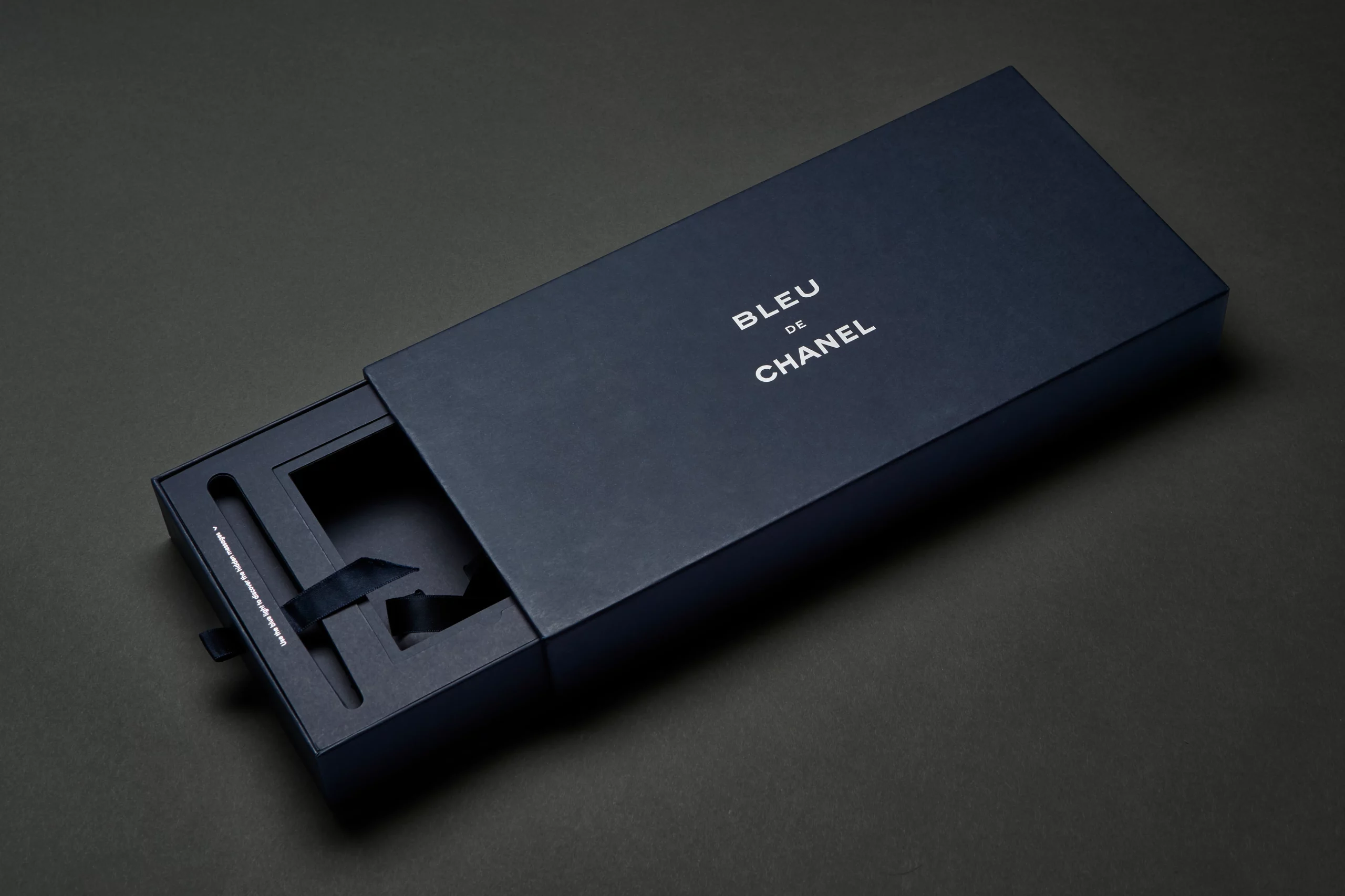
Each package must be designed to be recyclable through existing channels. The A to E grade system classifies packaging according to its actual recyclability. Packaging classified as A or B is practically recyclable through operational channels. Packaging classified as D or E can no longer be placed on the market after the deadlines set by the implementing regulations. For luxury goods, this means that combinations of incompatible materials, complex, non-separable laminations, or certain paper-plastic composites will need to be redesigned.
Second focus: reducing over-packaging
The PPWR (Privacy Protection Regulation) prohibits disproportionate empty space in packaging and strictly regulates what is known as luxury over-packaging. Gift sets with a usable internal volume of less than 40 % of the total packaging volume are likely to be non-compliant. This provision directly affects Christmas gift sets, limited editions, and prestige packaging that relies on the generous size of the container.
Third focus: the integration of recycled materials
The regulation sets minimum rates of incorporation of recycled materials according to packaging categories, with progressive stages until 2040. For food contact packaging, specific restrictions apply, particularly on restricted substances PFAS.
Fourth focus: reuse
Certain packaging categories will need to incorporate reuse objectives, with deposit or return systems. For luxury packaging, this approach actually opens up creative opportunities: a box designed to be kept, refilled, or reused meets both regulatory requirements and the expectations of a premium clientele sensitive to sustainability.
Good to know The PPWR (Public-Private Partnership for Waste Recycling) includes supplementary implementing acts that will specify the recyclability criteria for each packaging category. These acts are expected between August 2026 and February 2030, meaning that some obligations will be clarified gradually. It is therefore essential to monitor their publication on EUR-Lex to anticipate upcoming deadlines.
Finishes, inks and varnishes: what PPWR calls into question
It is in the area of decorative finishes that PPWR most directly impacts the work of printers and manufacturing offices. The basic rule is simple: any finish that compromises the recyclability of the packaging is likely to be called into question.
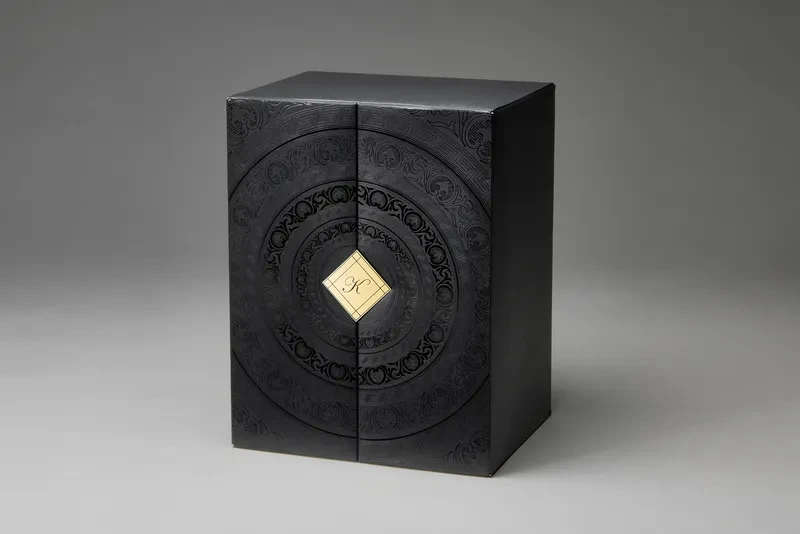
Recyclability of varnishes and inks is now as important a selection criterion as their aesthetic appeal. Water-based varnishes, vegetable-based inks, and separable finishes are preferred. Conversely, some thick UV varnishes, some non-separable metallic laminations, and some hot foil stamping compounds applied to recycled paper substrates can affect the recyclability grade of the final packaging.
This does not mean the end of hot foil stamping, embossing, or 3D spot varnishing. It means that these techniques must be chosen and combined with a precise understanding of their impact on the substrate's recyclability. A printer or manufacturing firm that masters luxury paper engineering and the interactions between substrates, inks, and finishes can still produce exceptional packaging while ensuring its PPWR compliance.
The restricted substances PFAS are given particular attention in the regulation. These chemical compounds, present in certain surface treatments and barrier papers, are being progressively banned in food contact packaging and will be subject to increased monitoring for all packaging.
PPWR 2026 Calendar: Two Levels to Distinguish
Understanding the European and French calendar
Understanding the application schedule is a key area of focus for brands and their manufacturing partners. Two levels need to be distinguished.
| Level | Key date | This applies | Source |
|---|---|---|---|
| European Union (PPWR) | August 12, 2026 | Initial provisions directly applicable in all Member States: recyclability, overpackaging, labelling, traceability | EUR-Lex, Official Journal of the EU |
| France (professional packaging) | July 1, 2026 | Extension of the Extended Producer Responsibility (EPR) scheme for professional packaging, progressive financial obligations, declarations to Adelphe or an approved eco-organization | Ministry of Ecological Transition |
| Additional enforcement actions | August 2026 to February 2030 | Details on recyclability grades by category, recycled material rates, and reuse methods | Ministry of the Economy, EUR-Lex |
In France, the Extended producer responsibility (EPR) for professional packaging This applies to companies that place packaging on the market for professionals, including presentation and sales packaging used in the luxury sector. Brands must declare their volumes to an approved eco-organization, such as Adelphe, and pay the corresponding eco-contributions. The French 2026 regulations for professional packaging thus follow their own timetable, slightly preceding the entry into force of the European PPWR (Product Protection Regulation).
What documentation is needed to prove the conformity of its packaging?
Key Documentation Requirements
The PPWR introduces a packaging traceability requirement that fundamentally changes the relationship between brands and their suppliers. Every package placed on the European market must be accompanied by a technical conformity file and a packaging conformity declaration. These documents must attest to the recyclability grade, material composition, absence of restricted substances, and, where applicable, the percentage of recycled materials incorporated.
In practical terms, this means that brands must be able to obtain precise and verifiable documentation from their suppliers and printers. Certifications such as the FSC label for paper and cardboard, technical data sheets for inks and varnishes, recyclability certificates for materials, and material composition reports become contractual elements, and no longer just marketing tools.
For buyers and purchasing managers of large groups (LVMH, Kering, L'Oréal Luxe and their brands), this documentation requirement directly aligns with the obligations of the CSRD (Corporate Sustainability Reporting Directive): the supply chain must be traceable, auditable, and compliant. A supplier unable to provide this evidence becomes a supplier risk in annual tenders.
Key points to remember PPWR compliance is not just a legal obligation; it's a differentiating factor in tenders from major luxury groups. Brands that anticipate and document their compliance as early as 2026 are well-positioned to meet the CSR requirements of their clients and financial departments.
Luxury and PPWR compliance: a surmountable opposition
The question that all art directors and production managers are asking themselves is legitimate: can we produce sustainable luxury packaging in 2026 that is both compliant with PPWR and meets the aesthetic requirements of a major brand? The answer is yes, provided that we rethink the approach to eco-design for luxury packaging from the creative briefing phase.
Intelligent material restraint is not a loss. Luxury recyclable packaging that leverages the intrinsic quality of the paper, the precision of the embossing, the color accuracy, and the architectural structure of the box can achieve a level of desirability superior to packaging overloaded with incompatible finishes. The major brands that anticipated this transition demonstrate this: excellence within constraints is a true form of craftsmanship.
At Maestro, we support production managers, art directors, and purchasing managers through this transition, leveraging our position as a technical manufacturing office. Our physical presence in production facilities, both in Italy and on relevant projects in China, allows us to anticipate technical incompatibilities between decorative finishes and recyclability, select compliant substrates and inks, and compile the traceability documentation required by PPWR. We work with FSC-certified papers, vegetable-based inks, and finishes whose impact on recyclability grades we fully understand, ensuring that PPWR-compliant packaging printing is not a compromise but a shared ambition.
You can discover our approach to high-end packaging manufacturing on our dedicated page, and explore our projects in our gallery to measure what regulatory compliance does not prevent from being achieved in terms of excellence in materials.
The PPWR luxury packaging regulation 2026 is not the end of prestige packaging. It is an invitation to a new form of creative and technical ingenuity, where packaging environmental performance becomes a component of perceived value, not its adversary. Brands that prepare for it with the right manufacturing partners will transform this constraint into a sustainable competitive advantage. Contact our team to discuss your project.
PPWR and luxury packaging 2026: key takeaways
In summary, the PPWR (Product Protection Regulation) imposes stricter requirements on luxury packaging by 2026 regarding recyclability, reduced over-packaging, and traceability, without compromising exceptional finishes. Brands that integrate these constraints from the design phase, partner with technical experts capable of documenting compliance, and adhere to the European and French regulatory timelines will transform this evolution into a value driver, rather than a mere regulatory obligation.
FAQ: PPWR and luxury packaging
Does the PPWR also apply to packaging manufactured outside the European Union but sold in Europe?
Yes. The PPWR applies to all packaging placed on the European market, regardless of its country of origin. A box produced in Italy, China, or elsewhere must comply as soon as it is sold in the EU. This is why control of the production chain and supplier documentation are essential, including for products manufactured outside Europe.
What is a recyclability grade from A to E and how is it determined?
The A to E grading system assesses a package's actual suitability for recycling through existing channels. Grade A corresponds to packaging that is practically recycled on a large scale. Grade E corresponds to packaging that is not recyclable under current conditions. This classification takes into account the main material, finishes, inks, adhesives, and the overall compatibility with industrial sorting and recycling processes. The precise criteria for each packaging category will be defined by implementing acts expected progressively until 2030.
Are small series and limited editions subject to the same obligations as large productions?
Yes, the PPWR does not provide for any exemptions related to production volumes. limited edition of 500 collector's boxes is subject to the same requirements for recyclability, material composition, and documentation as an industrial series. However, implementing acts may specify adapted procedures for certain specific categories. It is recommended to monitor their publication on EUR-Lex to anticipate any sector-specific clarifications.
What is the difference between EPR for professional packaging and PPWR?
Extended Producer Responsibility (EPR) for professional packaging is a French national scheme that requires companies placing professional packaging on the French market to contribute financially to its collection and recycling through an approved eco-organization such as Adelphe. The PPWR (Product Recyclability and Waste Recycling) scheme is a European regulation that sets design, recyclability, and documentation requirements applicable in all member states. The two schemes are complementary and will apply simultaneously in France from 2026.
Can packaging with hot foil stamping still achieve a good recyclability rating?
This depends on the substrate, the surface area covered by the foiling, and the technologies used. Hot foiling applied to a small area of predominantly paper packaging may still achieve a satisfactory recyclability grade, according to the criteria of the manufacturing process. However, foiling covering a large portion of the surface or applied to a complex substrate may negatively impact the grade. The assessment must be carried out on a case-by-case basis, using recognized recyclability standards and supplier documentation.
Where can I find the official PPWR documents to stay informed?
The full text of the PPWR regulations is available on EUR-Lex, the official database of European Union law. For specific details on professional packaging in France, the website of the Ministry for Ecological Transition publishes the national implementation guidelines. Trade shows such as Luxe Pack and Paris Packaging Week are also valuable forums for monitoring industry developments and practical adaptations.