
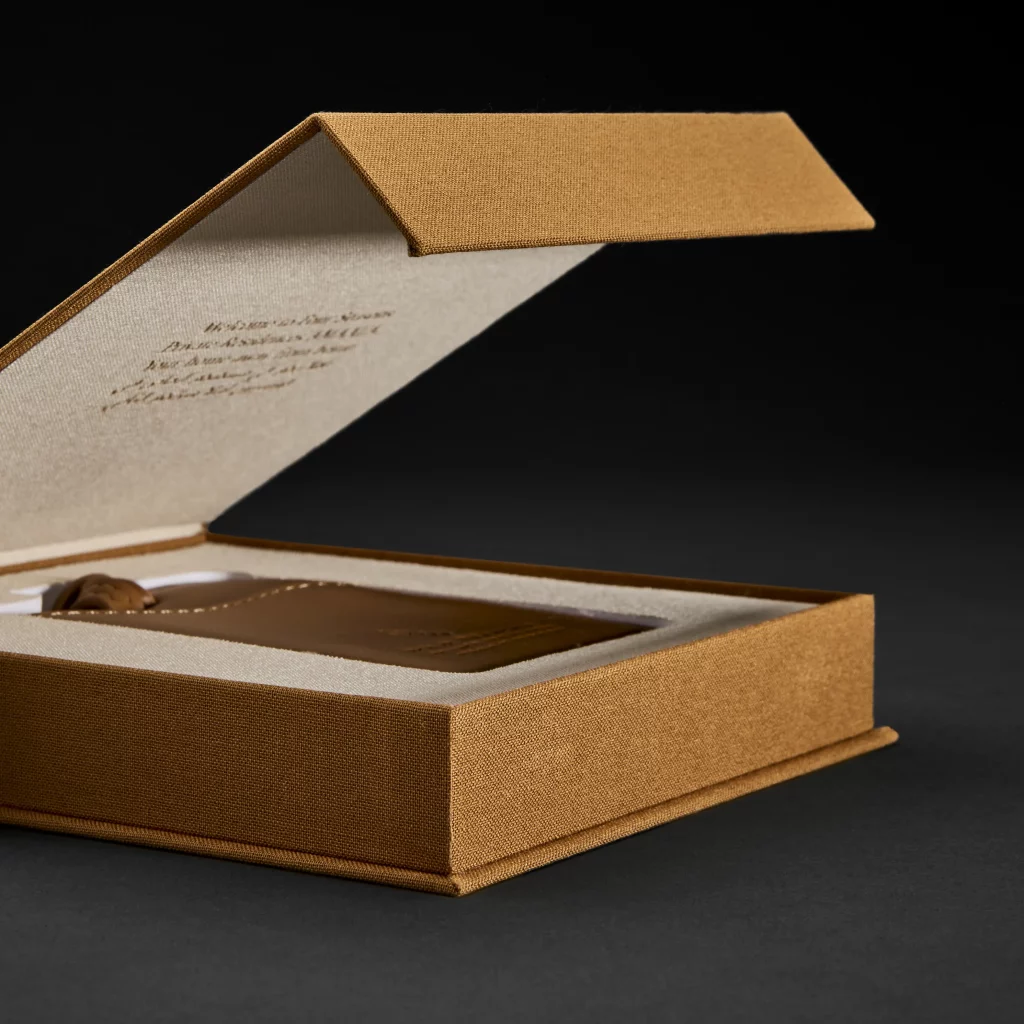
Behind every perfume box, cosmetic case, or collector's box lies a technical decision, often invisible but crucial: the choice of paper. Paper weight, thickness, and texture are three distinct parameters that, together, determine the rigidity, feel, and perceived value of packaging.
Confusing these concepts or focusing solely on paper weight risks creating packaging that fails to deliver on its aesthetic and structural promises. At Maestro, we incorporate these trade-offs from the initial consultation phase, well before the first proof approval, to ensure the final product lives up to the creative vision.
Paper weight, thickness and texture in packaging
Reading time: ~7 min
- Paper weight: a surface mass, not a thickness
- Thickness in microns: the physical measurement that weight doesn't tell you
- The feel of the paper: the forgotten parameter that changes everything by touch
- Paper, cardboard, or solid board: how to choose according to your packaging
- The Maestro approach to paper engineering
- FAQ
Paper weight: a surface mass, not a thickness
Grammage expresses the mass of one square meter of paper, expressed in grams per square meter (g/m²), sometimes noted as GSM in English (Grams per Square MeterThis is the most commonly mentioned piece of information on a paper datasheet, and it's also the one that generates the most misunderstandings. ISO 536 standard, adopted in France under the reference NF EN ISO 536, precisely frames the method of determining this surface mass for paper and cardboard.
In practice, the paper weight indicates the density of the material, but it doesn't directly tell you about its physical thickness or perceived rigidity. A coated paper of 150 g/m² and an uncoated paper of 150 g/m² do not behave the same way: the former will be denser and thinner, the latter bulkier and more flexible. This distinction is crucial when designing packaging where structural integrity and tactile feel are non-negotiable quality criteria.
Weight guidelines according to usage
To contextualize the uses, here are the benchmarks usually used in the printing and... packaging :
| Weight (g/m²) | Media type | Typical usage |
|---|---|---|
| 60 to 90 g/m² | Office paper / lightweight offset | Internal printing, standard documents |
| 90 to 135 g/m² | Medium coated paper or offset | Brochures, press kits, catalogues |
| 135 to 170 g/m² | Heavy coated paper / covering | Premium box covers and packaging |
| 200 to 350 g/m² | Cardboard box | Folding cases, cards, secondary packaging |
| 350 g/m² and above | Compact cardboard / foam board | Rigid boxes, gift sets, luxury packaging |
For high-end box coverings, specialist sources generally recommend a weight range of 120 to 150 g/m² for the lining paper, depending on the packaging design and the finishing techniques used. Beyond that, we enter the realm of cardboard, which is a paper grade in its own right.
Thickness in microns: the physical measurement that weight doesn't tell you
The thickness of paper or cardboard is a physical quantity distinct from its basis weight: it measures the actual space occupied by the sheet, expressed in microns (µm) or millimeters. Its determination is governed by ISO 534, which defines the measurement conditions using a micrometer. This instrumental precision is essential when designing a box whose assembly dimensions must be accurate to within a tenth of a millimeter.
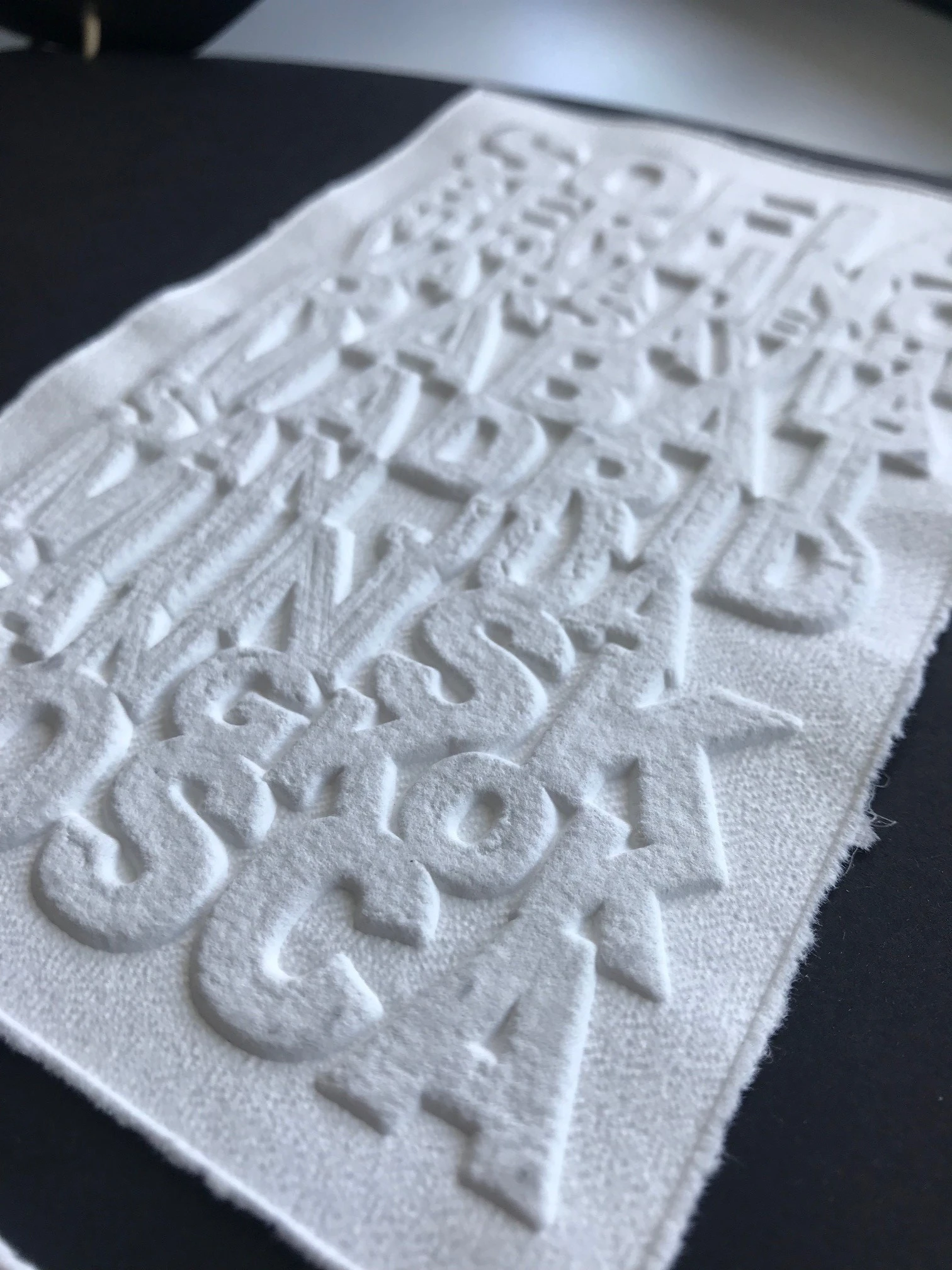
Difference between weight and thickness
The difference between paper weight and thickness in microns is explained by the internal structure of the cellulose fibers. Highly calendered paper—compressed between high-pressure rollers during manufacturing—will be denser and therefore thinner for the same weight than uncalendered paper, whose fibers remain more open. Coating, which involves applying a mineral layer to the paper's surface to improve printability, also helps reduce the relative thickness while increasing the mass.
Good to know Two papers with the same weight listed on their technical specifications can actually be twice as thick depending on their manufacturing process. That's why, at Maestro, we always request the complete technical specifications of the paper, not just the weight, before approving a packaging project.
In practical terms, uncoated 90 g/m² offset paper typically has a thickness between 100 and 120 microns, while glossy coated paper of the same weight will often be less than 90 microns. For 300 g/m² cardboard, the thickness typically ranges from 350 to 420 microns, depending on the grade and manufacturer. These variations directly impact the rigidity of the packaging, the feasibility of die-cutting, and the behavior of the substrate during folding or gluing.
The feel of the paper: the forgotten parameter that changes everything by touch
The bulk of paper is the ratio between its thickness, measured in microns, and its basis weight, expressed in g/m². The higher this ratio, the more "voluminous" or "bulky" the paper is said to be: for the same mass, it occupies more space and provides a more pronounced sensation of substance under the fingers. It is precisely this parameter that explains why Two papers of the same weight can have very different appearances and rigidities..
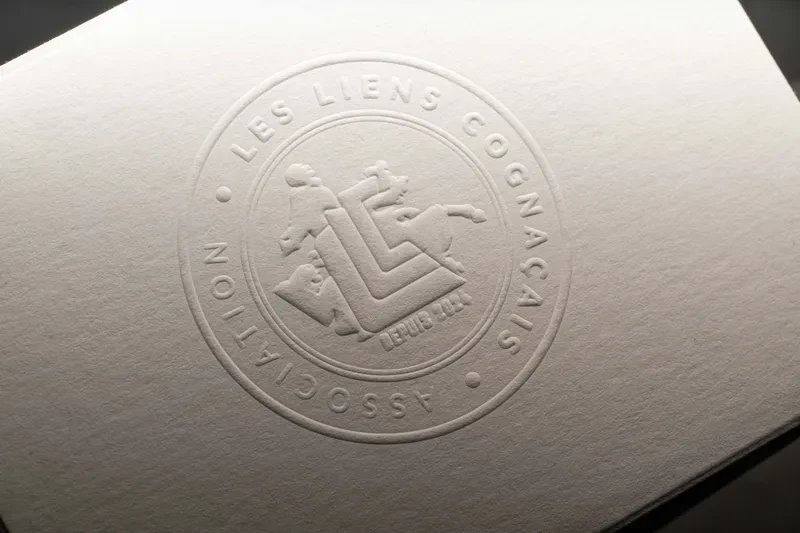
A paper with a high bulk will be perceived as thicker, more refined, and more durable, even if its basis weight remains modest. Conversely, a paper with a low bulk, highly calendered, or heavily coated will appear thin and smooth, which can be desirable for certain premium, highly graphic finishes, but can compromise the structural integrity of packaging if the choice is not carefully considered. The apparent volume of the paper is therefore a selection criterion in its own right, just like its basis weight or thickness.
The effect of the hand on luxury packaging
In the context of luxury packaging, the hand directly influences the user's sensory experience upon unwrapping. A perfume box whose wrapping paper features a raised hand immediately conveys an impression of material richness and meticulous craftsmanship. This is precisely what the Maestro teams evaluate when selecting materials, taking into account both the desired tactile feel and the production constraints of the converting machinery.
Key points to remember The paper's bulk is calculated by dividing the thickness (in µm) by the basis weight (in g/m²). A result greater than 1.2 indicates a bulky paper, particularly suitable for boxes and art book covers where the perception of density is a signal of quality.
Paper, cardboard, or solid board: how to choose according to your packaging
The difference between paper, cardboard, and solid board isn't just about weight; it involves very different manufacturing, processing, and final product characteristics. Understanding these distinctions is essential for any production manager or art director overseeing the production of premium packaging.
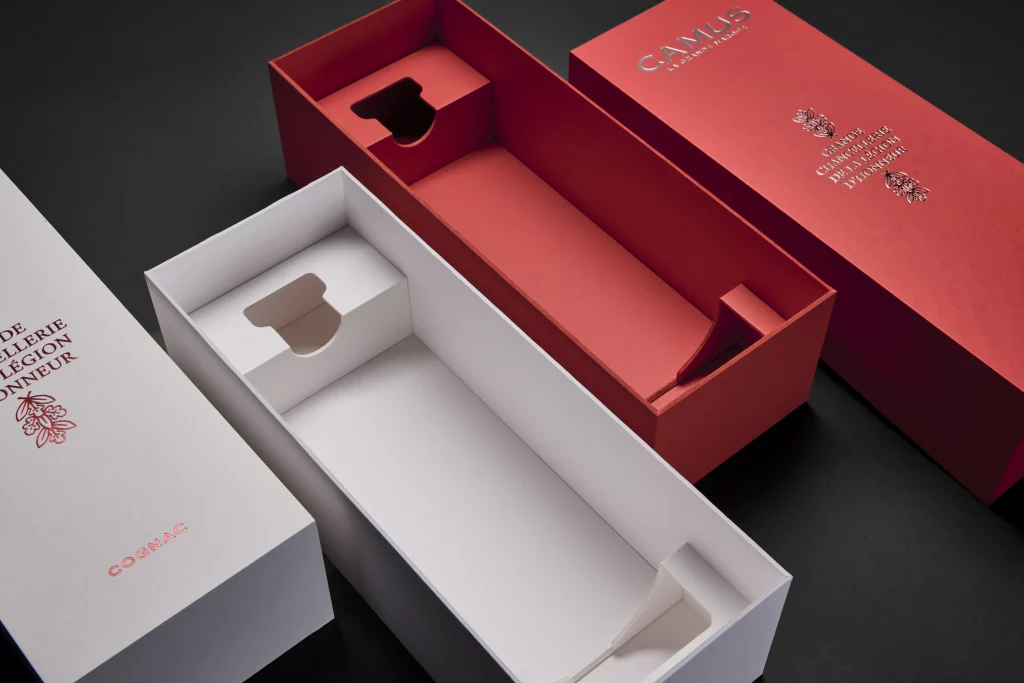
Paper, up to approximately 160 or 180 g/m² depending on the classification, is a flexible substrate used for printing, coating, or wrapping. It is used to wrap rigid boxes, create the inside pages of catalogs, or produce high-end labels. Cardboard, between approximately 200 and 400 g/m², is an intermediate substrate that combines printability with sufficient rigidity for folding cases or thick cards. Solid board, above 400 g/m², offers high compression resistance and forms the load-bearing structure of rigid boxes and luxury cases.
Several criteria guide the choice of the right medium for premium packaging:
- The final destination of the packaging Folding case, rigid dressed box, slipcase, collector's box or art book require supports with very different mechanical characteristics.
- The planned finishing techniques Hot foil stamping, embossing, 3D selective varnishing or debossing impose surface and thickness constraints that not all papers can absorb.
- Traceability and certification requirements : for tenders from major luxury groups, FSC certification of the support is often a prerequisite, as is compatibility with vegetable-based inks.
At Maestro, this paper engineering phase is integrated into our consulting process from the initial brief. Our role as a technical manufacturing office is precisely to anticipate any incompatibilities between the chosen substrate and production constraints, whether the manufacturing takes place in Italy or China. To learn more about our approach to supervised manufacturing, you can visit our dedicated page. double production.
The Maestro approach to paper engineering
Mastering the paper weight, thickness, and feel of packaging paper helps avoid unpleasant surprises during the prototyping phase and ensures consistency between the mock-up and the finished product. Too often, packaging is approved based on a weight specified in the technical specifications without verifying the actual thickness or feel of the material. The result can be packaging that lacks structure, a crease that breaks, or a tactile quality that doesn't meet the brand's expectations.
Our expertise in paper engineering is based on in-depth knowledge of paper and cardboard suppliers in Europe and Asia, a rigorous review of technical specifications, and physical testing conducted prior to each production run. We support both major luxury brands in selecting certified materials for their Christmas gift sets and independent brands launching their first premium packaging and seeking to achieve the artisanal excellence of large-scale production on smaller volumes.
If you are preparing a packaging or’premium edition If you would like advice on choosing the right medium, our team is available to review your brief. You can also explore our portfolio on the Maestro Gallery To understand the full extent of our expertise, and to submit a project, please visit our page. contact.
Weight, thickness and feel: three inseparable parameters
Paper weight, thickness, and feel are three complementary and inseparable parameters in the design of quality packaging. Paper weight indicates the surface mass of the material, thickness in microns describes its actual physical volume, and feel expresses the relationship between the two, revealing the density and texture of the paper.
Ignoring any of these three parameters risks leading to poorly calibrated trade-offs that can compromise the perceived value of packaging, its structural integrity, or its compatibility with planned finishing techniques. At Maestro, we make this technical expertise a cornerstone of our consulting services, supporting projects where every material detail matters.
FAQ
Can the thickness of a paper be calculated from its basis weight alone?
No, not directly. Basis weight indicates the surface mass of a paper, but thickness also depends on the structure of the cellulose fibers, the coating, and the calendering process. Two papers with the same basis weight can have very different thicknesses. The ISO 534 standard defines the official method for measuring thickness using a micrometer.
What is the difference between cardboard box and solid cardboard for a luxury box?
Cardboard, typically between 200 and 400 g/m², is used for folding cartons and substrates requiring both printability and moderate rigidity. Solid board, above 400 g/m², offers significantly greater compression resistance and forms the load-bearing structure of rigid boxes and high-end cases. The choice between the two depends on the packaging design and processing requirements.
Does FSC certification also apply to high-mass papers used in premium packaging?
Yes. FSC certification (Forest Stewardship CouncilThis certification applies to all paper and cardboard substrates, regardless of their surface mass or structure. It guarantees that the cellulose fibers come from responsibly managed forests. For tenders from major luxury groups, this certification is often required, along with supply chain traceability.
Why is the hand of the paper particularly important for art books and exhibition catalogues?
In the’premium edition, The paper's weight directly influences the perceived substance and quality of the work. An art book printed on heavy-weight paper appears more substantial, denser, and more precious than a book of the same weight printed on highly calendered paper. This factor also affects the final thickness of the book's spine, which has direct consequences for the binding and cover lettering.
Does the paper weight of the wrapping paper influence the applicable finishing techniques?
Yes, significantly so. Hot foil stamping, embossing, and debossing require a sufficiently stable paper surface and a minimum thickness so that the die can be printed without tearing the substrate. Paper that is too light or has low bulk is likely to warp under pressure or heat. This is why the choice of substrate must always be validated beforehand, taking into account the planned embellishment techniques.