
In a world where every detail counts, luxury packaging flocking has become one of the most sought-after finishes for enhancing boxes and cases. By depositing millions of microfibers onto a substrate, it creates a truly velvety effect that transforms simple packaging into a sensory experience. For a niche perfume launch, a jewelry case, or a spirits gift set, this soft texture immediately reinforces the perceived value. However, mastering the technical constraints, durability, and integration into an international manufacturing chain is essential. This is precisely where the technical expertise of a manufacturing office like Maestro makes all the difference.
Luxury flocking packaging: when velvet graces your boxes and cases
Reading time: ~9 min
- What is flocking in luxury packaging?
- Why use flocking for luxury packaging?
- On which surfaces can flocking be used?
- Examples of applications for jewelry and perfume boxes
- Advantages and limitations of luxury packaging flocking
- How to choose between flocking and other luxury finishes
- How Maestro integrates flocking into its dual production in Italy and China
- FAQ
What is flocking in luxury packaging?
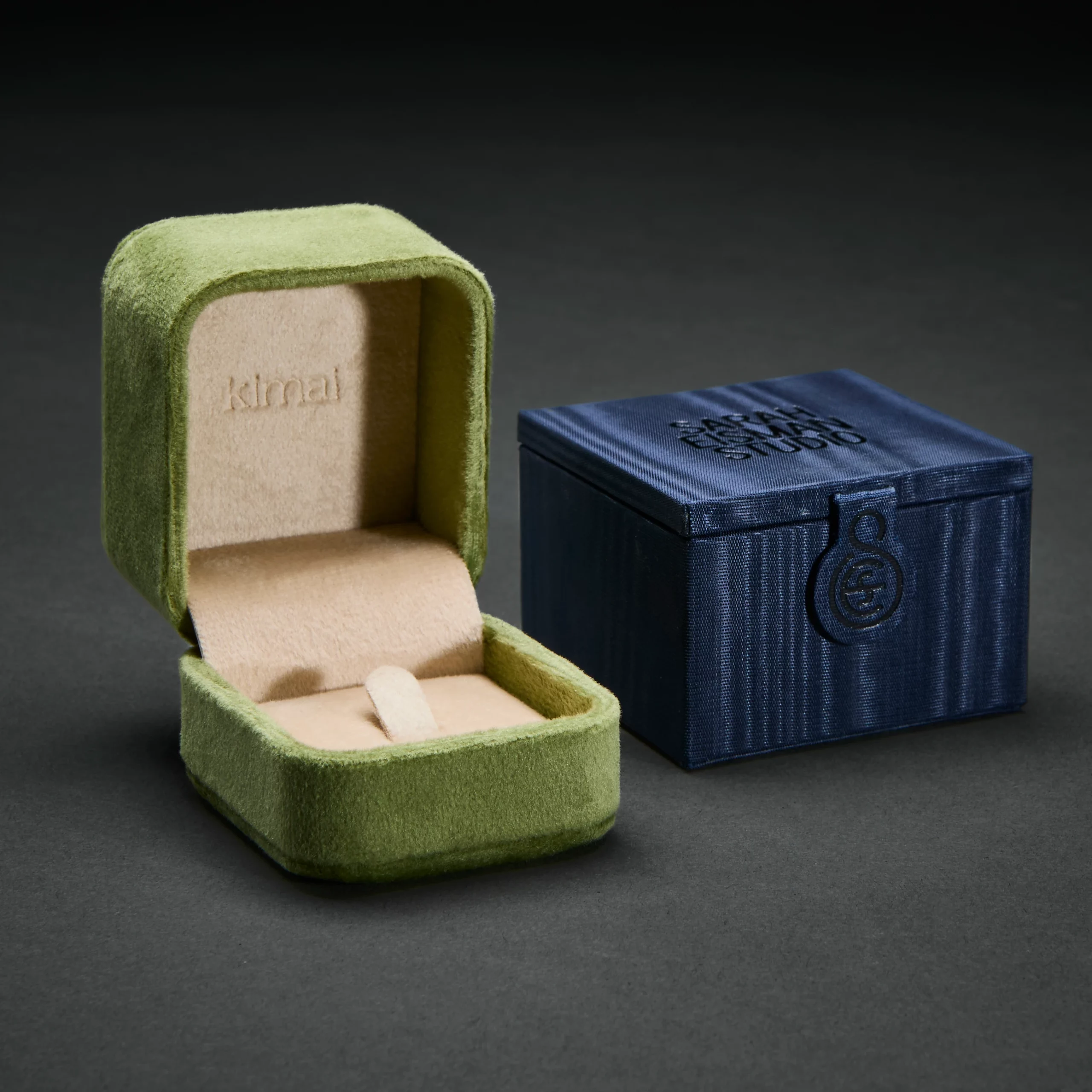
Flock printing is a tactile finish that involves depositing very fine fibers onto a surface previously coated with adhesive. These fibers, in quantities of several million per square meter, stand upright and create a velvety texture of varying density.
Electrostatic flocking
The electrically charged fibers are projected towards the substrate; they embed themselves perpendicularly in the adhesive, providing homogeneous coverage and excellent hold, ideal for rigid boxes, cases and cushions.
Transfer flocking
The velvet is first produced on a backing film and then transferred using heat and pressure. This method ensures precise pattern control and perfect repeatability in large production runs, which is essential for international production. The final result depends in particular on the length and fineness of the fibers, their material (polyamide or viscose), as well as the chosen color and opacity. In premium packaging, flocking is often combined with other embellishments such as hot foil stamping or embossing to enrich the tactile experience without overwhelming the design.
Why use flocking for luxury packaging?
Reinforce perceived value
The velvet texture immediately evokes the codes of jewelry, haute parfumerie or exceptional spirits; it justifies a higher price positioning.
Create a memorable sensory experience
The act of unpacking becomes a micro-ritual: the hand glides over a soft and unexpected surface, reinforcing brand recall.
To visually translate the brand's universe
Colour, density and placement allow for fine alignment of flocking on a creative territory: deep black for jewelry, burgundy for a spirit, powdery pastel for a cosmetic, etc.
On which surfaces can flocking be used?
Paper and cardboard for rigid boxes and cases
Common applications: rigid boxes covered in flocked paper, partially flocked box interiors or sleeves. Success depends on the rigidity of the substrate and the control of the folds.
Plastic, metal, glass for special cladding
Flock printing can be applied to certain plastic or metal parts, or to pre-treated glass, creating unique effects such as a velvety perfume bottle cap. It is then essential to ensure adhesive/material compatibility and resistance to abrasion.
Examples of applications for jewelry and perfume boxes
Jewelry and watch cases
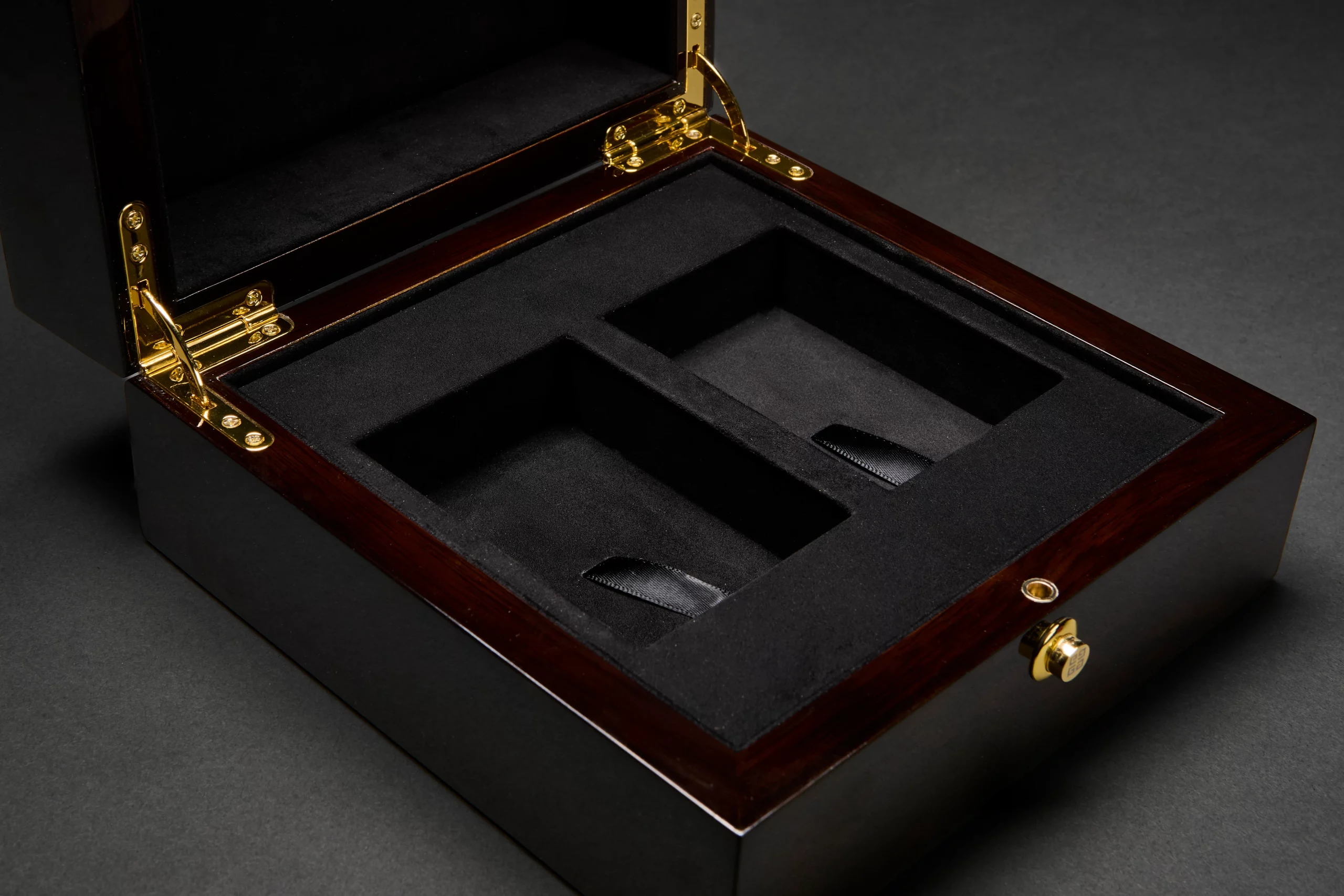
Fully flocked interiors to protect watches or jewelry, velvet trays or cushions and a sober exterior/rich interior contrast; the precision of the cuts and the durability are crucial.
Niche and high-end perfume packaging
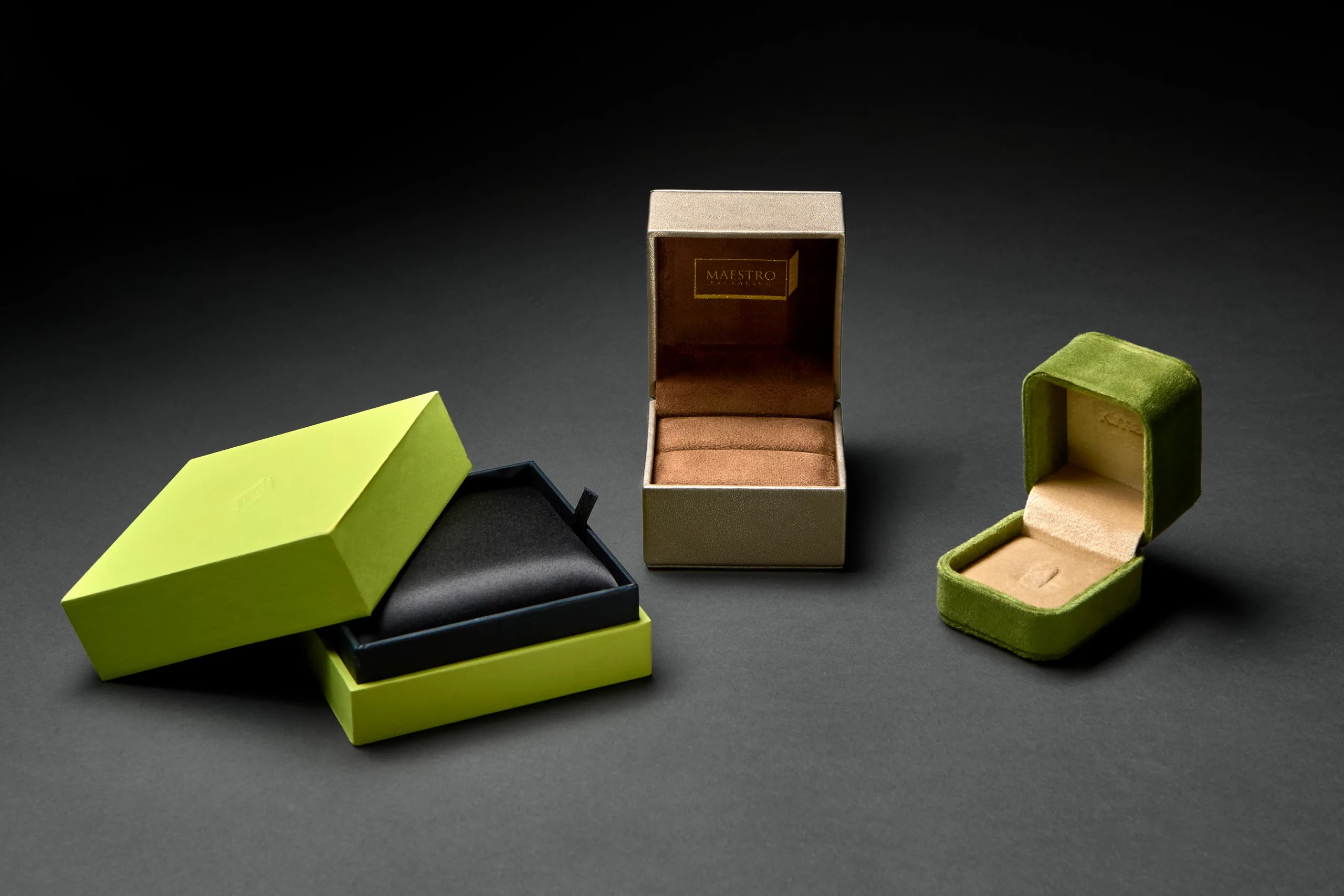
Flocked inner shells conforming to the bottle, partial outer covering or combination of flocking + embossing + selective varnish to amplify the sensory dimension.
Premium spirits gift sets
Flocked interior holding the bottle, velvet supports for tasting accessories or fully dressed collector cases, aligning the brand experience with that of traditional luxury.
Advantages and limitations of luxury packaging flocking
The main advantages
- Immediate differentiation in shop windows or in press mailings
- An enhanced unboxing experience that extends the lifespan of the box set.
- Clear product range segmentation, reserving velvet for high-end editions
Points of vigilance
Durability (risk of marking or loss of density), sensitivity to friction areas, environmental impact of synthetic fibers and complexity of international production require rigorous technical and creative management.
How to choose between flocking and other luxury finishes
| Desired effect | Recommended finish | Typical use |
|---|---|---|
| Velvety softness | Flockage | Interior of the case, tactile strips |
| Dry relief, shadow/light | Embossing | Logos, patterns |
| Metallic shine | Hot foil stamping | Monograms |
| Matte/glossy contrast | Selective varnishing | Visuals, typography |
| Peach skin feel | Soft-touch | Cases, catalogs |
The challenge is to combine effects without overloading the object: discreet gilding + velvet interior for a perfume, deep embossing + flocking for jewelry, or flocked insert + selective varnish for a spirit.
How Maestro incorporates flocking into its dual production in Italy and China
Paper engineering and upstream 3D prototyping
Study of the exact role of flocking, choice of support and fibers, volume models to validate haptic rendering and adjustments before series launch.
Production as close as possible to the markets
Italian site for small and medium-sized high-end production runs, Chinese site for larger volumes, with on-site technical support. Maestro in order to ensure regularity, color control and traceability.
Control of deadlines and traceability
Adherence to tight schedules and provision of complete documents (FSC, carbon data) to secure international launches.
FAQ
Does flocking hold up well over time?
Yes, provided the quality of the fibers and adhesive is suitable and areas of intense friction are avoided or reinforced. Resistance tests are essential.
Can flocking and gilding be combined?
Absolutely: hot foil stamping on non-flocked areas and velvet on flat surfaces or interiors, with an order of operations adjusted to preserve each effect.
Is flocking compatible with an eco-responsible approach?
Since the fibers are mostly synthetic, their impact must be included in the environmental assessment and material traceability documented. Combined with FSC-certified cardboard and vegetable-based inks, flocking can be part of a comprehensive and responsible approach.