
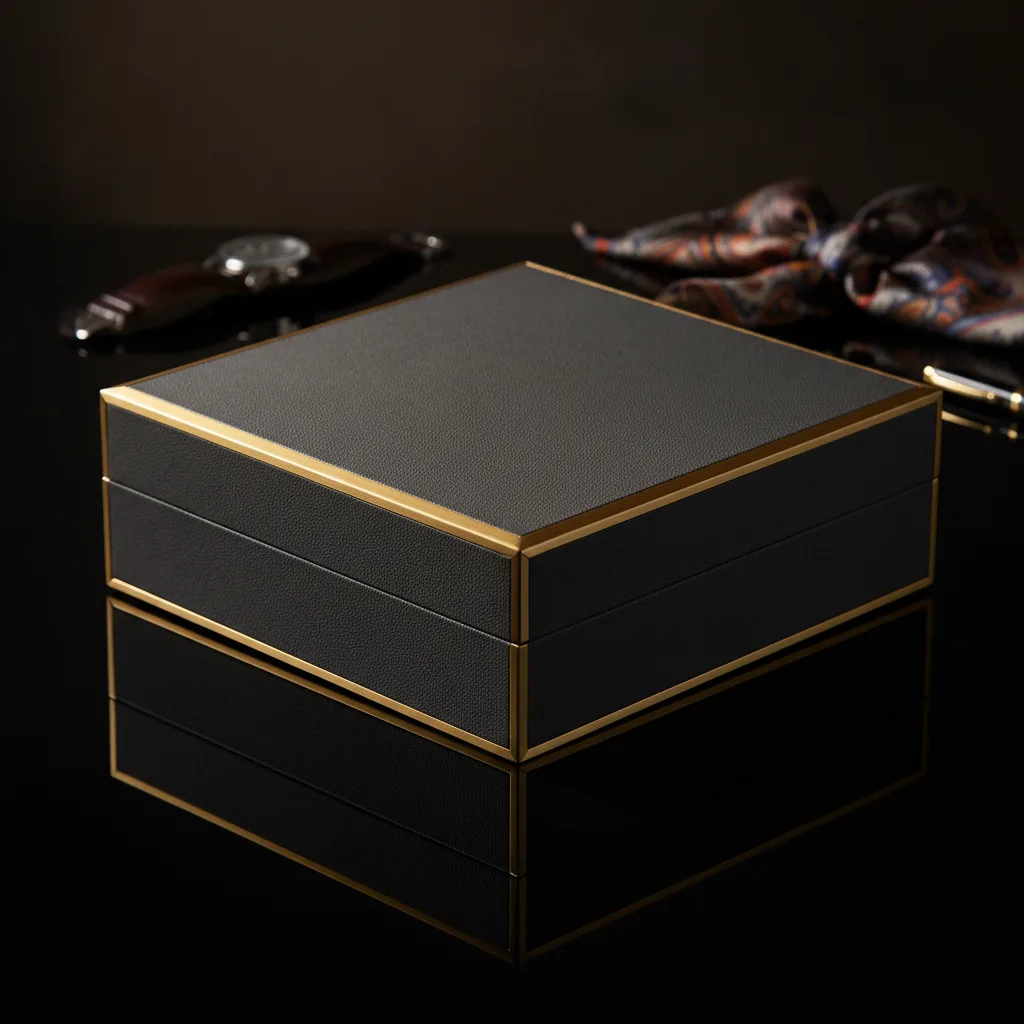
A custom-made luxury rigid box is more than just a beautiful box. It's a meticulously crafted structure that protects, showcases, and embodies the perceived value of your brand from the very first impression. For a production manager, art director, or brand manager, understanding what lies behind the price of a high-end rigid box is essential for making the right decisions.
In this article, we break down the premium rigid box layer by layer: gray cardboard soul, paper or fabric covering, inner foam, satin, magnetic closures, finishing touches and luxury production constraints. You will see how each choice impacts the final result, the budget and the deadlines in order to communicate on equal footing with a technical manufacturing office like Maestro.
Luxury custom-made rigid box: the anatomy of exceptional packaging, from structure to finish
Reading time: ~12 min
- What is a custom-made luxury rigid box?
- The internal structure: the core is made of grey cardboard
- Exterior covering: paper, canvas, suede
- The interior: foam, satin, and product presentation
- Closure systems: magnetic, drawer, separate lid
- The premium finishes that define a luxury box
- This justifies the price of a custom-made luxury rigid case
- How to choose your high-end rigid case manufacturer
- Key points to validate before starting production
- Synthesis
What is a custom-made luxury rigid box?
A custom-made luxury rigid box is a rigid (non-folding) packaging made from thick cardboard, covered in paper or fabric, and often featuring interior fittings. Designed for premium brands, it offers protection, prestige, and an enhanced opening experience.
| Compared to a standard cardboard box |
|---|
| Cardboard thickness is significantly greater |
| Structure glued and then covered (not simply cut and grooved) |
| Extensive customization: materials, textures, volumes, closures, inserts |
This type of box is preferred for niche perfumes, high-end cosmetics, spirits, jewelry, limited editions or premium gift sets.
The internal structure: the core is made of grey cardboard
Cardboard thickness and quality
For a personalized prestige gift box, high-density gray cardboard is generally used (1.5 to 3 mm depending on the size and weight of the product). Sometimes, coated cardboard or reinforced solutions are chosen for large bottles or multi-product gift boxes. The thicker and more uniform the cardboard, the more resistant the box is to shocks and handling; conversely, medium-weight cardboard results in fragile corners, deformations, and a less substantial feel when handled.
Cutting, creasing, gluing
The precision of the cutting and creasing is crucial for achieving clean edges. Dimensional tolerances are tightened, the adhesive is calibrated to avoid any excess thickness under the cladding, and the assembly must remain stable during cladding, especially in large production runs.
Exterior covering: paper, canvas, suede
Choice of material
Common options include premium coated papers (metallic effects, 3D spot varnish), textured specialty papers (canvas, linen, leather, etc.), fabrics (imitation leather, suede, velvet), and high-end textured or recycled kraft papers for an eco-responsible positioning. These coverings are laminated to the core; their thickness and flexibility influence the quality of the corners and grooves.
Printing and adherence to the charter
On paper, offset printing is the gold standard for rich visuals; on canvas or suede, screen printing offers a crisp and durable logo. Key considerations for production/art direction teams include color consistency across all elements, paper performance during finishing processes (lamination, embossing, foiling), and mastery of photogravure to minimize proofs. At Maestro, these parameters are controlled from the outset, whether the production is in Italy or China.
The interior: foam, satin, and product presentation
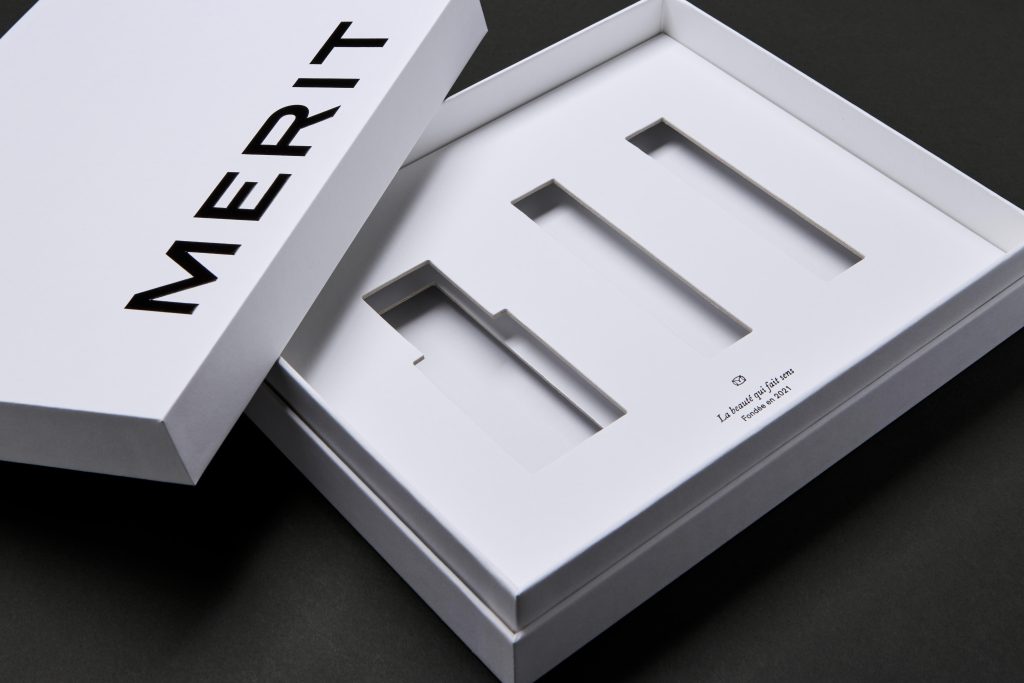
Inserts and shims
Depending on the product: custom-cut high-density foam (for perfumes, jewelry, spirits), compact cardboard or micro-corrugated cardboard covered with paper for lighter inserts, or specific thermoforming. The thickness and density are adjusted according to the weight and fragility of the contents, while ensuring easy handling.
Interior trim
To enhance the perception of luxury: foam inserts covered in velvet, suede, or textured paper; bases lined with printed, metallic, or satin paper; interior markings (hot-stamped logo, tone-on-tone screen printing, discreet message). This presentation transforms a "decent premium" box into a "collector's item.".
Closure systems: magnetic, drawer, separate lid
Types of structures
Common configurations include the book-shaped box with magnetic closure, the box with a separate lid (hatbox or two-part type), the drawer box with ribbon, the bell-shaped box with or without a slipcase, and nesting boxes for limited editions. Each structure involves technical constraints regarding cardboard thickness, reinforcements, and assembly cost.
Magnets and reinforcements
Magnets are incorporated from the initial design stage; improper positioning or an undersized magnet can lead to a gaping closure, opening during transport, or a visible magnetic mark under the casing. Hence the importance of 3D prototyping before mass production.
The premium finishes that define a luxury box
Hot and cold gilding
Hot foil stamping ensures crisp edges, a deep shine, and can be combined with embossing for a raised effect. Cold foil stamping is better suited to large metallic areas or complex effects associated with offset printing.

Embossing, debossing, varnishing
Embossing (raised relief), fine embossing, selective gloss or matte varnish, or even 3D selective varnish: the ideal combination depends on the paper, the design, and the desired tactile effect. Paper engineering is essential to ensure compatibility between the substrate, inks, and finish.
This justifies the price of a custom-made luxury rigid case
| Main cost items |
|---|
| Cardboard material (thickness, quality, FSC certificate) |
| Paper or textile coverings (creative range, special fabrics) |
| Printing & photogravure (file quality, color checks, proof) |
| Finishing touches (gilding, embossing, varnishing, metallization) |
| Inserts & interior fittings (foam, thermoforming, cladding) |
| Manual or semi-automatic assembly |
| Logistics (dual production, quality controls, individual packaging) |
The more complex the case, the greater the proportion of skilled labor required. In terms of volume: small, specialized series produced in Italy offer responsiveness and direct control; for larger quantities, dual production with China, overseen by experts, allows for price competitiveness while maintaining luxury standards thanks to on-site technical support. [CTA middle]: Are you considering a new custom-made luxury rigid case and want to challenge your structural and finishing options? Present your project to Maestro on the factory site for an initial technical reading.
How to choose your high-end rigid case manufacturer
Questions to ask during the briefing
- Who is really in charge of the manufacturing process: an in-house technician or a broker?
- What production sites are used and how are they controlled?
- What papers, cardboards and foams are available in stock with which certifications?
- How are photogravure and color validation handled?
- What is the prototyping process (white model, printed, 3D)?
- What production reports and CSR documents can you provide?
Compare offers methodically
To compare several quotes, verify that the thickness and quality of the greyboard are equivalent, that the covering papers are identical or equivalent, that the printing and finishing processes are the same, and that quality control, packaging, and logistics options are included. An abnormally low price may mask substandard material quality or a lack of quality control, leading to disputes and returns.
Key points to validate before starting production
Prototyping and testing
Create a white mock-up for the structure, then a printed mock-up with finishes for colours and gilding, volume tests with your real products and a validation of transport conditions (stacking, shock resistance).
International delivery times and logistics
In international production, lead times depend as much on the workshop as on logistics. A partner overseeing dual production (Italy/China) anticipates bottlenecks, secures warehouse dates, adjusts in case of changes, and documents each step for purchasing, marketing, and CSR.
FAQ
What is a custom-made luxury rigid case?
A custom-made luxury rigid box is a rigid, non-folding package made of thick cardboard, covered in paper or fabric, and featuring interior fittings tailored to the product. It aims to offer optimal protection, a high perceived value, and a memorable opening experience for premium brands.
What are the main factors that influence the price of a custom-made luxury rigid case?
The price of a custom-made luxury rigid box depends mainly on the thickness and quality of the cardboard, the choice of papers or fabrics for covering, the printing and photogravure processes, the finishing touches, the inserts and interior fittings, the assembly method as well as the logistical and quality control requirements.
How to choose your manufacturer of custom-made luxury rigid cases
When choosing a manufacturer of custom luxury rigid boxes, it is essential to identify who actually manages production, to know the manufacturing sites and their quality control procedures, to verify the ranges of papers, cardboards, and foams available, the prototyping process, color management, and CSR commitments. Comparing several offers with equivalent technical specifications helps ensure the expected level of quality.
What steps need to be validated before starting the production of a custom-made luxury rigid box?
Before launching production, a white model of the structure, a printed model with finishes, 3D tests with the actual products, and transport trials must be validated. It is also essential to finalize deadlines and logistics, particularly in the case of dual international production.
Synthesis
A custom-made luxury rigid box is both a technical and emotional object. Beneath its apparent simplicity lies a core of precise gray cardboard, carefully chosen cladding, a meticulously designed interior, and finishing touches calibrated to the micron. Understanding this structure allows for better management of tenders, justification of budgets, and minimization of production risks.
By choosing a technical production office like Maestro Gestion Edition, you benefit from a single point of contact with expertise in paper engineering, photogravure, supervised double production, and the CSR traceability required by luxury brands. To explore the world of manufacturing and its achievements further, visit the Maestro Manufacture website.