
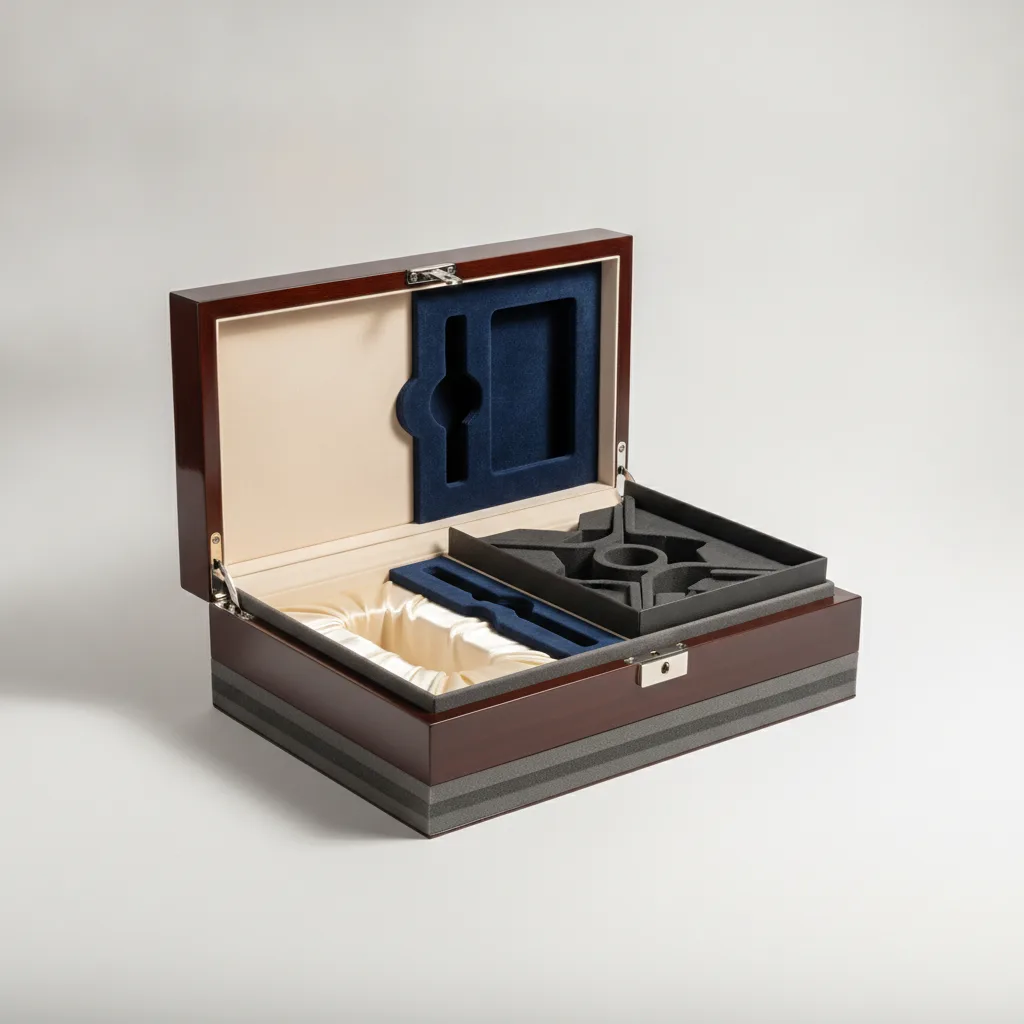
In a premium gift box, custom-made internal padding is never just an accessory. It secures the product, protects it during transport, and stages the opening process—a crucial moment for brand perception. Choosing between foam, EVA, satin, velvet, or structured cardboard directly impacts the security, ergonomics, image, and overall cost of the packaging. In 2026, with increased CSR constraints and high-stakes product launches, the right padding material becomes both a strategic and creative choice. This guide offers a practical method for selecting the solution best suited to your product, your brand identity, and your budget.
Custom-made interior padding: foam, EVA, satin or velvet — which material to protect and enhance your product?
Reading time: ~9 min to review the custom-made internal shimming.
- The role of internal padding in a luxury case
- The main types of inserts for premium cases
- How to choose the right packing material
- Impact of the choice of mounting method on the overall cost of the enclosure
- Dos and Don'ts for your interior shimming
- FAQ
The role of internal padding in a luxury case
Protect the product
The padding prevents movement, absorbs shocks, and avoids contact between fragile parts. For a polished glass bottle or a precision instrument, the density of the foam, the thickness of the cardboard, and the structure of the compartment are crucial.
To stage the object
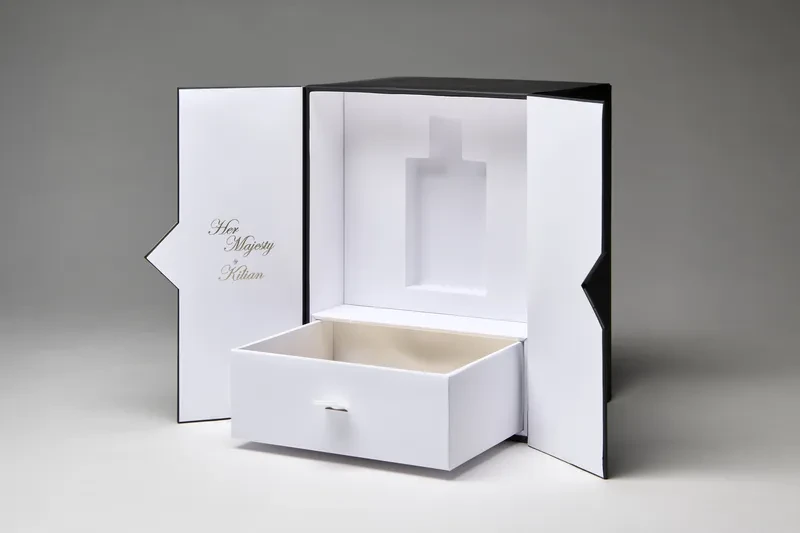
The depth of the compartment, the color contrast, and the centering all contribute to the drama of the unboxing; they direct the gaze from the moment it is opened.
Make it easier to get started
Finger recesses, side notches or removal aid strips are designed from the engineering phase of the sizing in order to avoid any frustration.
To represent the brand image
Raw black foam doesn't tell the same story as a velvet-covered insert or a dyed cardboard inlay. Texture, color, and feel must extend the brand's visual language.
The main types of inserts for premium cases
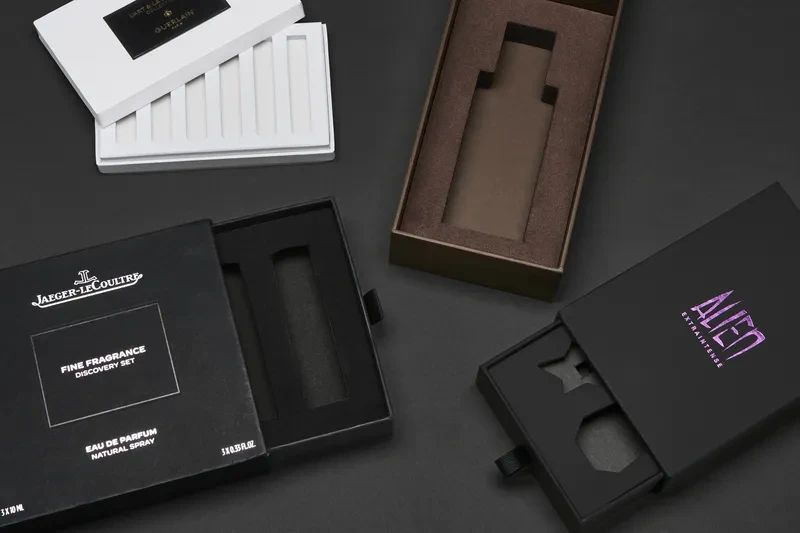
High-density foam and EVA padding
Strengths: High mechanical protection; very precise cutting; large thicknesses possible; wide range of colors. EVA offers a fine grain and a visually crisp finish, ideal for premium spirits or watchmaking. Boundaries : sometimes too "technical" in its raw state; variable environmental footprint; cutting tolerances to be checked.
Cushioning covered in satin or velvet
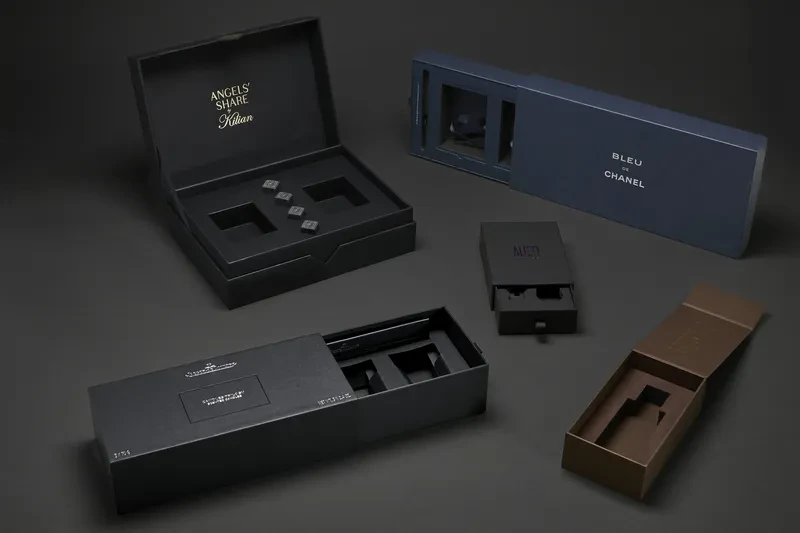
Satin: luminous and smooth draped effect, perfect for perfumery or haute couture cosmetics when covering a rigid structure. Velvet/suede: soft touch, high-quality finish especially in dark shades; strong contrast with metal or glass.
Points to consider: Risk of creases, sensitivity to dust, higher cost per square meter.
Cardboard inlays and creative paper padding
Strengths: excellent recyclability; possibility of dyed cardboard; creation of levels for scenography; more ecological perception. Boundaries : Less protection for heavy objects; sensitivity to humidity; tolerances to be controlled.
Foam/EVA + textile + cardboard combinations
The most sophisticated boxes combine a foam or EVA base for protection, a textile covering for emotion and cardboard risers to structure the levels; the ideal balance between security, perception of luxury and CSR objectives.
How to choose the right packing material
Analyze the product and its constraints
Weigh the product and its complete case, assess its fragility (glass, lacquer, gilding), its shape, and the intended mode of transport. The more fragile, heavy, or complex the product, the more effective structural protection is required.
Define the level of protection and staging
Three parameters need to be considered: protection during transport, effect upon opening, and ergonomics of handling.
| Product type | Protection priority | Staging | Common materials |
|---|---|---|---|
| Niche perfume bottle | High | Bottle centered, silhouette illuminated | EVA foam + velvet or paper |
| Cognac/spirits gift set | Very high | Deep, solid case | Dense foam or EVA + covering |
| Limited edition art book | Average | Book flat, easy access | Inlay colored cardboard |
| Jewelry / Watchmaking | Medium to high | Elevated product, jewel-box style | Foam insert + velvet |
Integrating brand image and CSR
A socially responsible brand? Opt for cardboard or optimized, removable foam. A historic haute parfumerie house? Create a jewel-box effect with luxurious textiles, while documenting the materials. An independent spirits brand? A clean EVA foam base with just enough partial covering for a premium look.
Impact of the choice of mounting method on the overall cost of the enclosure
The cushioning material is only part of the cost of a rigid, padded box, but it can significantly affect the unit price. Key factors include the type of material, the complexity of the cuts, the finishing, and production volumes. Working upstream with a partner who can estimate several scenarios (raw foam, finished foam, dyed cardboard, cardboard/EVA mix) allows you to measure the impact on the overall cost price.
Dos and Don'ts for your interior shimming
| To do | Don't do |
|---|---|
| Take measurements on the actual product; test the handling from the prototype stage; anticipate the mode of transport; align colors and textures; document the materials. | Choosing a material solely for aesthetic reasons; mixing non-separable materials; neglecting tolerances; forgetting accessories; approving a final product without physical testing. |
FAQ
What type of packaging is needed for a niche perfume box?
High-density foam or EVA base cut to the shape of the bottle for protection, velvet, suede or high-end paper covering for the sensory dimension, and a discreet recess to facilitate squeezing.
How to reconcile luxury packaging and recyclability?
Opt for thick or colored cardboard inserts compatible with paper recycling processes. If foam is essential, minimize the number of materials used and design for easy disassembly; a manufacturing department can suggest optimized solutions.
How can I prevent the product from moving during transport?
Readjust the cutout around the product, review the thickness of the foam or cardboard, and add a second layer of padding if necessary to secure the top. Vibration and drop tests on prototypes are recommended before final approval.
A well-designed internal packaging does more than just prevent breakage; it creates a ritual of discovery aligned with your positioning and environmental commitments. Maestro, Our in-house manufacturing office can help you balance protection, emotional impact, and cost for your luxury gift sets, from niche perfumes to premium cognacs. More information: maestro-manufacture.com
—