
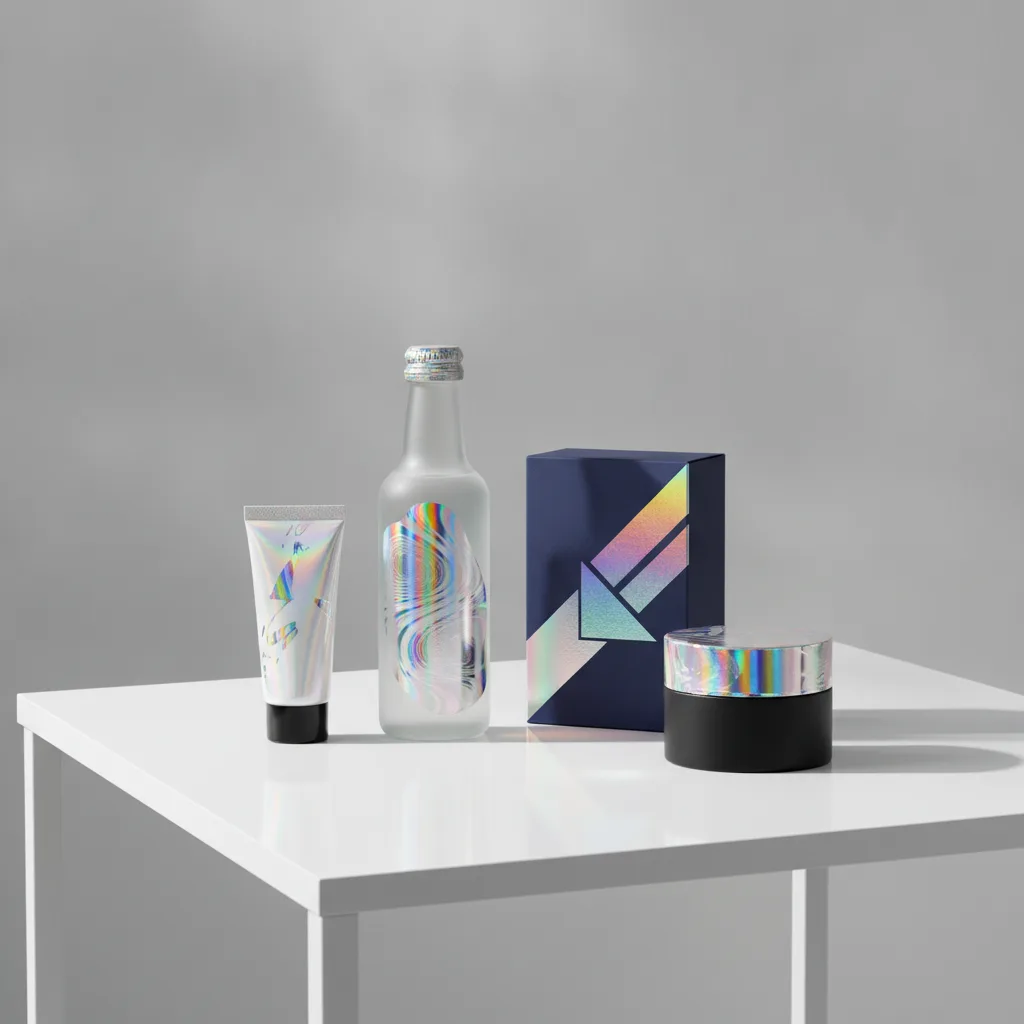
Holographic foil on packaging is everywhere. From energy drinks to perfume gift sets, these rainbow reflections catch the eye from afar and promise immediate impact on the shelf. But when applied as is to a luxury product, there's a real risk of veering into mass-market territory rather than high-end perfumery or exceptional spirits. For a production manager, art director, or brand manager, the question is simple: how to use holographic foil without compromising perceived value? This article details the technical aspects, uses, benefits, and, above all, the limitations of this finish to help you know when to adopt it or avoid it.
Holographic foil on packaging: spectacular effect or a bad idea for luxury?
Reading time: ~11 min
- What is holographic foil in packaging?
- How does holographic marking work?
- Advantages of holographic foil for brands
- The limits and pitfalls of a luxury world
- How to use holographic foil correctly in luxury
- Holographic foil and CSR: what questions should we ask?
- When to opt for other high-end finishes
- FAQ
What is holographic foil in packaging?
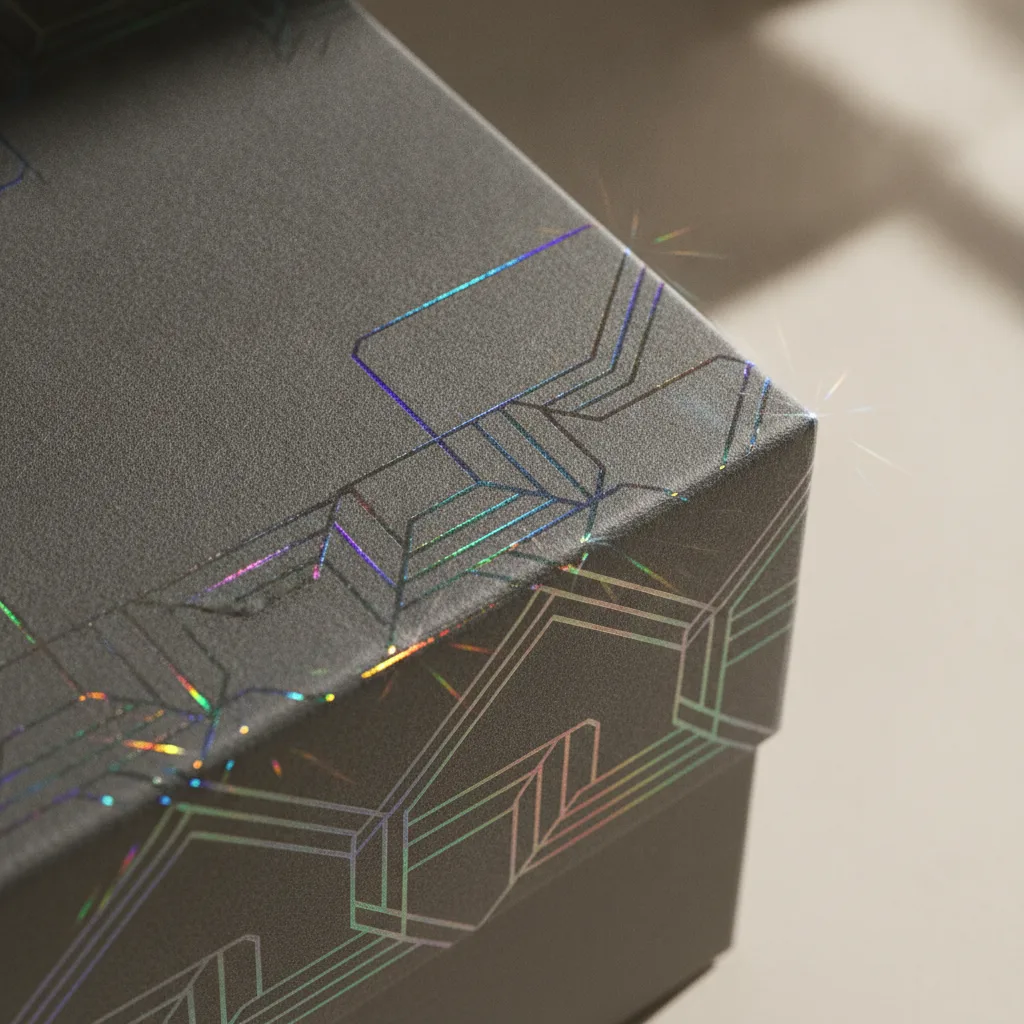
Holographic foil is a micro-embossed decorative film that diffracts light and creates dynamic rainbow reflections. Similar to hot foil stamping, its surface, engraved with micro-reliefs, acts like a diffraction grating, reflecting light in multiple colors. It is applied to paper or cardboard to create highly visible packaging that changes depending on the viewing angle.
| Family | Concise description | Typical applications |
|---|---|---|
| Decorative standard | Rainbow patterns, waves, stars | Drinks, party packs, entry-level cosmetics |
| High-end customization | exclusive brand diffractive pattern | Luxury perfumes, jewelry, limited editions |
| Security hologram | Effect + micro-texts, latent images | Pharmacy, electronics, premium spirits |
How does holographic marking work?
The transfer is primarily done using hot foil stamping: a heated plate presses the foil against the substrate, depositing only the decorative layer. Depending on the type of paper (glossy coated, textured, or dyed-through), the temperature and pressure are adjusted to maintain sharpness. Cold foil, applied cold using an adhesive varnish, remains an alternative for long offset print runs.
| Stage | Action | Key point |
|---|---|---|
| 1 | Pattern creation | Generic or custom micro-relief engraving |
| 2 | Foil manufacturing | Polyester layering + holographic layer |
| 3 | Application | Hot plate presses the foil onto the support |
| 4 | Result | Permanent design, impossible to forge without removing the backing |
Advantages of holographic foil for brands
Visual impact and differentiation
More striking than classic metallic gilding, the effect creates a visual break on the shelf. On a niche perfume or a premium spirits gift set, a subtle motif limited to a detail of the logo is enough to distinguish the product without falling into the "toy box" effect.
Perception of technicality and modernity
For brands focused on innovation or clean beauty, controlled holography evokes high technology and scientific precision, especially when combined with 3D selective varnish.
Role in anti-counterfeiting
Integrated into a vignette containing micro-text or multiple images, holography becomes a visual marker of authenticity. It is often combined with a more emotionally resonant embellishment on the front of the packaging.
The limits and pitfalls of a luxury world
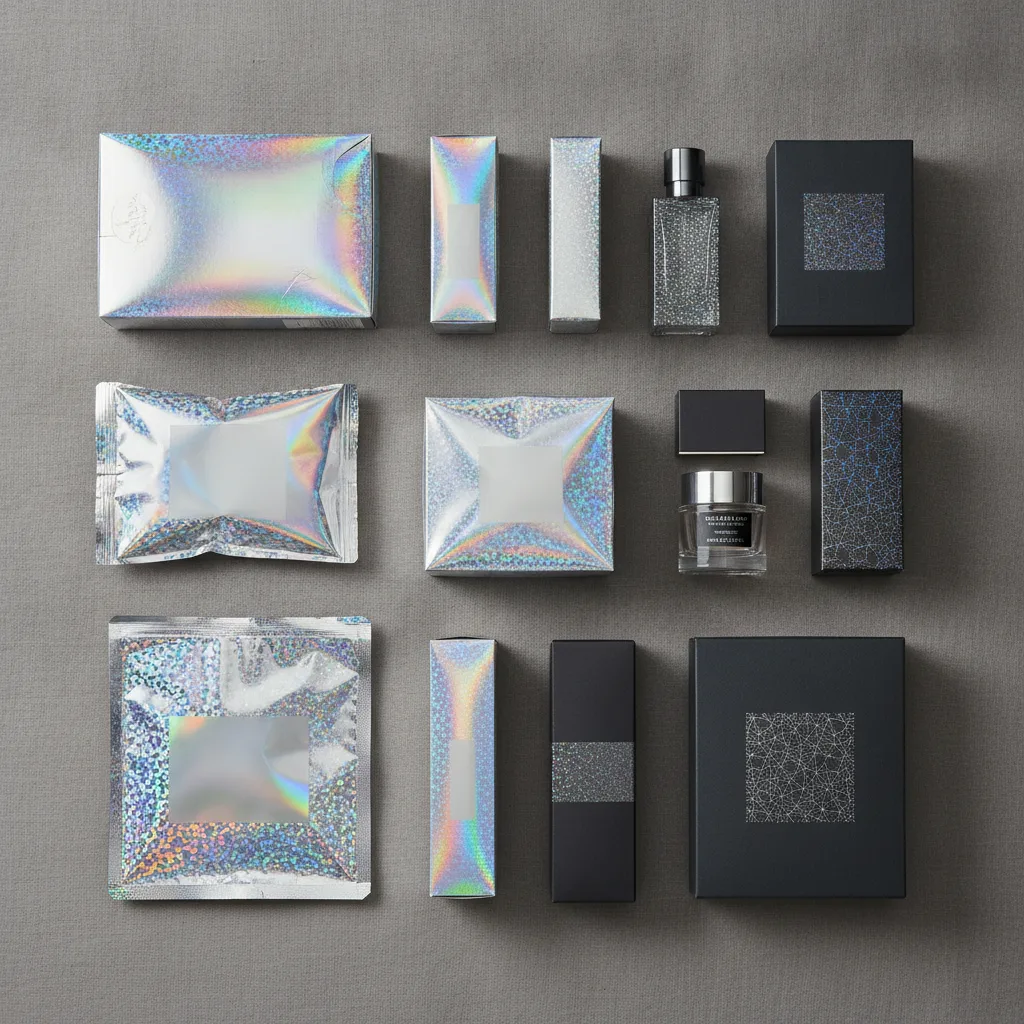
A very mass-market visual code
The large, flat rainbow swatches immediately evoke mass-market retail. On a bottle costing several hundred euros, this clashes sharply with the promise of rarity.
Risk of visual saturation
The over-the-top effect is eye-catching and can overshadow other, more subtle finishes (textured paper, embossing, lacquering). In luxury boutiques, the focus should remain on the brand.
Sensitivity to trends
The "rainbow" effect follows waves of fashion, especially among young and digital trends. A luxury launch designed to last several years risks becoming outdated prematurely.
How to use holographic foil correctly in luxury
Opt for custom-made designs
A monogram in micro-pattern, a discreet seal or a reminder of the size of a jewel: a proprietary motif transforms an eye-catching code into a sophisticated signature.
Limit the surface area and work with contrasts
A border on a slipcase, a line around a label, or a guarantee stamp is all that's needed. Combined with colored paper and palladium hot foil stamping, holography becomes an accent, not a mass effect.
Choosing the right medium and the right process
Paper/foil compatibility is crucial. A manufacturing office with locations in Italy and China can adjust temperature, pressure, and alignment to ensure sharpness between prototype and industrial production.
Holographic foil and CSR: what questions should we ask?
- Compatible with FSC-certified papers and traceable supply chain
- Impact on the overall recyclability of the packaging (limited surface area)
- Material and process documentation for CSR committees
- Production reports are available from the manufacturing partner.
When to opt for other high-end finishes
Many objectives assigned to holography can be achieved differently: embossing or fine debossing for tactile relief, cold foiling or 3D selective varnish to capture light without iridescence, discreet security hologram coupled with micro-texts or NFC chip for anti-counterfeiting.
FAQ
Is holographic foil necessarily "cheap" for a luxury box?
No, not if it's used in detail and with a custom pattern. What looks "cheap" are the generic rainbow flat colors.
Can holographic foil be combined with classic hot foil stamping?
Yes. The main logo can remain in gold or silver foil, with holography playing an accent or texture role.
Does holographic foiling complicate international production?
It adds parameters (paper, machine settings, foil sourcing) but a manufacturing office that oversees testing and production across multiple sites guarantees a consistent result.
In summary, holographic foil is neither an enemy of luxury nor a miracle solution. Everything depends on the design, the substrate, the surface area covered, and the level of technical supervision. For a strategic launch, the support of an expert manufacturing agency like Maestro Management Edition Allows for precise selection between holography, gilding, embossing, or varnishing. More information: https://www.maestro-manufacture.com.