
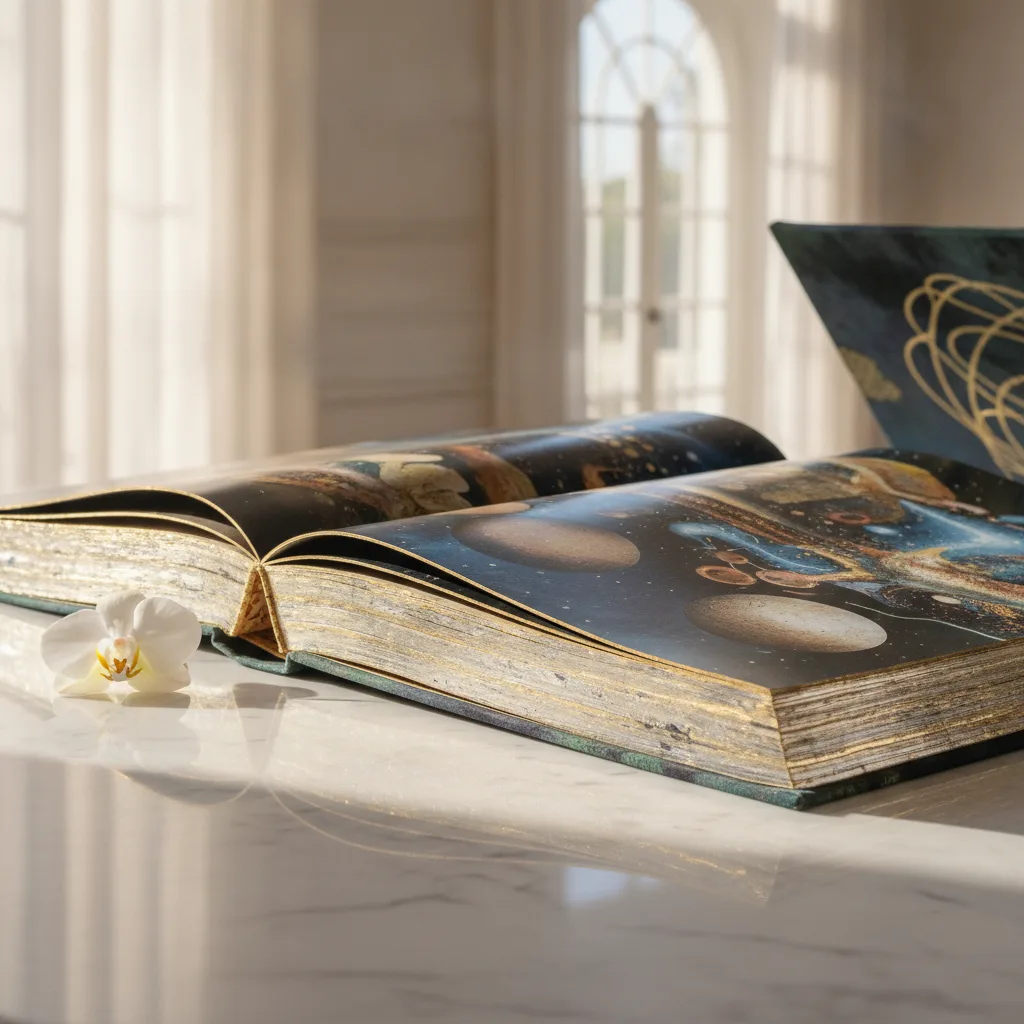
In art books, every detail counts, but few finishing touches transform a book as much as gilt edges. In a single gesture, the raw edge becomes a mirror surface; the reflections of gold or silver structure the object and immediately establish its status as a collector's item.
For an art book or a prestigious catalog, gilt edges often mark the boundary between a "coffee table book" and a true collector's item. book-object. However, it is still necessary to understand what this technique implies in terms of paper engineering, binding and finishing to ensure quality, deadlines and costs.
Gilt edges on art books: the ultimate signature of a beautiful book or a numbered edition
Reading time: ~14 min
- Edge gilding: definition and heritage
- The main families of techniques
- How edge gilding transforms an art book
- Binding and paper engineering constraints
- Real gold, film or color: how to choose?
- Typical use cases
- Points to be aware of
- Synthesis
- FAQ
Edge gilding: definition and heritage
Gilding on the edges involves covering the three trimmed sides of a book (head, foot, and spine) with genuine gold, silver, or metallic or colored foils. Historically, it is a luxury binding technique associated with bibliophilia, religious works, art books, and limited-edition prints.
Originally, gilding served a dual purpose: to protect the pages (making them less susceptible to dust and moisture) and to embellish the book, as gold immediately signaled a precious object. Fine bookbinding workshops continue this tradition today, sometimes enriched with painted or marbled edges, or fore-edge paintings.
For publishing houses and luxury brands, edge gilding has become a high-end marker that creates a perception of rarity that no other finish can match.
The main families of edge gilding techniques
Traditional gold leaf gilding
Step 1: The book is pressed into a press to obtain a perfectly flat spine.
Step 2: application of diluted glue followed by two layers of clay-based slab.
Step 3: light re-wetting to achieve the ideal "bitterness point".
Step 4: manual application of the loose gold leaf onto the edge.
Step 5: polishing with agate stone until a mirror effect.
Result: extremely noble surface, but slow artisanal process, suitable for small series.
Oil gilding (mixture)
The same pressing technique is used, followed by two coats of shellac, and then the application of gilding oil. The gold leaf is applied once the size has set properly, before polishing. This is still a handcrafted process, resulting in a longer working time and slightly more tolerance.
Modern gilding with metallic film
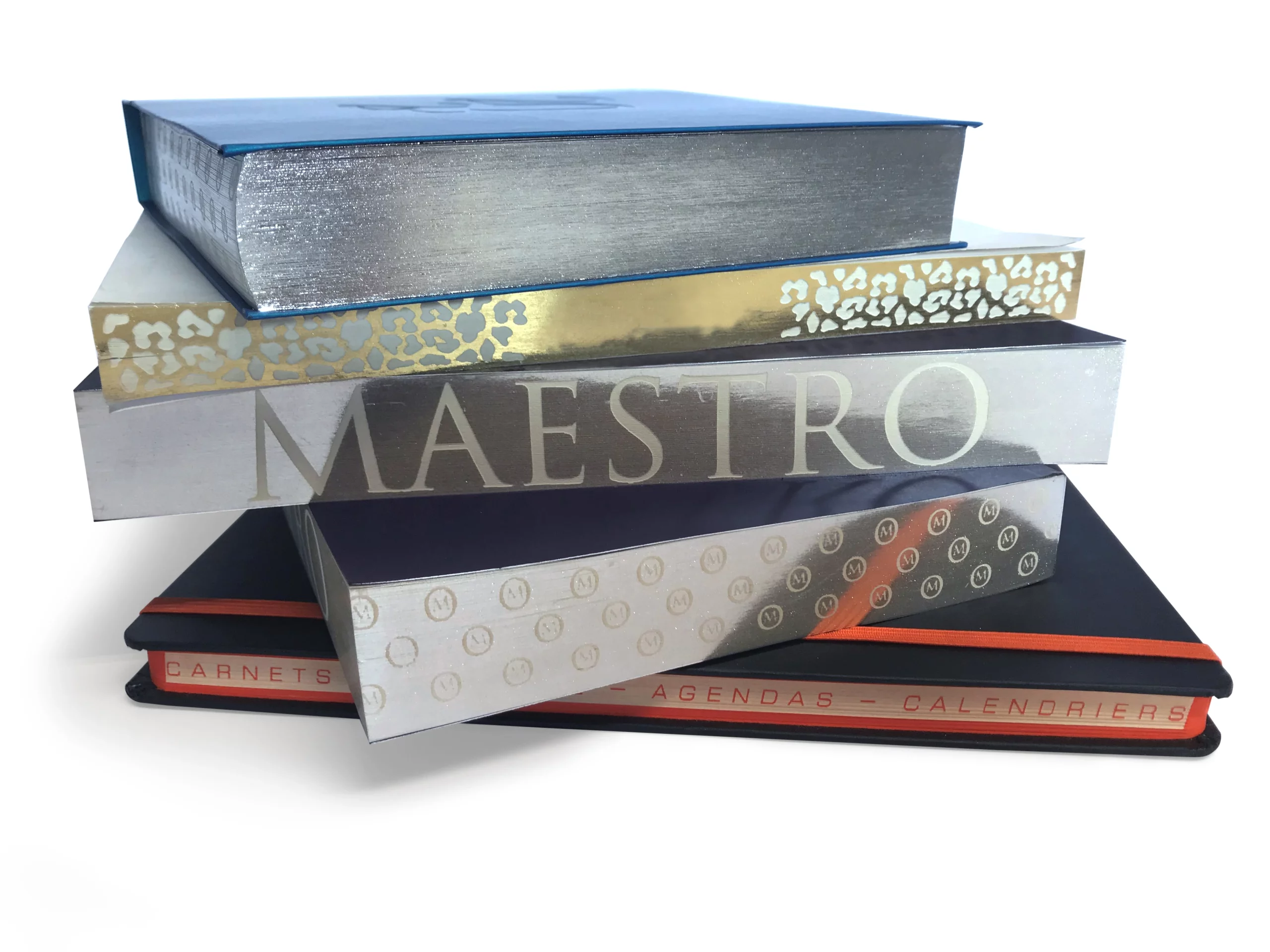
The book blocks are compressed, sanded, and then coated with a metallized film transferred using a heated roller. The residual sheet is removed, and the pages are "broken" to prevent them from sticking together. This is the most common solution for large print runs due to its repeatability and wide range of colors.
Creative and artistic approaches
Some workshops offer mottling, marbling, painting, or partial fan-shaped patterns. These variations are unique pieces or very limited editions and always rely on a perfectly prepared edge.
How edge gilding transforms an art book
A major lever of perceived value
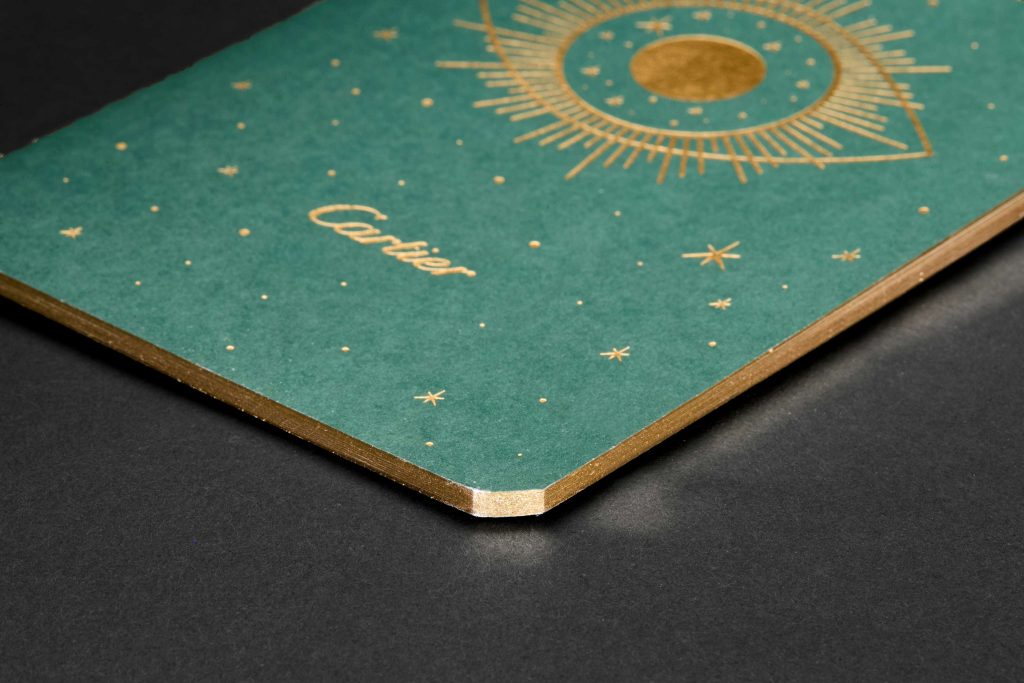
A gilded edge creates a surprising effect, enriches the tactile experience, and strengthens the connection with the brand's universe. It directly contributes to the book-object strategy and justifies a higher selling price.
A relevant protective function
Gilding limits dust penetration and forms a barrier against moisture: a key argument for catalogues that travel or books that are kept for the long term.
Binding and paper engineering constraints to anticipate
| Category | Types of binding |
|---|---|
| Favorable | Square spine, glued and sewn, full cloth or leather, high-end hardback |
| More delicate | Simple perfect binding on heavy paper, for very large books or books with thick signatures |
Weight, paper and trimming
A perfectly clean trim is essential. Paper that is too fibrous can make the edge difficult to smooth; therefore, strict control of cutting tolerances and a stabilization period between printing, binding, and gilding are crucial.
Real gold, metallic foil, or colored: how to choose
| Option | Benefits | Boundaries |
|---|---|---|
| Genuine Gold | Unmistakable brilliance, heritage value | High cost and delays, limited capacity |
| Metallic film | Consistent brightness, wider color palette, suitable for larger print runs | Precise settings required, sometimes specific sourcing |
| Non-metallic color | Contemporary alternative, artistic coordination | Visual impact less "luxurious" than metal |
Typical use cases in art books and prestige publishing
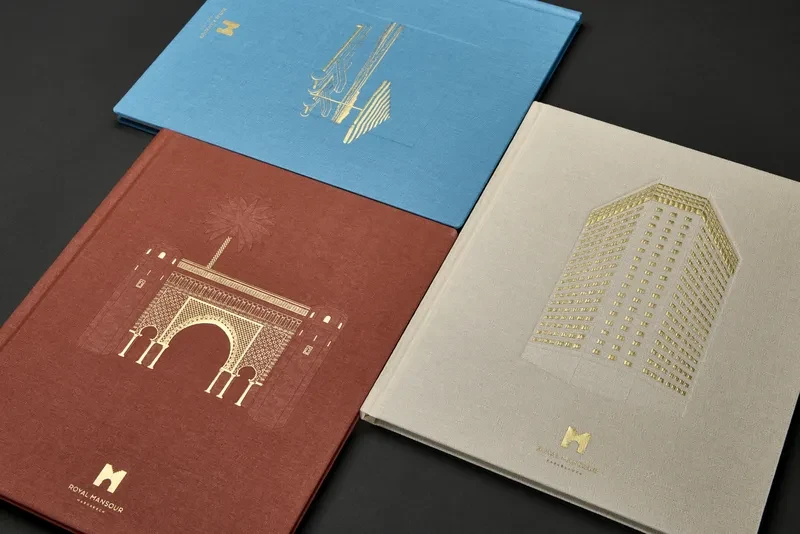
Artist monographs, fine jewelry or haute couture catalogues, numbered editions, premium photo albums: the gilded edge transforms the work from a printed item into a collector's object.
Technical and organizational points of concern
Anticipating the location and order of operations (printing, binding, gilding), defining trimming tolerances, creating prototypes and verifying the CSR compatibility of papers and films: these are all key actions to ensure deadlines and quality.
Summary: Position the edge gilding at the heart of your art book.
By combining meticulous paper engineering, a thoughtful choice of binding, and a gilding technique tailored to the book's dimensions, gilding on the edges of art books becomes a decisive lever for transforming a publishing project into a true art object. This finish enhances the perception of rarity, protects the book over time, and aligns the physical product with the desired brand image, provided it is integrated from the design stage and closely coordinated with production partners.
FAQ
Is edge gilding compatible with all formats?
Yes, from small octavo to large panoramic, provided that the block is thick and stable enough to be held without deformation.
Does the gilding damage the pages or hinder opening?
No, if the gilding is done correctly: after the operation, the technician "breaks" the edge to separate each sheet and ensure a normal opening.
What is the budgetary impact of edge gilding?
It is a high-end finish which adds a targeted but consistent surcharge on high value-added works (limited editions, prestige catalogues, luxury editions).