
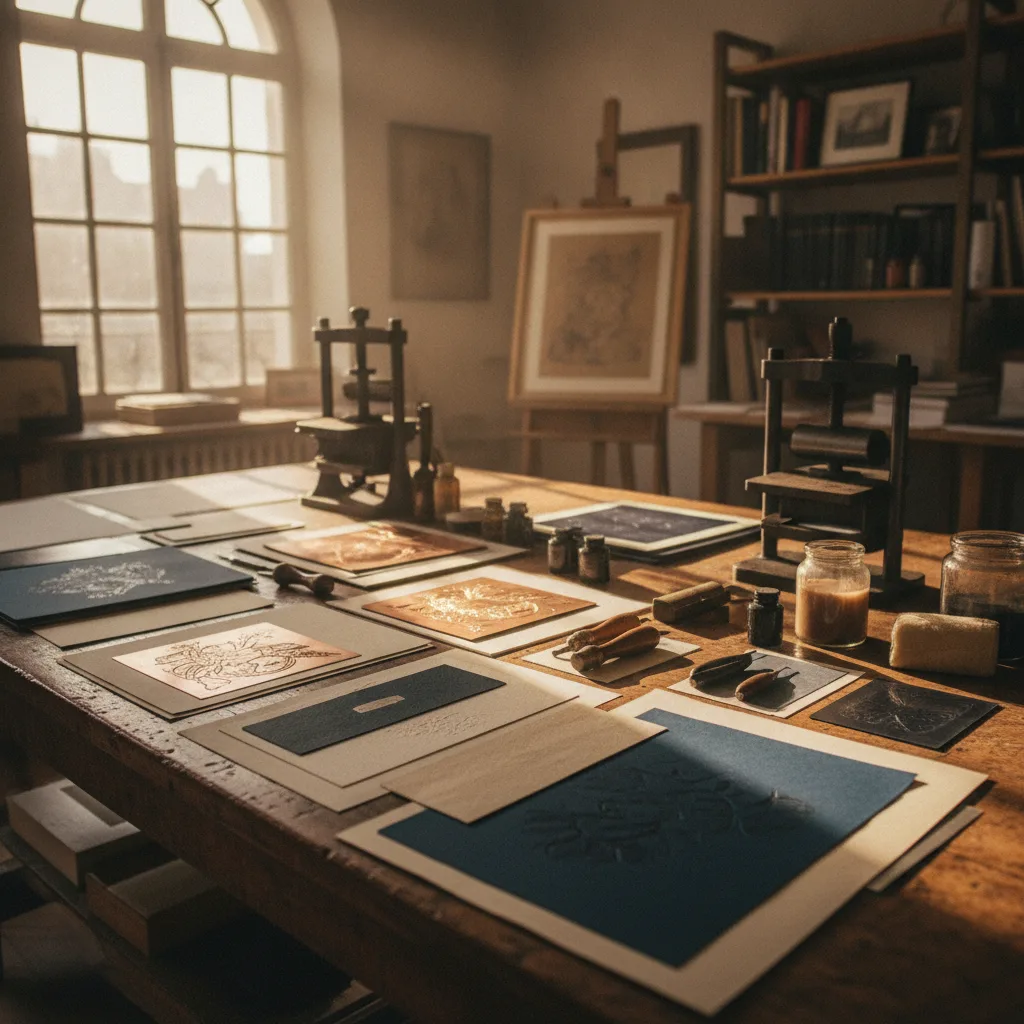
Whether you are preparing an exhibition catalogue, a monograph, a photography book or an artist's portfolio, art book printing in Paris involves precise technical choices in terms of photogravure, paper and binding in order to best respect the artistic intention and the reading experience.
Art book printing in Paris: find the printer who understands your requirements
Reading time: ~13 min
- Summary
- Understanding what makes an art book unique
- Art book printing in Paris: an overview of the options
- Why work with a manufacturing contractor in Paris?
- Key criteria for choosing your art book printer in Paris
- Preparing your art book project in Paris: a useful checklist
- FAQ
Understanding what makes an art book unique
An art book is not like other books, and art book printing in Paris requires taking this specificity into account. Whether it's an exhibition catalogue, a monograph, a photography book, or an artist's portfolio, everything hinges on three major challenges.
Faithfulness to the artistic intention
Your primary requirement is the translation of intent: a deep black in photographic prints, a subtle skin tone, a varnish that highlights without distorting, a perfectly controlled white reserve. Achieving this requires professional photogravure capable of anticipating differences between screen and paper, precise calibration of color profiles according to the chosen paper, and accurate management of halftones in offset printing to avoid moiré patterns and loss of detail. For a photography exhibition catalog, for example, the rendering of blacks, contrast, and grain become paramount; printing the finest books is literally about translating an intention into a finished product.
The crucial role of paper
The choice of paper influences the perception of the artwork as much as the ink itself. Depending on your project, you might opt for a matte coated paper for soft, glare-free images, a satin or glossy coated paper for high-contrast photos, or even a bulky or textured paper for a more tactile artist's book. Beyond aesthetics, opacity (no transparency on the reverse), whiteness (cooler or warmer), and compatibility with the chosen offset printing screen also come into play: paper engineering is a true art form.
Bookbinding as an extension of the editorial process
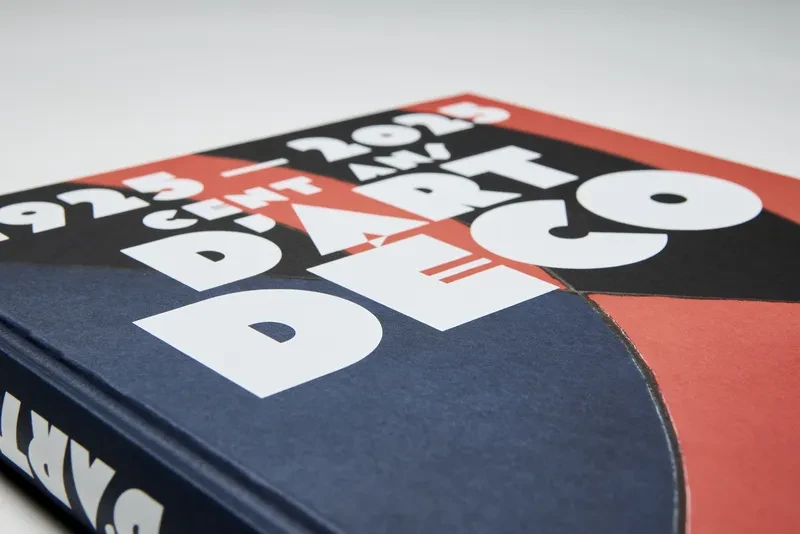
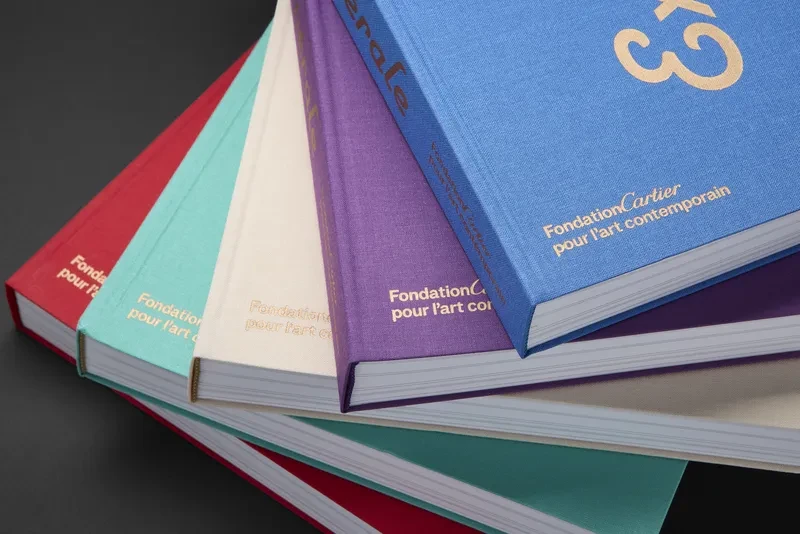
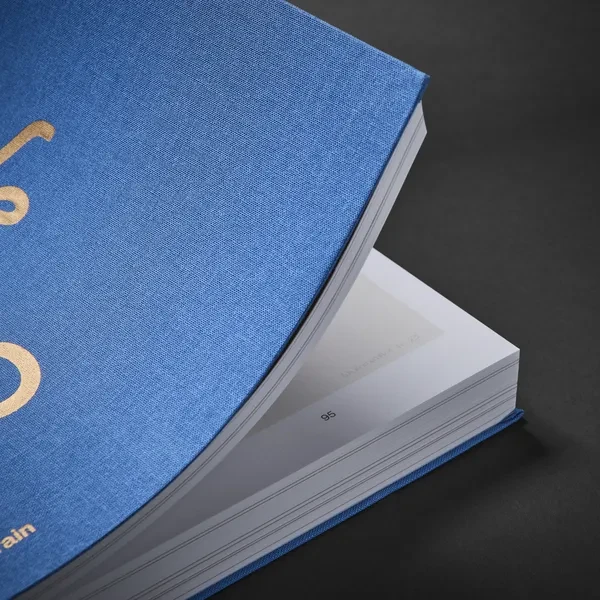
Perfect binding, sewn binding, hardcover, dust jacket, slipcase, or custom box: the way the reader holds the book contributes to the experience. For a gallery book or museum catalogue, the book's lay-flat binding, the durability of the sewn signatures, and the precision of the spine are criteria as important as the image quality.
Art book printing in Paris: an overview of the options
In Paris, several types of service providers respond to the search term "art book printing Paris". Each has its advantages and limitations depending on your level of requirements and the complexity of the project.
Express and general printers
Express printing networks covering all of Paris offer fast printing, courier delivery within the arrondissements, and very short turnaround times for catalogs or brochures. For a simple leaflet or catalog, this may suffice. For a demanding art book, however, the precision of these settings quickly reveals its limitations.
Specialized art book workshops in Paris
Some workshops are explicitly dedicated to art books. A Parisian showroom allows visitors to browse samples, discuss layout and binding, and refine a monograph or exhibition catalog project. However, their production capacity may be limited for large print runs or highly specialized embellishments.
Online printing platforms
Online platforms offer advanced configurators: you choose the format, paper, lamination, and binding, then upload your PDF. This solution is viable for a freelance artist or a small, technically skilled publisher, but the lack of a dedicated project manager often hinders projects aiming for exceptional quality.
| Actor type | Benefits | Boundaries |
|---|---|---|
| Express printers | Very short delivery times, simple ordering process, proximity to Paris | Limited photogravure advice, restricted paper range, standardized color controls |
| Specialized workshops | Showroom samples, editorial support, knowledge of the art market | Reduced industrial capacity, more limited choice of finishing processes |
| Online platforms | Wide range of standard options, clear pricing, scheduled delivery | Limited color palette, standardized papers and finishes, minimal support |
Why work with a manufacturing contractor in Paris?
Among these options, there is a path that is still relatively invisible online: the manufacturing technician office. This is precisely the position of Maestro Management Edition in Paris.
A Parisian contact, an Italian artisanal production
Based in Paris, Maestro acts as the production manager; art book projects are produced in high-end workshops in Italy, under direct supervision. You work closely with the client on layouts and material choices, while benefiting from offset printing and binding done in specialized fine book workshops, with quality control at the factory until final approval.
Photogravure and color fidelity from the first try
The goal isn't to "fix things after the fact," but to get it right from the very first proof: color preparation based on your original files, selection of the correct offset halftone for each type of image, and, if necessary, contract proofs printed on the chosen paper. The result: fewer revisions, less stress before varnishing, and a final product that closely matches the artistic intent.
High-end paper engineering and binding
Maestro is involved from the very beginning of the design process: selecting the interior paper (coated, uncoated, or specialty) to suit the content, calculating the overall thickness of the book, and defining the binding structure (perfect bound, sewn, hardback, dust jacket, or slipcase). For luxury brands and cultural institutions, the line between art book and collector's item is blurred; Maestro's packaging expertise also allows them to design limited-edition slipcases, boxed sets, and numbered special series. More information can be found in the section Edition from the site.
Key criteria for choosing your art book printer in Paris
Image quality and color management
Always ask your service provider about image preparation methods (color profile, conversions, curves), press calibration frequency, and the possibility of obtaining a proof or press approval file. For a photo exhibition, absolute black, subtle gradations, and neutral grays must be defined from the initial briefing.
Range of papers and certifications
Ensure the breadth of the fine art range (coated, uncoated, creative, photographic), the availability of FSC-certified papers, and the ability to provide annotated samples. CSR departments now value manufacturing reports detailing materials and technical choices.
Consulting skills and references
Ask for examples of books comparable to yours, cases solved with complex colors, unusual papers, or special bindings, and the types of clients they've worked with (galleries, museums, luxury brands). A good contact person prefers to discuss technical constraints rather than agree to everything.
Deadlines and organization surrounding exhibition openings
The opening date is non-negotiable. Inquire about average printing and binding times, handling of unforeseen issues (late files, last-minute revisions), and delivery options in Paris, whether to your warehouse or directly to the exhibition venue.
Preparing your art book project in Paris: a useful checklist
Prepare your image files and your mockup
- High-definition images: 300 dpi at print size
- CMYK conversion using the profiles recommended by the printer
- Consistent graphic design: margins, grids, text styles
- Export high-quality PDF with bleed and crop marks
Clarify your editorial intent
Specify in your brief the destination of the book (bookstore, institution, collection), the level of colour requirement (fine art photo, reproduction of works, archives), the quantities envisaged, as well as the budgetary and CSR constraints; this transparency allows a production office like Maestro to propose several realistic scenarios.
Plan the key steps
Ideally, your schedule should include a fully approved mock-up, a photogravure/proofing stage, a final press proof or contractual proof, and then delivery a few days before varnishing to mitigate any logistical issues. The more ambitious the project, the more reassuring the presence of a technician at the factory becomes: this is one of the roles Maestro Manufacture fulfills.
FAQ
How to reconcile budget and quality for an art book in Paris?
By clarifying your priorities early on. A project manager can, for example, maintain a premium photogravure and sewn binding while optimizing format, number of pages, or paper type to stay within budget. Conversely, a purely price-driven approach often leads to unavoidable compromises in color accuracy or texture.
Is it necessary to physically travel to Paris for an art book project?
A face-to-face meeting remains invaluable for reviewing papers and bindings, especially for a first project. However, many steps can be managed remotely (sending samples, exchanging files, approving scanned proofs), as demonstrated by Maestro's experience with clients based in France, Switzerland, and Belgium.
How much time should be allowed for printing an art book before an exhibition opening?
Depending on the complexity and print run, generally allow several weeks between final file approval and delivery. For projects involving fine photogravure, special binding, or a slipcase, an extra buffer is advisable for proofs and any necessary retouching. The key is to establish the opening date as a central milestone and build the project timeline accordingly.
In Paris, art book printing lies at the crossroads of several worlds: express printers, specialized workshops, online platforms, and technical production offices. For an exhibition catalog, a monograph, or an ambitious artist's book, choosing a partner who understands your requirements for photogravure, colorimetry, papers, and special bindings is crucial. Maestro Management Edition, A Parisian partner backed by high-end Italian production, Maestro-Manufacture positions itself as a master craftsman for luxury brands, galleries, and institutions seeking to transform a creative vision into an exceptional book. To discover examples of our work or discuss your next project: https://maestro-manufacture.com/edition contact us.